Candidacy for scar camouflage.
Who scar camouflage is for, who it isn't for, and the five questions we answer at the first consultation — scar maturity, flatness, skin tone match, contraindications, and whether laser revision should come first.
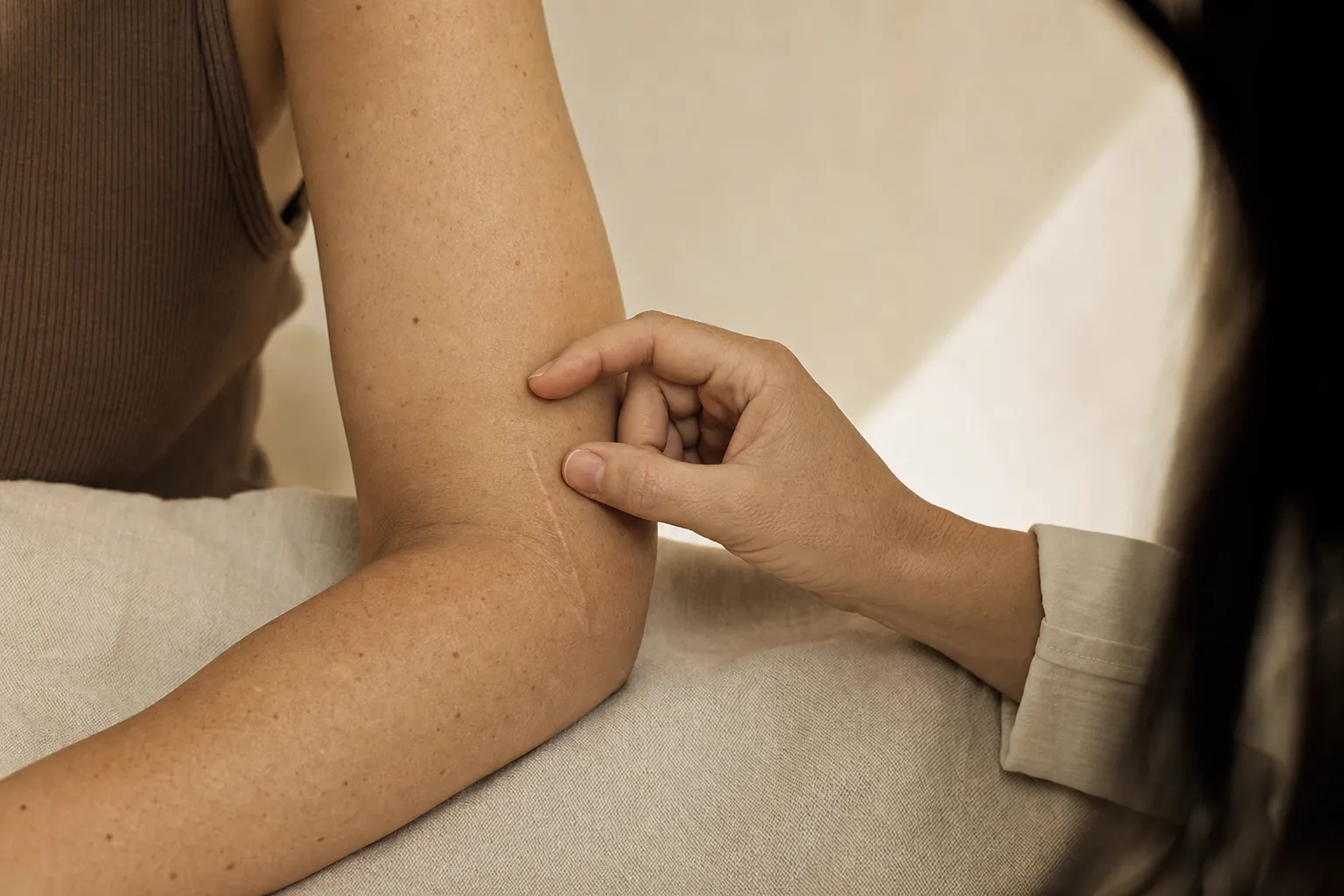
Candidacy turns on five questions: how mature the scar is (typically twelve months or more post-surgery, eighteen months or more post-burn), how flat and stable it has become, whether your skin tone allows reasonable color matching, whether any active dermatologic or systemic conditions need to clear first, and whether laser revision should precede the camouflage. We answer all five at the first consultation and route you to the right answer — which is sometimes laser revision first, sometimes the RS path, sometimes both.
Where camouflage is the right tool.
These are the patterns that respond consistently. Edge cases exist in every category; the consultation is what separates a textbook candidate from a borderline one. If the right answer for your case is laser revision, the RS area-specific work, or a combined plan, we will say so.
| Mature surgical scarsTwelve months or more post-op | Flat, hypopigmented (white or near-white), and stable in size and color over the prior six months. C-section, tummy tuck, mastopexy, breast reduction, joint surgery, and abdominal surgery scars are the most common indications. Two to four sessions to full match. |
|---|---|
| Mature burn scarsEighteen months or more post-injury, surgeon clearance | Burn scars need longer remodeling time and a surgeon sign-off before camouflage. Hypertrophic or contracted burn scars are addressed with laser revision and sometimes intralesional therapy before camouflage is appropriate. |
| White (silvery) stretch marksStriae alba | Mature striae alba — the silvery-white stage — respond well. Active red striae rubra are still remodeling; we wait or treat the redness first with vascular laser. Cluster size and skin-tone uniformity drive session count. |
| Self-harm scarsEmotional readiness as part of candidacy | Technically the same procedure as any other mature scar. The candidacy conversation includes emotional readiness — patients who arrive sure of the decision do best. Discretion is preserved at every step; consent for any photography is asked separately. |
| Gender-affirming surgery scarsCoordinated with surgical timeline | Top surgery, phalloplasty, vaginoplasty, and other gender-affirming procedures produce scars that respond to camouflage on a 12 – 18 month timeline. We coordinate with the surgeon on planned future revisions so the camouflage isn't placed before the final scar is set. |
| Mature traumatic scarsLacerations, road rash, surgical repairs from injury | Provided the scar has matured (typically twelve months) and is flat, mature traumatic scars behave like surgical scars and respond similarly. Larger or contoured wounds may benefit from prior laser resurfacing. |
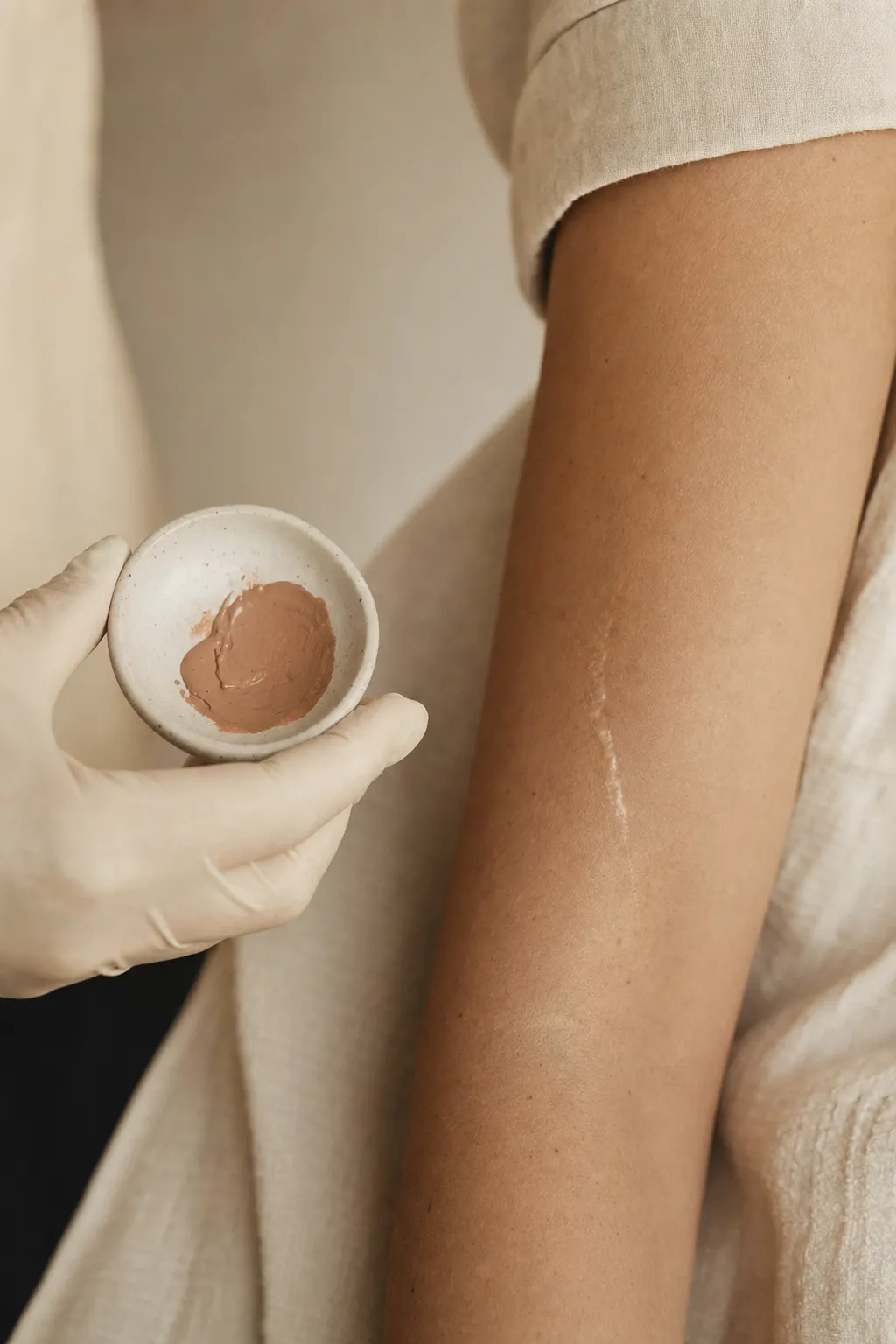
When camouflage isn't the right answer.
The most common reason we decline to camouflage is scar immaturity. A scar placed under pigment too early — before color and texture have stabilized — will shift as the scar continues to mature, and the camouflage will look obviously misplaced six months later. We require twelve months for surgical scars, eighteen for burns, and longer if the patient or surgeon has any doubt about stability.
We also decline active keloid or hypertrophic scarring without prior intervention. Pigment placed into active scarring tissue compounds the cosmetic problem; the right sequence is laser revision (or intralesional steroid for keloids) first, camouflage later.
Other absolute reasons include active dermatologic disease in the scar area (psoriasis, eczema flare, contact dermatitis), pregnancy or active breastfeeding, isotretinoin (Accutane) within six months, and active autoimmune disease affecting the skin in a flaring state.
Two situations where we route patients elsewhere even though the procedure itself is appropriate: a scar where the right starting point is laser revision (we book that here too, in the same building); and an areola or nipple reconstruction case, where the canonical workflow and pigment palette live at Ruth Swissa and the procedure is identical but the patient is better served starting from the RS areola page.
What the first appointment covers.
- 01
Scar history and surgical timeline.
When the scar happened, what produced it, how it has evolved, what previous treatments (if any) you have tried. For surgical scars, the original surgeon's name and the operation date are useful but not required.
- 02
Photographs and tissue assessment.
Standardized photographs of the scar in calibrated lighting. We assess maturity, flatness, color uniformity, and whether the scar crosses tone changes in the surrounding skin.
- 03
Color-match conversation.
The provider mixes a candidate pigment tone against your skin in good light. If a small test deposit is appropriate, it is placed in an inconspicuous area at the consultation; we look at the settled color before scheduling the first full session.
- 04
Plan with sessions, intervals, and total cost.
You leave with a written plan: expected session count (two to four), session length, intervals between sessions, and the estimated total. If laser revision should come first, that appointment is on the plan instead.
- 05
Honest re-routing if needed.
If the right answer is laser revision, an RS areola page, or another studio, we say so. We would rather you find the right care than feel cornered by where you started the conversation.
- Scars under twelve months post-surgery (or eighteen months post-burn) without surgeon clearance.
- Active keloid or hypertrophic scarring without prior intervention.
- Active dermatologic disease in the scar area.
- Pregnancy or active breastfeeding.
- Within six months of isotretinoin (Accutane).
- Cases where pigment cannot match within a clinically reasonable margin of the surrounding skin tone — we explain why and route to laser revision instead.
Artistic direction by Ruth Swissa, CMM, 25+ years in paramedical aesthetics.
Questions we get.
How do I know if my scar is mature enough?
Surgical scars are typically mature at twelve months — flat, color-stable, and unchanged over the prior six months. Burn scars take eighteen months or longer. If you are unsure, the consultation is the right next step; we will tell you honestly if we need to wait.
What if my skin tone is unusual or hard to match?
We mix a custom pigment for every patient — there is no stock color from a chart. Difficult skin tones are part of what twenty-five years of paramedical work prepares for. The candidacy concern is not your skin tone; it is whether the scar tissue itself will accept pigment evenly.
I had top surgery. When can I book?
Generally twelve to eighteen months post-op, with surgeon clearance and any planned future revisions accounted for. We coordinate the timing with the surgical team where helpful.
I have a keloid. Can you camouflage it?
Not directly. Pigment placed into active keloid tissue compounds the cosmetic problem. The sequence we use is intralesional steroid or laser revision first to address the keloid, then camouflage once the scar has flattened.
Should I do laser scar revision first or camouflage first?
Laser revision first if the scar is raised, hypertrophic, or texture-dominant; camouflage if the scar is flat and color-dominant. Many cases need only one of the two. The decision is made at consultation and the full framework is in our journal at /blog/laser-scar-revision-vs-camouflage/.
What if I'm not sure I want a permanent procedure?
The honest answer is: take the time. Camouflage pigment is permanent, and the right time to book is when the decision feels settled. The consultation is non-binding; you leave with a written plan and zero obligation.
Continue.
Paramedical tattooing that blends a mature scar into the surrounding skin tone — the same technique the Ruth Swissa studio is known for nationally, now performed inside the Med Spa's clinical envelope.

What changes the price of a scar-camouflage plan — scar size, scar count, expected session count, and whether laser revision is part of the plan. SMS-side range pending; reference price at our sister studio Ruth Swissa.
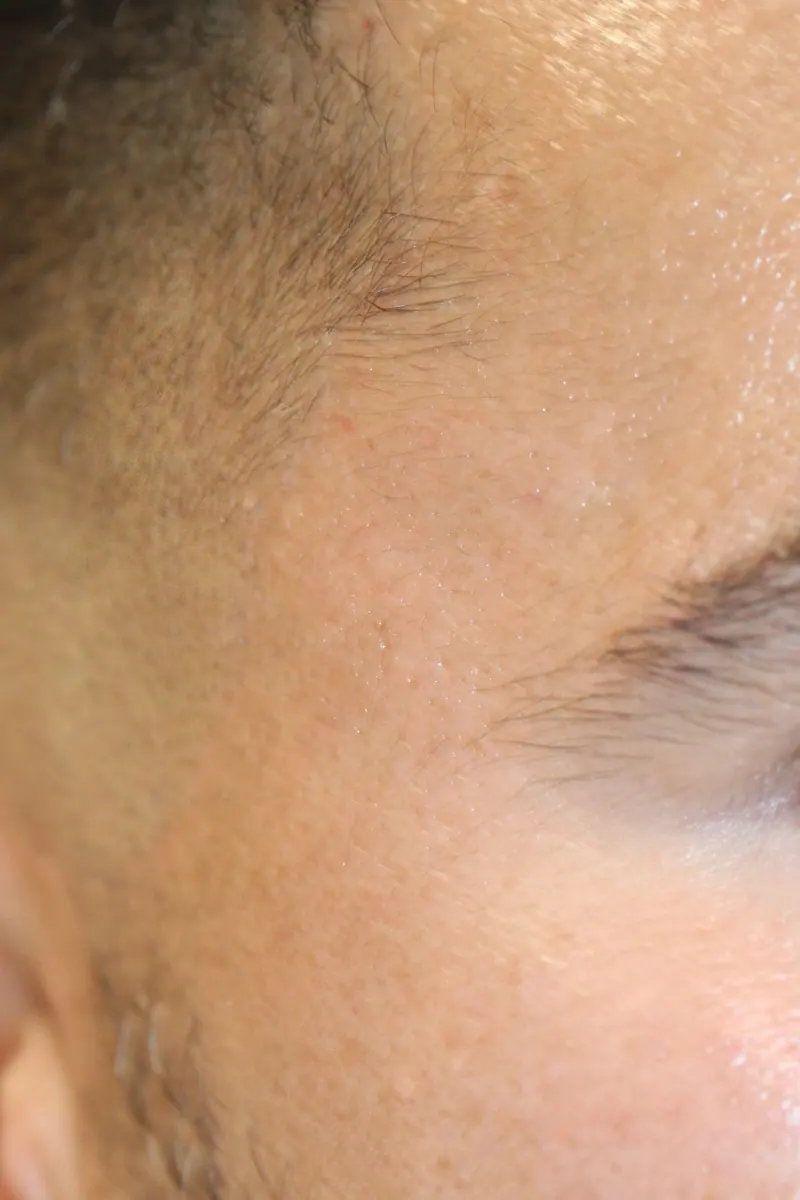
Selected consented cases from the paramedical archive — how camouflaged scars read at conversational distance, what remains visible up close, and what we don't publish.
Ablative laser resurfacing for texture, pores, fine lines, crepiness and photodamage. Real downtime, Fitzpatrick caveats, recovery protocol.
Swissa Med Spa shares a building, a clinical team and a thirty-year history with Ruth Swissa, the paramedical tattooing practice.
Schedule a consultation for candidacy for scar camouflage.
“… Ruth, with her artistry, skill, and talent, magically removed the entire scar! It's completely gone, and I feel like myself again.”