PicoSure Pro tattoo removal.
Picosecond laser tattoo removal. Sessions, sensation, the ink the older lasers can't reach, and why removal sometimes belongs with the same team that does the cover-up.
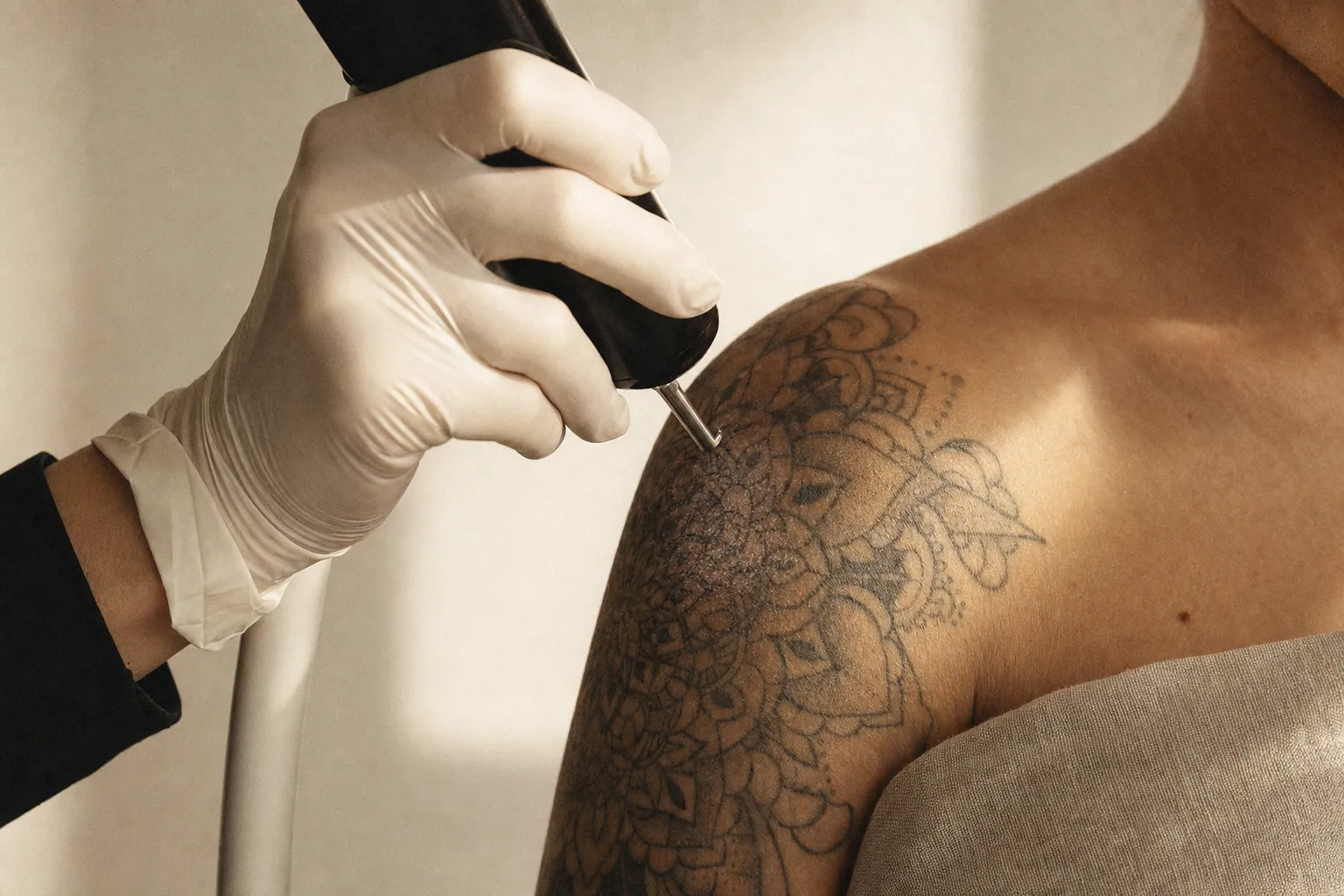
A picosecond laser that breaks tattoo ink into smaller particles than older Q-switched lasers, which the body then clears through the lymphatic system. Shorter pulse means more particle fragmentation per session — and access to colors that earlier lasers struggled with.
Why we chose PicoSure Pro.
Older Q-switched lasers operate on the nanosecond scale. They work, but they fragment ink less efficiently and tend to leave behind colors the laser's wavelength doesn't cleanly target.
PicoSure Pro operates on the picosecond scale — three orders of magnitude faster pulse duration. The energy delivered is more photoacoustic than photothermal: the ink particles shatter rather than burn. The result is fewer sessions for most tattoos and a meaningfully better outcome on the colors that older lasers leave behind.
We treat with PicoSure Pro because it's the device we'd want if we were the patient. There's no other reason to pick a laser.
Session count by ink, color, and depth.
Most amateur tattoos clear in four to six sessions. Professional tattoos run six to ten. Highly saturated multi-color pieces, or tattoos that have been worked over multiple times, can run longer.
Black ink is the most predictable. Reds and oranges respond well. Blues and greens — the historical hard cases — respond meaningfully but slowly. White and yellow ink can be unpredictable; sometimes they shift rather than fade, which we discuss before any work on those colors.
On timing"Sessions are spaced six to eight weeks apart. Treating sooner doesn't accelerate the result — it just produces more inflammation."
What happens in a session.
- 01
Numbing.
Topical numbing is applied for 30 minutes before treatment. The session itself is 20 to 45 minutes depending on tattoo size.
- 02
The laser pass.
Sensation is often described as a rapid snapping or rubber-band sting. Most patients tolerate the session with topical anesthesia alone.
- 03
Frosting.
Immediately after, the treated area frosts — a white discoloration caused by gas formation from the ink shattering. This resolves in 20 to 30 minutes.
- 04
Aftercare.
Keep the area clean and sun-protected. No swimming or hot tubs for a week. No picking at the skin as it heals. Written aftercare is provided.
The decision tree.
Not every tattoo needs to come off completely. If you plan to cover the work with new ink, a partial removal — three to five sessions to fade the existing piece so a tattoo artist has more design room — is often enough.
If you're working with a permanent-makeup artist on a fade-then-redo for old microblading or lip blush, the same approach applies. Our sister studio, Ruth Swissa, performs the corrective tattooing; we coordinate the removal sequence.
- Tattoos over active skin infection.
- Patients within 6 months of isotretinoin (Accutane).
- Areas with a history of keloid scarring without an explicit risk discussion.
How much does PicoSure tattoo and pigment removal cost in Los Angeles?
PicoSure tattoo and pigment removal in Los Angeles ranges roughly $200 to $1,500 per session depending on the size and location of the area treated. Full-face pigment work runs $1,000 to $1,500; mid- and lower-face zones $800 to $950; neck pigment $300 to $450. Most plans run four to ten sessions spaced six to eight weeks apart, with package pricing on request.
What drives the per-session cost.
Treatment area is the primary cost lever. Pigment work on a full face is a longer pass, more numbing, more energy delivered — and priced accordingly. A neck capillary cluster or a small focal pigment patch is a fraction of the time and a fraction of the cost. Per-session pricing in LA generally scales with treatment area first, ink complexity second.
For tattoos, ink color and saturation set the floor. Black ink is the most predictable and clears in the fewest sessions. Reds and oranges respond well. Blues and greens — the historical hard cases — respond more slowly and may take additional sessions. Highly saturated multi-color pieces or cover-ups can push session count beyond ten.
Session count is the multiplier most patients forget. A $300 per-session price across eight sessions is $2,400 in total. A $800 per-session price across four sessions is $3,200. Comparing per-session prices in isolation, without comparing total session counts, misleads more patients than it helps. Picosecond devices like PicoSure Pro typically need fewer sessions than older Q-switched lasers.
Location within LA matters for pigment removal pricing more than for tattoos, because pigment cases tend to be longer-relationship treatments where injector experience and protocol quality dominate. Beverly Hills clinics sit at the top of the range; Calabasas and the Valley generally below for comparable expertise.
Typical Los Angeles ranges by area.
Per-session pricing for PicoSure Pro and comparable picosecond devices across LA. Package pricing typically applies to multi-session plans.
| Variant | What's included | Typical LA range |
|---|---|---|
| Pigment removal · full face | Diffuse pigment, melasma adjunct, or full-face PMU pigment treatment per session. | $1,000 – $1,500 per session |
| Pigment removal · mid / lower face | Focused zone — cheeks, perioral, jawline pigment. | $800 – $950 per session |
| Pigment removal · neck | Neck pigment patches or hyperpigmentation. | $300 – $450 per session |
| Pigment removal · chest | Chest hyperpigmentation; larger surface area than face. | $1,000 – $1,200 per session |
| Carbon laser facial | Carbon photofacial — a single-session brightening pass. | $350 – $400 per session |
| Tattoo removal · per session | Variable by tattoo size, ink color, depth, and density. Quoted at consultation. | $200 – $1,500 per session |
PicoSure vs older Q-switched lasers vs cover-up tattooing.
PicoSure Pro is a picosecond laser — pulse duration measured in trillionths of a second. Older Q-switched lasers operate on the nanosecond scale, three orders of magnitude slower. Per session, the two devices may price similarly in some clinics, but the picosecond device typically clears tattoos in fewer sessions. Total cost across a plan is usually lower with PicoSure Pro despite higher equipment cost.
Q-switched lasers also struggle with certain colors — blues, greens, and pastels — that picosecond technology handles meaningfully better. For multi-color tattoos, the cheaper per-session Q-switched price often turns into more sessions, more total cost, and a less complete fade.
Cover-up tattooing is the other adjacent path. If you plan to ink over an existing tattoo, full removal is rarely necessary — three to five PicoSure sessions to fade the existing piece gives a tattoo artist enough design room. Total cost is roughly $1,200 to $4,500 versus $4,000 to $8,000 for full removal. The right answer depends on what comes next.
For permanent-makeup correction — old microblading, lip blush, eyeliner — the picosecond approach applies the same physics. PMU pigments often contain iron oxides that behave differently from tattoo ink; the protocol shifts, the price stays in the $150 to $600 per session range. Ruth Swissa handles the corrective tattooing if a redo follows the removal.
How we price PicoSure work.
Pricing at Swissa Med Spa is determined at consultation, after evaluating the tattoo or pigment in person. Multi-session package pricing is available on request. The plan and total are confirmed in writing before the first session.
Supervised by Dr. Charles Peterson, board-certified physician with nearly a decade in aesthetic medicine.
PicoSure tattoo removal results.
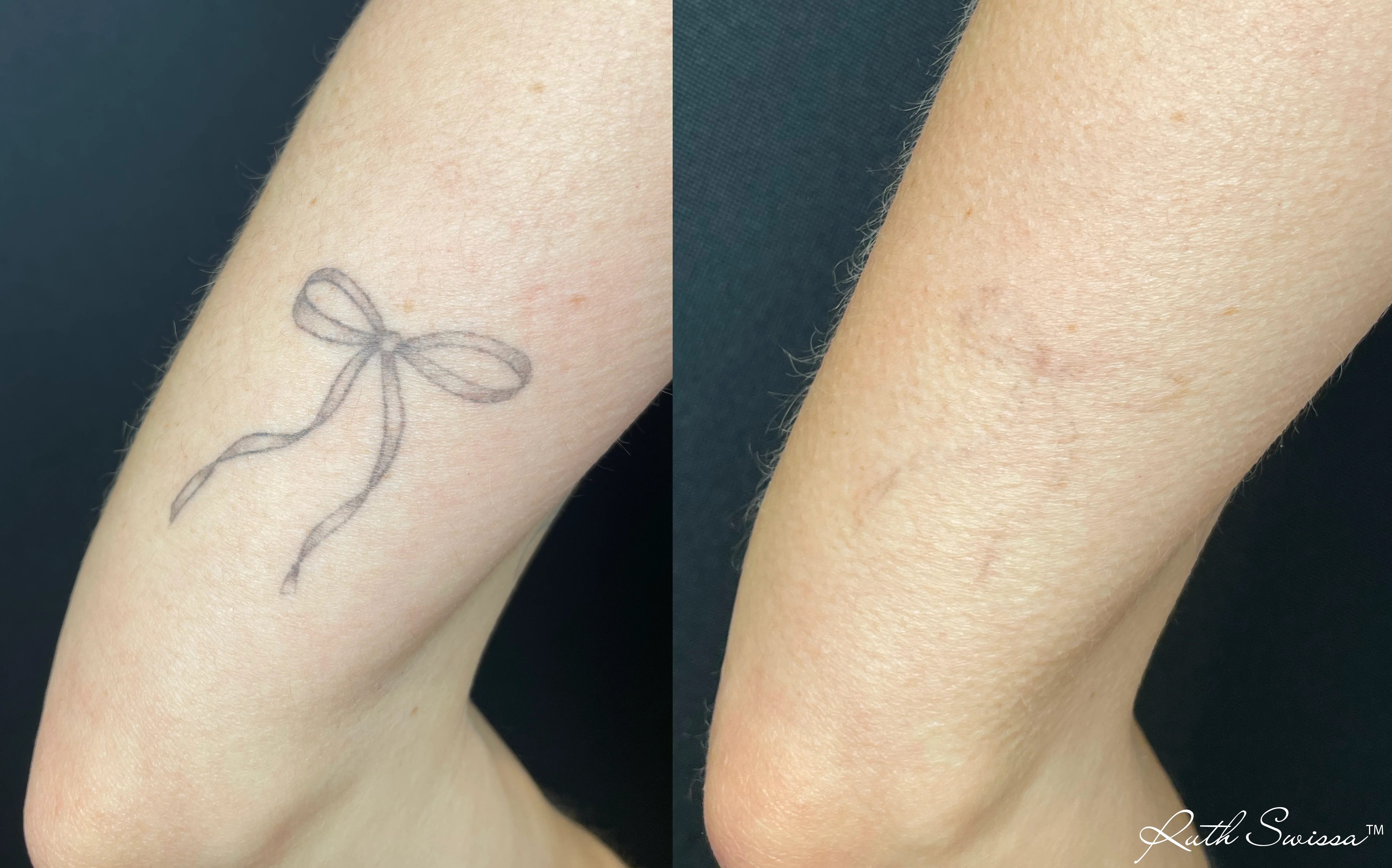
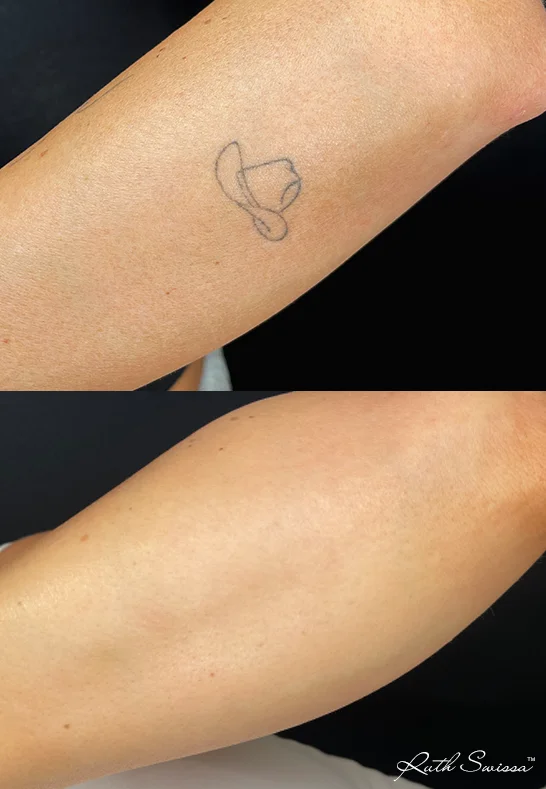
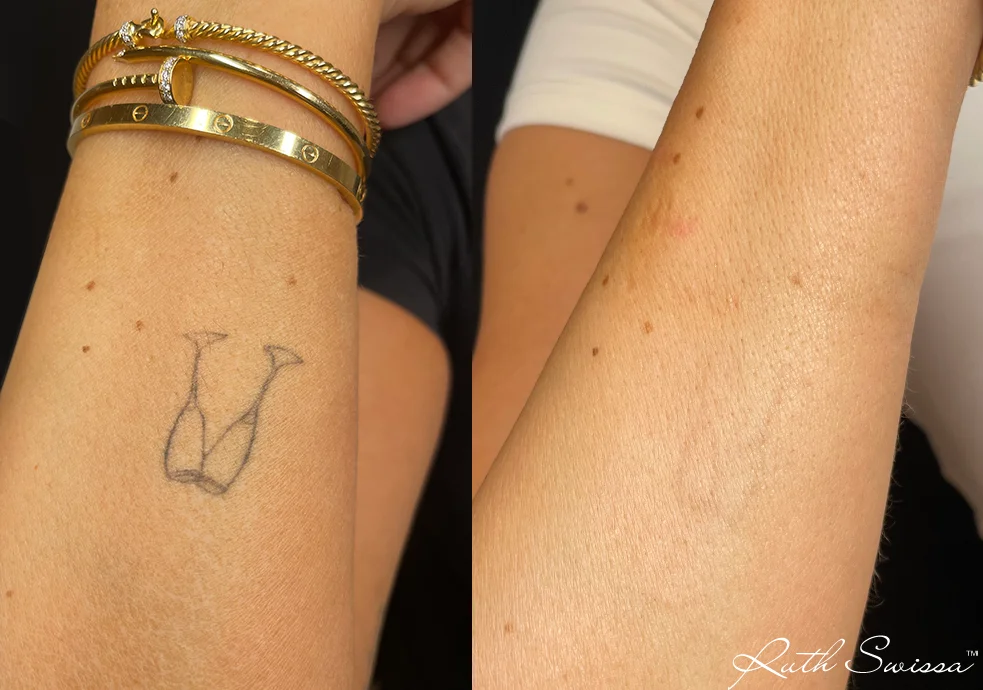
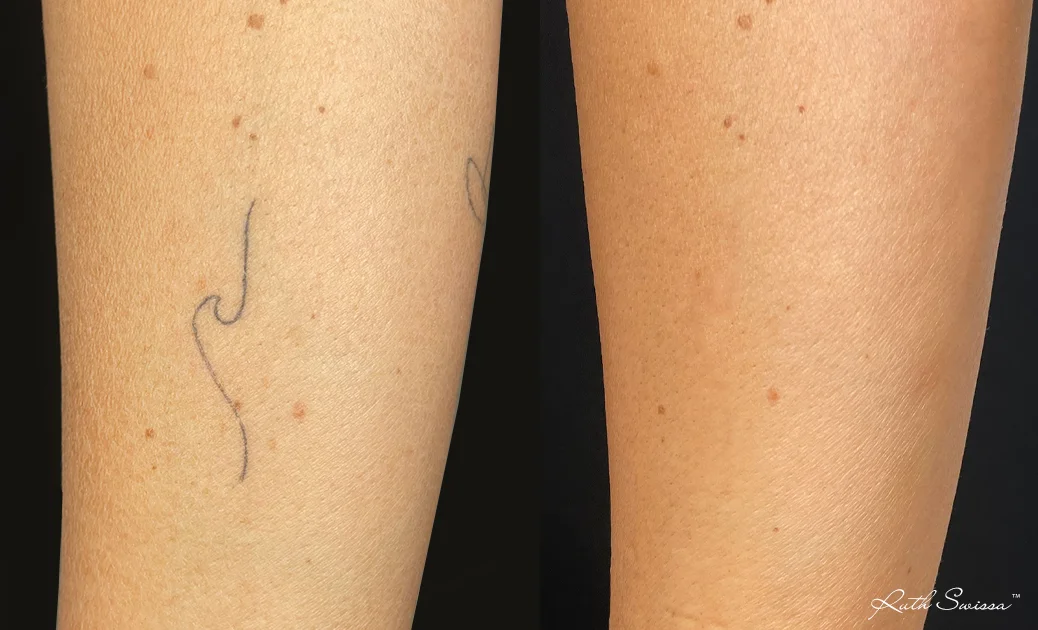
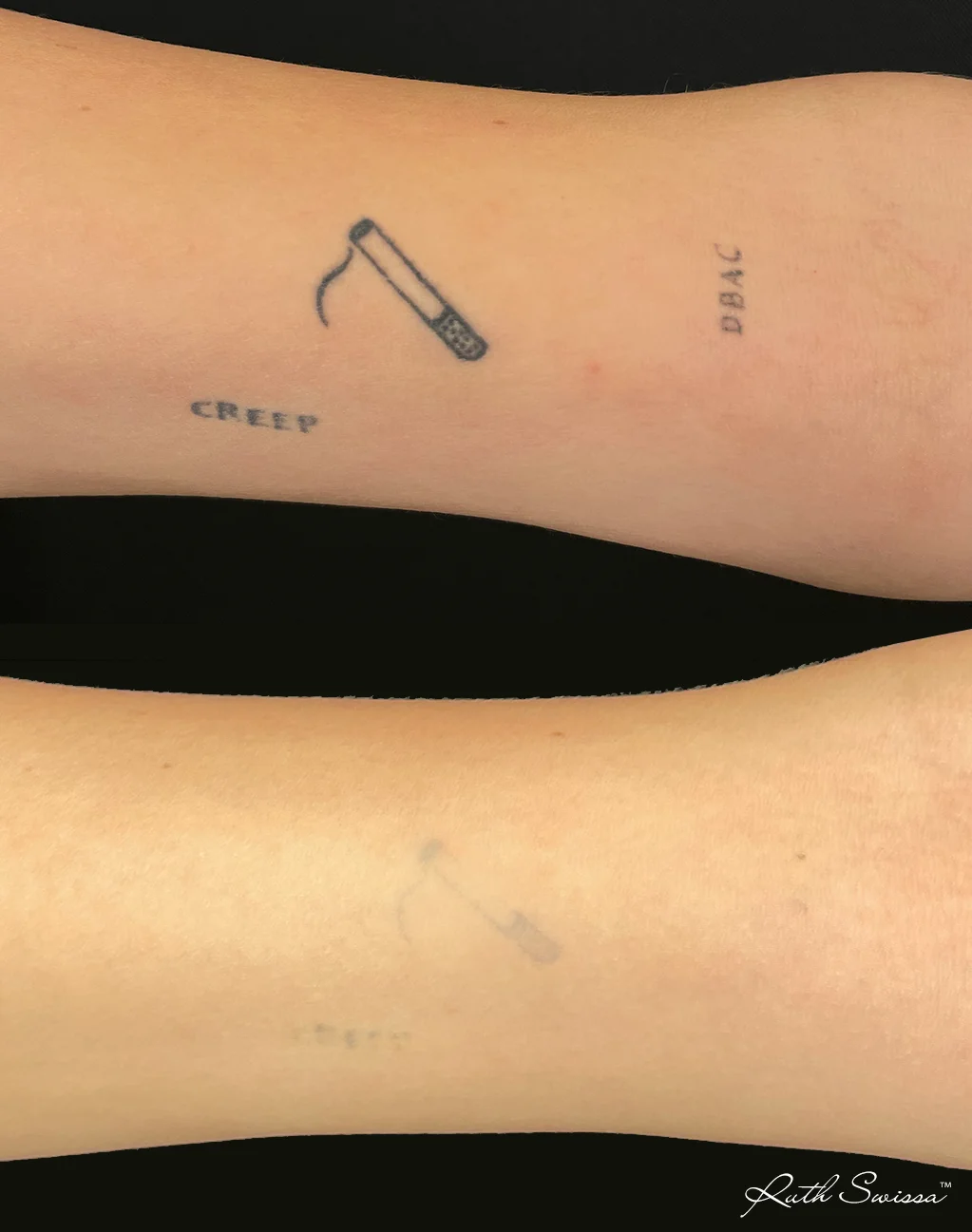
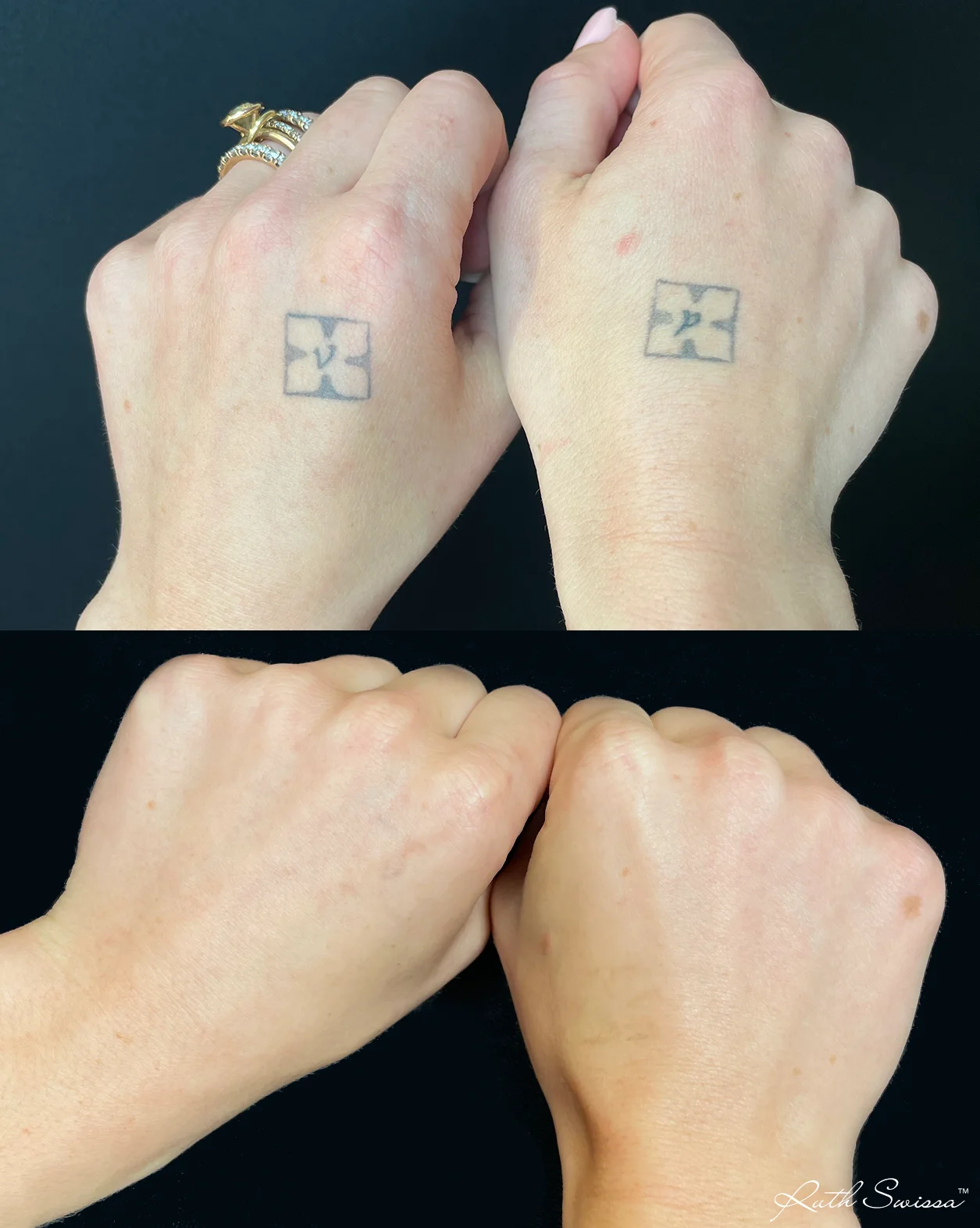
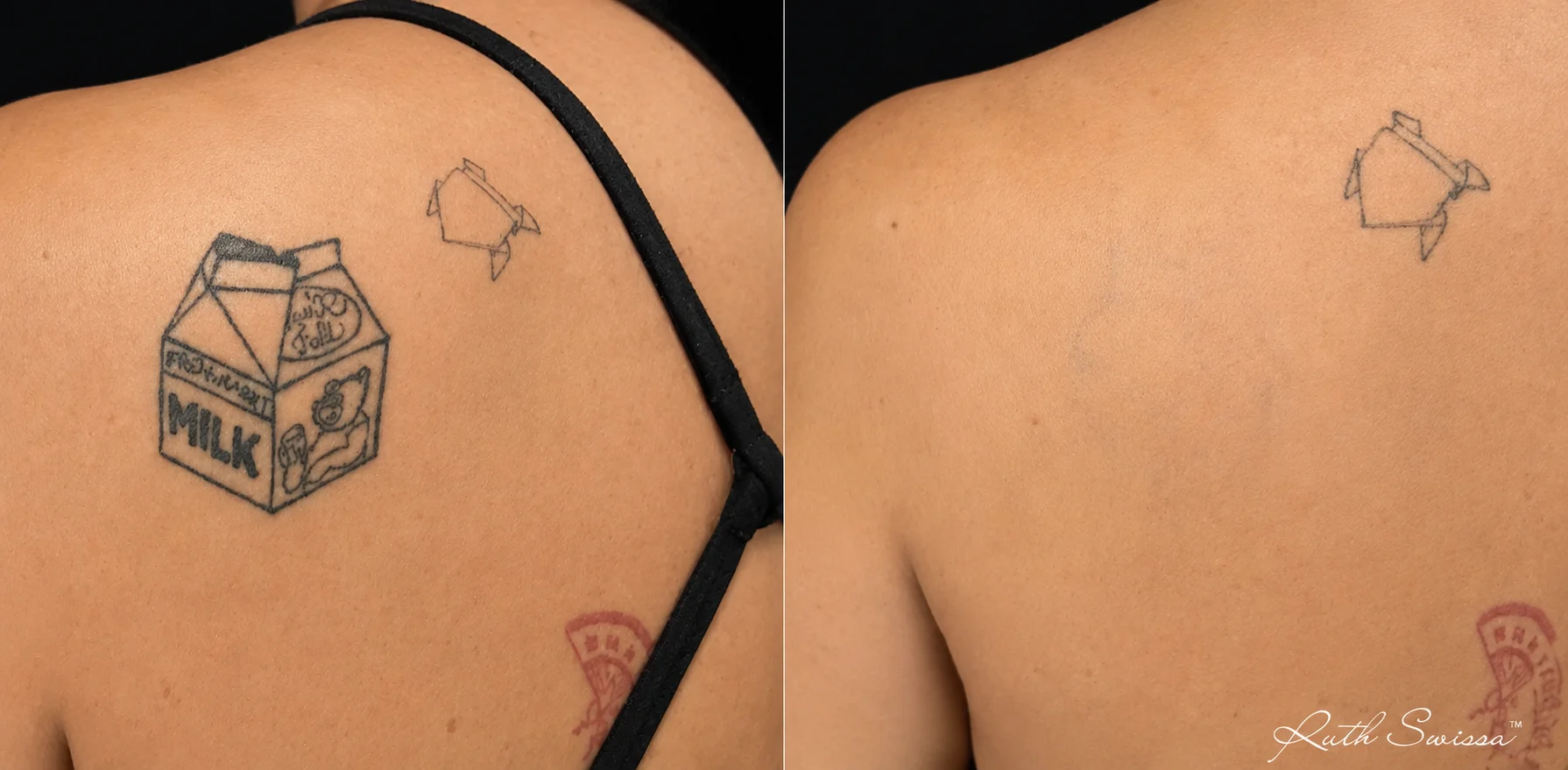
Photographs from the Ruth Swissa studio archive, shared with patient consent. Session count varies with ink density, color profile, and skin type.
Where picosure pro tattoo removal is performed.
Our Beverly Hills satellite operates Wednesdays by appointment and performs injectables only. Lasers, regenerative protocols, medical weight loss and wellness are at our Calabasas studio.
Questions we get.
Will the tattoo be completely gone after the treatment plan?
Most tattoos clear to a point where a fresh observer wouldn't notice them. Some residual shadow can remain, particularly with deeply saturated black ink. We discuss realistic clearance at the consultation.
What about PMU — permanent-makeup removal?
PMU pigments behave differently from ink because they often contain iron oxides. We use the same device but a different protocol. See our PMU removal page for the specifics.
How much does PicoSure tattoo removal cost in Los Angeles?
Per-session pricing in LA generally runs $200 to $1,500, depending on tattoo size, ink color and saturation, and depth. Most plans require four to ten sessions spaced six to eight weeks apart. Package pricing is available; total cost is shared in writing after the consultation.
Is PicoSure more expensive than older Q-switched lasers?
Per session, sometimes. Per plan, usually not — picosecond technology typically clears tattoos in fewer sessions and handles difficult colors more completely. Total cost across a removal plan tends to favor PicoSure despite the per-session premium some clinics charge.
Does it scar?
Properly dosed PicoSure Pro on intact, undamaged skin shouldn't scar. Pre-existing scars from the original tattooing, or scars from prior removal with other lasers, are visible after the ink clears.
Can I do this if I'm on retinol or in the sun?
Stop topical retinoids one week before and one week after each session. Avoid significant sun exposure on the treated area between sessions — sunscreen daily, full coverage if possible.
How much does full-face pigment removal cost?
Full-face PicoSure pigment work typically runs $1,000 to $1,500 per session in Los Angeles. Mid- or lower-face zones are $800 to $950. Neck pigment work is $300 to $450. Total depends on session count, which we estimate at consultation.
Is the device the same in both your studios?
PicoSure Pro is at our Calabasas studio. If you find this page from a Beverly Hills search, your sessions are scheduled at Calabasas — ten miles north.
Continue.
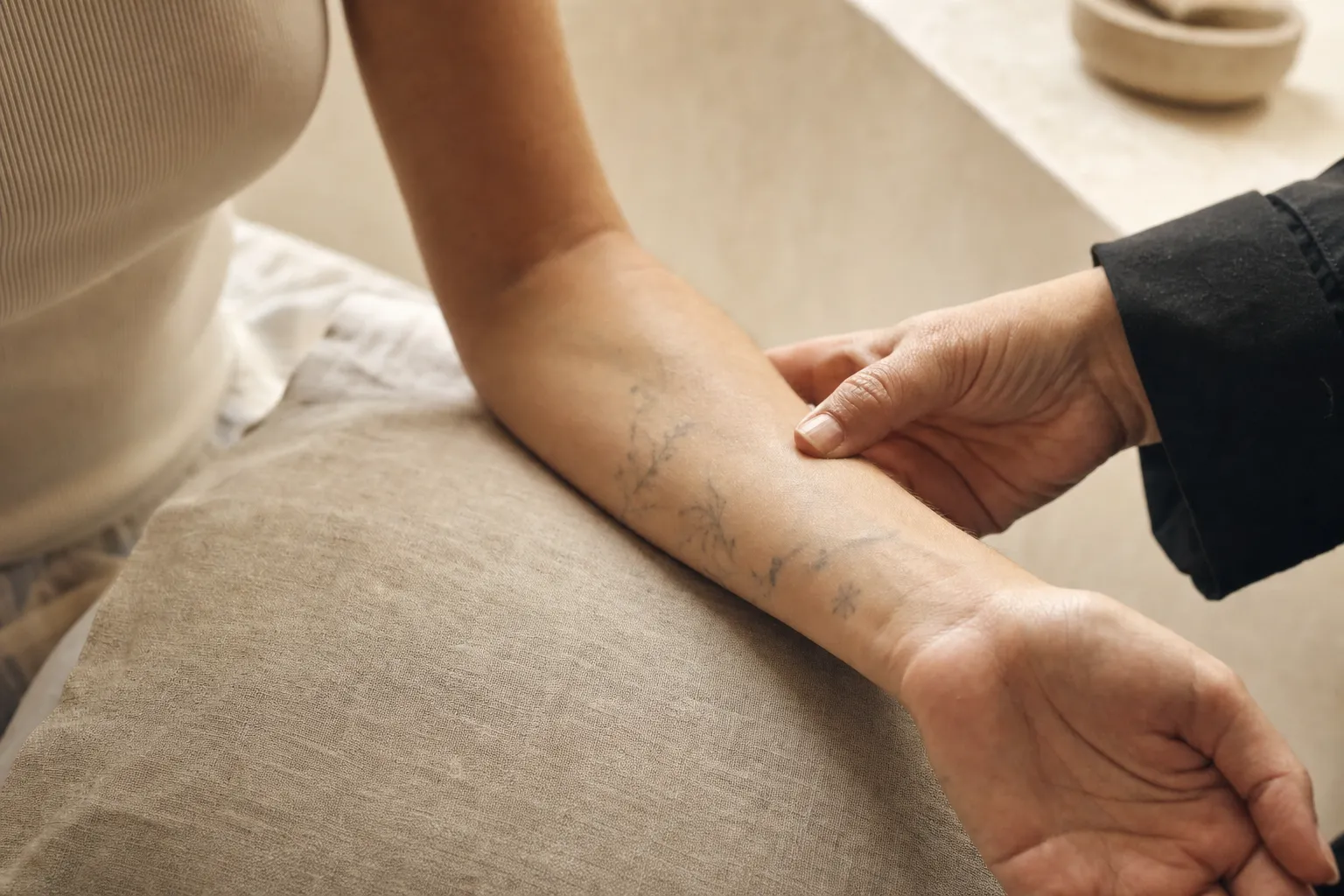
PicoSure Pro tattoo removal performed at our Calabasas studio, serving Beverly Hills clients ten miles north. Book a consult.
Iron-oxide pigments don't behave like ink. Our PicoSure pathway, sessions to expect, and the paradoxical-darkening risk we disclose up front.
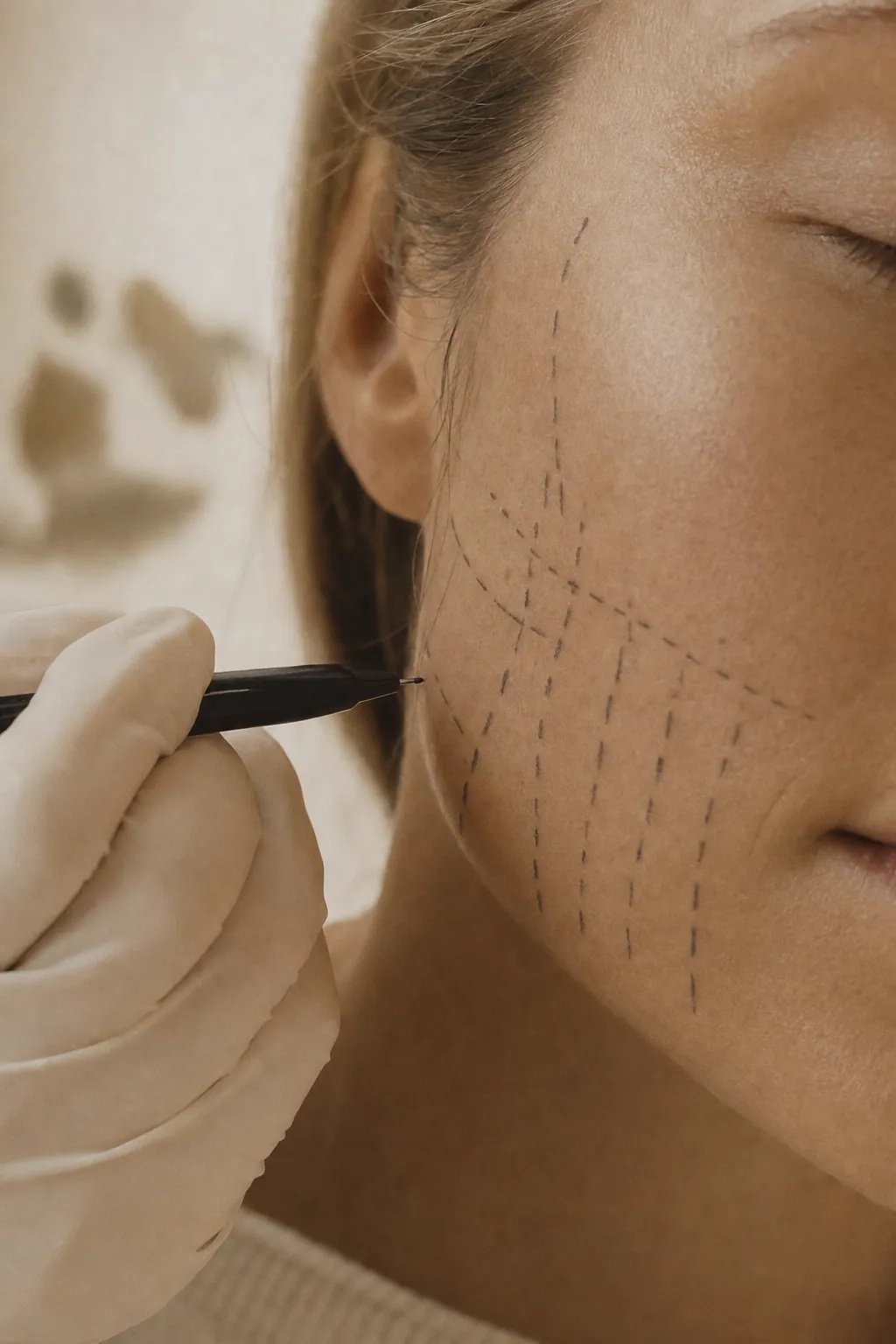
Ablative laser resurfacing for texture, pores, fine lines, crepiness and photodamage. Real downtime, Fitzpatrick caveats, recovery protocol.
Two modalities, one decision. When to lase the scar tissue and when to cover it with skin-tone pigment, by scar type and skin tone.
Swissa Med Spa shares a building, a clinical team and a thirty-year history with Ruth Swissa, the paramedical tattooing practice.
Schedule a consultation for picosure pro tattoo removal.
“I had ablative CO2 laser resurfacing. Next to no pain! … She explained everything in detail and was explicit in after care instructions…”