Medical weight loss. GLP-1 therapy under physician supervision.
GLP-1 mechanism, on-label vs off-label use, candidacy, side-effect management, what happens when you stop.

Physician-supervised use of GLP-1 receptor agonists — semaglutide (Ozempic, Wegovy) and tirzepatide (Mounjaro, Zepbound) — for sustained weight reduction in screened candidates. These medications work by slowing gastric emptying and modulating appetite signaling in the brain. They are tools, not magic. Outcomes depend on dose titration, side-effect management, and whether the patient builds the lifestyle changes that hold weight off when the medication is eventually tapered.
GLP-1 therapy, in plain terms.
Glucagon-like peptide-1 is a hormone the gut releases after eating. It tells the pancreas to produce insulin, slows the rate at which the stomach empties, and signals satiety to the brain. The medications used in medical weight loss — semaglutide and tirzepatide — mimic this hormone at a longer-acting, higher-than-physiologic dose.
The result, in most patients, is a meaningful reduction in appetite, fewer food-related intrusive thoughts, and slower gastric emptying that extends the sensation of fullness after meals. Average reported weight reduction over 60-plus weeks of full-dose therapy is in the 15-to-22 percent range depending on the molecule, the dose tolerated, and the patient.
GLP-1 medications are not appetite suppressants in the stimulant sense. They don't speed metabolism. They don't dissolve fat. They make it easier to eat less without feeling deprived — which, if you've spent years fighting hunger, is the part that matters.
Semaglutide and tirzepatide, briefly.
Two molecules cover almost all GLP-1 prescribing in medical weight loss today. The right choice is patient-specific; we discuss it at consultation.
| SemaglutideOzempic (T2D) · Wegovy (weight) | A GLP-1 receptor agonist, taken as a weekly injection. Ozempic carries the type 2 diabetes label; Wegovy — the same molecule — is FDA-approved for chronic weight management. The longer-studied of the two, with over a decade of safety data. Dosing, titration, and cost in full on the semaglutide page. |
|---|---|
| TirzepatideMounjaro (T2D) · Zepbound (weight) | A dual GLP-1 and GIP receptor agonist. Greater average weight reduction than semaglutide in head-to-head trials; newer to market, with a shorter safety record. Mounjaro carries the T2D indication; Zepbound is the weight-management label. Detail on the tirzepatide page. |
The full semaglutide vs tirzepatide head-to-head, the Wegovy vs Ozempic and Mounjaro vs Zepbound brand-label comparisons, and the Ozempic cost guide each have a dedicated page.

Who this is for, and who it isn't.
FDA labeling for the weight-management indications generally requires a BMI of 30 or higher, or 27 with a weight-related comorbidity such as type 2 diabetes, hypertension, dyslipidemia, or obstructive sleep apnea. We use those thresholds as a starting point, not a ceiling — candidacy is a full clinical conversation, not a calculation.
We don't prescribe GLP-1 medications for cosmetic weight reduction in patients with a normal BMI and no metabolic indication. Off-label use exists across this category, and we make individual decisions, but the bar for off-label is high and the screening is the same. The one low-dose exception we run deliberately is microdosed GLP-1 therapy for appetite stability — most often through menopause — under the same screen.
From first visit to maintenance.
- 01
Intake and screening.
Medical history, current medications, prior weight-loss attempts, baseline labs (typically a metabolic panel, HbA1c, lipids, TSH; additional studies if indicated). We screen for contraindications and for the metabolic context that makes therapy appropriate.
- 02
Starting dose.
Both medications start at a dose below therapeutic level — the first weeks are about tolerability, not weight reduction. The starting dose is intentionally low so the gastrointestinal system can adapt.
- 03
Titration.
Dose increases occur every four weeks, with check-ins to confirm tolerability. Not every patient reaches the highest dose; many do their best work at an intermediate dose, and we titrate to effect rather than to label maximum.
- 04
Maintenance.
Once we find the dose that produces steady reduction without intolerable side effects, the patient holds there. Visits become less frequent. We continue to monitor labs and clinical status.
- 05
Taper, eventually.
Most patients don't stay on these medications forever. We plan the off-ramp deliberately — slower than people expect — and pair it with the eating-pattern and movement changes that have to do the work after the medication is gone.

What the GI system does, and for how long.
The most common side effects are gastrointestinal: nausea, early fullness, constipation, occasionally reflux or diarrhea. They cluster in the first one to two weeks after each dose increase, then settle. They are dose-dependent — slowing the titration almost always reduces them. The GLP-1 side-effects guide covers frequency and management across the class; tirzepatide's profile has a page of its own.
Less common but worth naming: gallbladder irritation, pancreatitis (rare), injection-site reactions, transient fatigue, and a temporary loss of taste for foods the patient previously craved. Patients often describe a quieting of the constant background thought about food — what's been called 'food noise.' Most welcome this. Some find it disorienting.
Less common still, and important: muscle loss alongside fat loss if protein intake is inadequate, hair shedding during rapid weight reduction, and the cosmetic changes — facial volume loss colloquially called 'Ozempic face' — that can accompany meaningful weight reduction at any age.
On staying on"Obesity behaves like a chronic condition. When the medication stops, the physiology that drove the original weight tends to return — unless the patient's eating and movement patterns have shifted enough to hold the new baseline."
Weight regain, and how to think about it.
Trial data on both molecules show that a majority of patients regain a significant fraction of lost weight within a year of discontinuation. That isn't a failure of willpower; it's the underlying physiology reasserting itself once the medication's effect on appetite and gastric emptying is removed.
This is the conversation we have at every visit, not just the first. The medication creates a window in which it's easier to build new habits — smaller portions normalized, protein prioritized, resistance training in the routine, sleep protected. The patients who hold their results are usually the ones who used that window deliberately.
There's no shame in needing the medication longer, or returning to it later. But the planning has to be honest from the start.

- During pregnancy, breastfeeding, or while actively trying to conceive (effective contraception is required during therapy).
- Patients with a personal or family history of medullary thyroid carcinoma or multiple endocrine neoplasia type 2 (MEN-2).
- Patients with a history of pancreatitis.
- Patients with active eating-disordered behavior, or a recent history of one, without coordination with a treating clinician.
- Patients with severe gastroparesis or other significant gastrointestinal motility disorders.
- For cosmetic weight reduction in patients without a clinical indication. The bar for off-label is high and conversation-dependent.
Supervised by Dr. Charles Peterson, board-certified physician with nearly a decade in aesthetic medicine.
Medically supervised weight loss results.




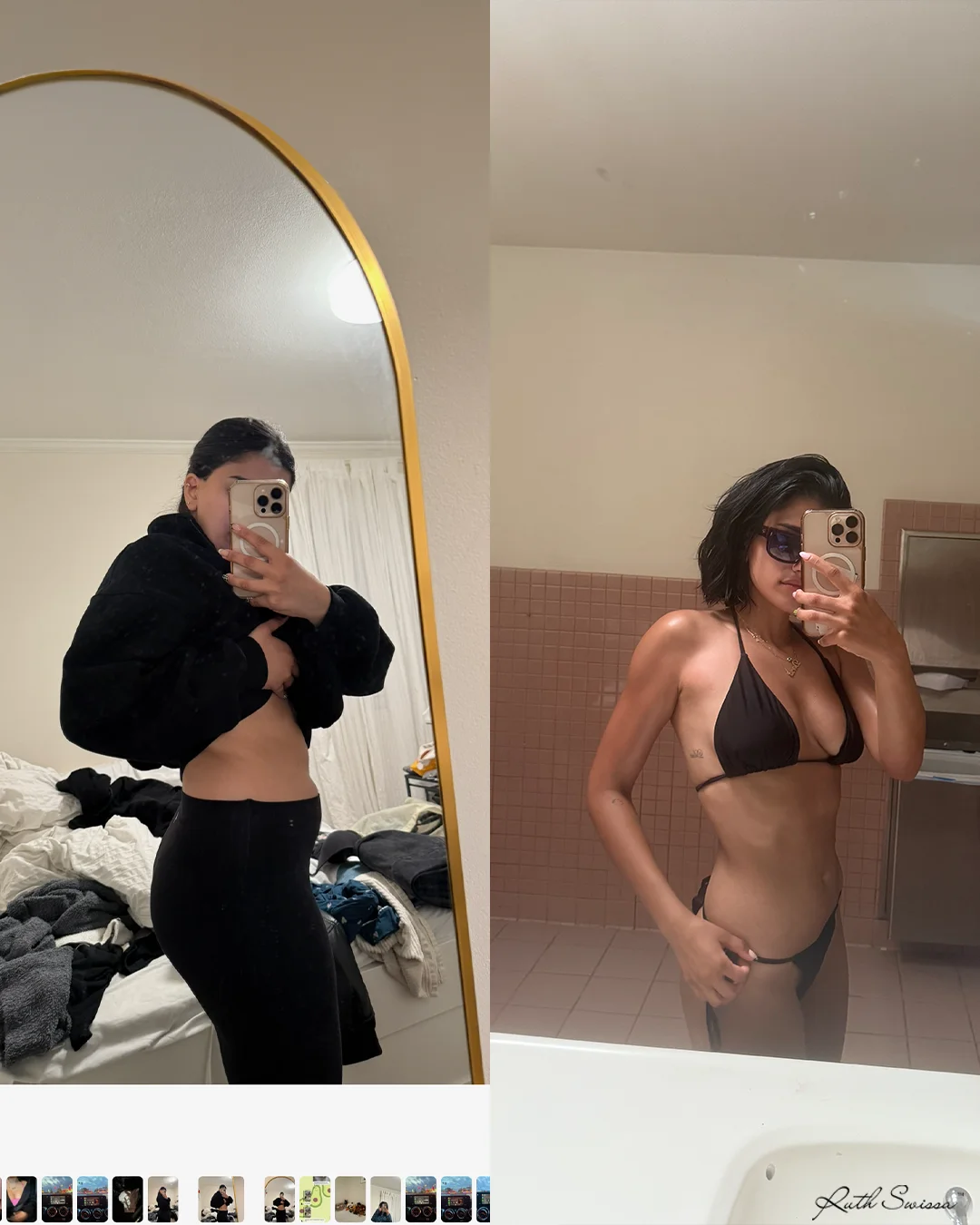
Photographs from the Ruth Swissa studio archive, shared with patient consent. Outcomes vary with baseline metabolic profile, adherence, and lifestyle factors reviewed at every check-in.
Where medical weight loss. glp-1 therapy under physician supervision is performed.
Our Beverly Hills satellite operates Wednesdays by appointment and performs injectables only. Lasers, regenerative protocols, medical weight loss and wellness are at our Calabasas studio.
Questions we get.
How much weight will I lose?
Trial averages are 15 percent of body weight for semaglutide and roughly 20 percent for tirzepatide over a year-plus of full-dose therapy. Individual results vary widely. We don't predict outcomes at the consultation — we set up the program and adjust based on response.
Are these safe long-term?
Semaglutide has over a decade of post-market data; tirzepatide's record is shorter but consistent with the class so far. We monitor labs and clinical status throughout therapy, and our GLP-1 side effects guide covers the long-term picture in depth.
Will my insurance cover this?
Wegovy and Zepbound — the weight-management indications — have inconsistent coverage that depends on plan, BMI, and comorbidities. Ozempic and Mounjaro are typically covered only for type 2 diabetes. We can help you understand your specific situation, but coverage isn't something we control.
Will the weight come back when I stop?
Often, yes — in part. Published data show meaningful regain in most patients within twelve months of discontinuation. The medication is a tool that creates a window for new habits. Patients who hold their results have generally rebuilt eating and movement patterns during the active phase.
Is this compounded medication?
We use FDA-approved branded products unless there's a specific clinical reason to consider an alternative. Compounded GLP-1 products carry meaningfully different regulatory and safety considerations, and we discuss those candidly when relevant.
What does it cost?
Pricing depends on the medication, the dose, and your coverage — our Ozempic cost guide walks the typical Los Angeles market ranges in detail. Our program pricing is discussed at consultation.
Continue.

Dosing schedule, week-by-week expectations, side-effect timeline, food strategies during titration, the Wegovy vs Ozempic distinction.

Dual-agonist GLP-1 + GIP mechanism, comparison with semaglutide, the Mounjaro vs Zepbound FDA-label distinction.

Semaglutide vs tirzepatide — mechanism, trial weight-loss percentages, side-effect profiles, cost, and how we choose between them.

Wegovy vs Ozempic — both are semaglutide. The FDA-label split, dose ceilings, insurance implications, and which fits weight management.
Schedule a consultation for medical weight loss. glp-1 therapy under physician supervision.
“… The spa is beautiful, and the staff is welcoming and professional.”