Tirzepatide (Mounjaro, Zepbound).
Dual-agonist GLP-1 + GIP mechanism, comparison with semaglutide, the Mounjaro vs Zepbound FDA-label distinction.

Tirzepatide is the molecule — a dual GLP-1 and GIP receptor agonist. Mounjaro is the brand name FDA-approved for type 2 diabetes; Zepbound is the same molecule, FDA-approved for chronic weight management. In head-to-head trials, tirzepatide produced greater average weight reduction than semaglutide. The molecule is newer; long-term safety data are still being collected.
GLP-1 plus GIP, and what that actually does.
Tirzepatide acts on two incretin pathways instead of one. GLP-1 is the well-known appetite-and-satiety lever. GIP — glucose-dependent insulinotropic polypeptide — is a second gut hormone with effects on insulin secretion and adipose tissue handling that, in isolation, are modest. Activated together, the two pathways appear to produce a greater effect than either alone.
In SURMOUNT-1, the registration trial for Zepbound, patients on the highest dose lost an average of roughly 21 percent of body weight over 72 weeks. In SURMOUNT-5, a direct head-to-head against semaglutide, tirzepatide produced about a 50 percent greater average weight reduction. These are trial averages, not individual predictions.
What this means in practice: tirzepatide is, on average, the more potent of the two molecules currently available. Whether that potency is right for a given patient depends on candidacy, tolerability, prior experience with semaglutide, and access.
Tirzepatide titration, weeks 1 to 24.
The dose ladder is gentler in slope than semaglutide but reaches a higher maximum. As with semaglutide, we titrate to effect, not to label maximum.
| Weeks | Dose | What to expect |
|---|---|---|
| 1 – 4 | 2.5 mg weekly | Starting dose. Sub-therapeutic. Appetite changes often noticed within days. |
| 5 – 8 | 5 mg weekly | First therapeutic dose. Many patients see meaningful response here. |
| 9 – 12 | 7.5 mg weekly | Optional next step if response or tolerability indicates. |
| 13 – 16 | 10 mg weekly | Common maintenance plateau for responsive patients. |
| 17 – 20 | 12.5 mg weekly | Continued titration if benefit and tolerance support it. |
| 21 – 24+ | 15 mg weekly | Label maximum. Held as maintenance when appropriate. |
How we choose between the two.
There is no universal right answer. The decision turns on several axes, and we talk through each at consultation.
| Track record | Semaglutide has more years on market and more accumulated long-term safety data. For patients who weigh safety record heavily, semaglutide remains the conservative choice. |
|---|---|
| Potency | Tirzepatide produces greater average weight reduction in trials. For patients with higher starting BMI or significant metabolic comorbidities, the greater potency may be the deciding factor. |
| Tolerability | Both can produce gastrointestinal side effects. Some patients tolerate one molecule better than the other. Prior intolerance to semaglutide is a reasonable indication to try tirzepatide, and vice versa. |
| Access and cost | Coverage varies by plan, indication, and brand. We work through what's actually available to you rather than recommending around insurance. |
What's similar, what's different.
The side-effect profile of tirzepatide overlaps substantially with semaglutide — nausea, early fullness, constipation, occasionally diarrhea or reflux, clustering around dose increases. The pattern of slower titration reducing symptoms holds here too — the tirzepatide side-effects guide walks the timeline week by week.
What's distinct is the relative incidence of certain effects in trials. Tirzepatide showed slightly higher rates of nausea and diarrhea, slightly lower rates of constipation. The clinical relevance of these differences is patient-specific, and we adjust based on how a given person is tolerating therapy rather than on trial averages.
The contraindication list is essentially the same as semaglutide: medullary thyroid carcinoma history, MEN-2, pancreatitis history, pregnancy. We screen for these at intake and recheck if circumstances change.
On switching"Switching from semaglutide to tirzepatide isn't a 1:1 dose conversion. We restart titration from a low dose, accept a few weeks of overlap-period side effects, and titrate up to a new equivalent."
- During pregnancy, breastfeeding, or attempts to conceive — effective contraception is required during therapy.
- Patients with personal or family history of medullary thyroid carcinoma or MEN-2.
- Patients with a history of pancreatitis.
- Patients with severe gastroparesis or other significant motility disorders.
- Patients with active eating-disordered behavior outside coordination with a treating clinician.
How much does tirzepatide cost in Los Angeles?
Tirzepatide (Mounjaro, Zepbound) in Los Angeles typically ranges from $350 to $1,200 per month, depending on dose, source, and insurance coverage. Branded cash-pay programs commonly land $800 to $1,200 at therapeutic doses. Compounded tirzepatide programs run lower, $350 to $600 per month, with the same sourcing and labeling tradeoffs that apply across the GLP-1 category.
What moves the monthly tirzepatide price.
Dose is the primary driver. Tirzepatide titrates from 2.5 mg through 15 mg weekly, and most programs price per month at the labeled dose. Patients in starter phase use less medication than patients at maintenance doses (10 mg, 12.5 mg, 15 mg). The per-month cost roughly doubles between the starter and full-dose phases of the titration ladder.
Source — branded versus compounded — is the most consequential variable. Manufactured Mounjaro and Zepbound carry full FDA-approved supply chain pricing. Compounded tirzepatide is available from 503A and 503B pharmacies at lower price points, but with sourcing, sterility, and labeling differences worth disclosing. The cost spread between branded and compounded is meaningful; the clinical tradeoff is real.
Insurance coverage shifts the math significantly. Mounjaro for type 2 diabetes is reasonably well covered in LA-region plans. Zepbound for chronic weight management is improving but plan-dependent. Patients with coverage often pay $25 to $200 per month with copay assistance; patients without coverage pay full cash price. We help patients understand their benefits before committing.
Program structure accounts for the rest. Programs including monthly visits, labs, dose-titration management, and side-effect support price higher than remote-only mail-order models. The clinical-oversight premium matters most during the first three to six months of titration, when side-effect management and dose adjustments are most active.
Typical Los Angeles tirzepatide ranges.
Per-month pricing including medication and program services. Insurance coverage, when applicable, can substantially reduce out-of-pocket cost.
| Variant | What's included | Typical LA range |
|---|---|---|
| Branded Mounjaro / Zepbound (cash pay) | FDA-approved manufactured drug, all doses, full pharmacy supply chain. | $800 – $1,200 per month |
| Branded with insurance coverage | Covered prescription with copay assistance, when plan includes GLP-1 therapy. | $25 – $200 per month |
| Compounded tirzepatide program | Compounded prep from a 503A or 503B pharmacy; lower price, additional tradeoffs. | $350 – $600 per month |
| Initial consultation + intake | Medical history, labs, candidacy assessment, contraindication screen. | $200 – $500 one-time |
| Monthly clinical visit | Dose titration, side-effect review, weight check; often bundled into program pricing. | $100 – $200 per visit |
Tirzepatide vs semaglutide vs surgical alternatives.
Semaglutide is the most direct comparison. LA cash-pay semaglutide programs run $300 to $1,000 per month — modestly below tirzepatide at comparable doses. The relevant tradeoff isn't just cost: tirzepatide produces roughly 50 percent greater average weight reduction in head-to-head trials. For patients evaluating cost-per-result, tirzepatide's higher monthly cost often delivers more change per dollar spent over a year.
Compounded versus branded is the within-category cost lever. The cash savings of compounded tirzepatide are real — typically $300 to $400 per month less than branded — but the tradeoffs in sourcing, labeling, and sometimes potency differ from the FDA-approved product. Patients should hear both sides before choosing.
Bariatric surgery — sleeve gastrectomy $15,000 to $20,000, gastric bypass $20,000 to $25,000 — is the major surgical alternative. For patients with significant obesity and metabolic comorbidities, surgery may produce greater long-term weight reduction at lower total cost than years of GLP-1 medication. Surgical and medical paths often complement each other; some patients use GLP-1 as a pre-surgical optimization tool.
Patients sometimes start on semaglutide for budget reasons and switch to tirzepatide after a year. The monthly cost increase is modest; the response increase is often meaningful. We discuss the switching decision openly when the time comes.
How we price tirzepatide programs.
Pricing at Swissa Med Spa is determined at consultation, where we discuss source options, candidacy, and program structure as part of the broader weight-loss program. The monthly program cost is shared in writing before initiation, with dose escalations included rather than billed as separate adjustments.
Supervised by Dr. Charles Peterson, board-certified physician with nearly a decade in aesthetic medicine.
Tirzepatide results.




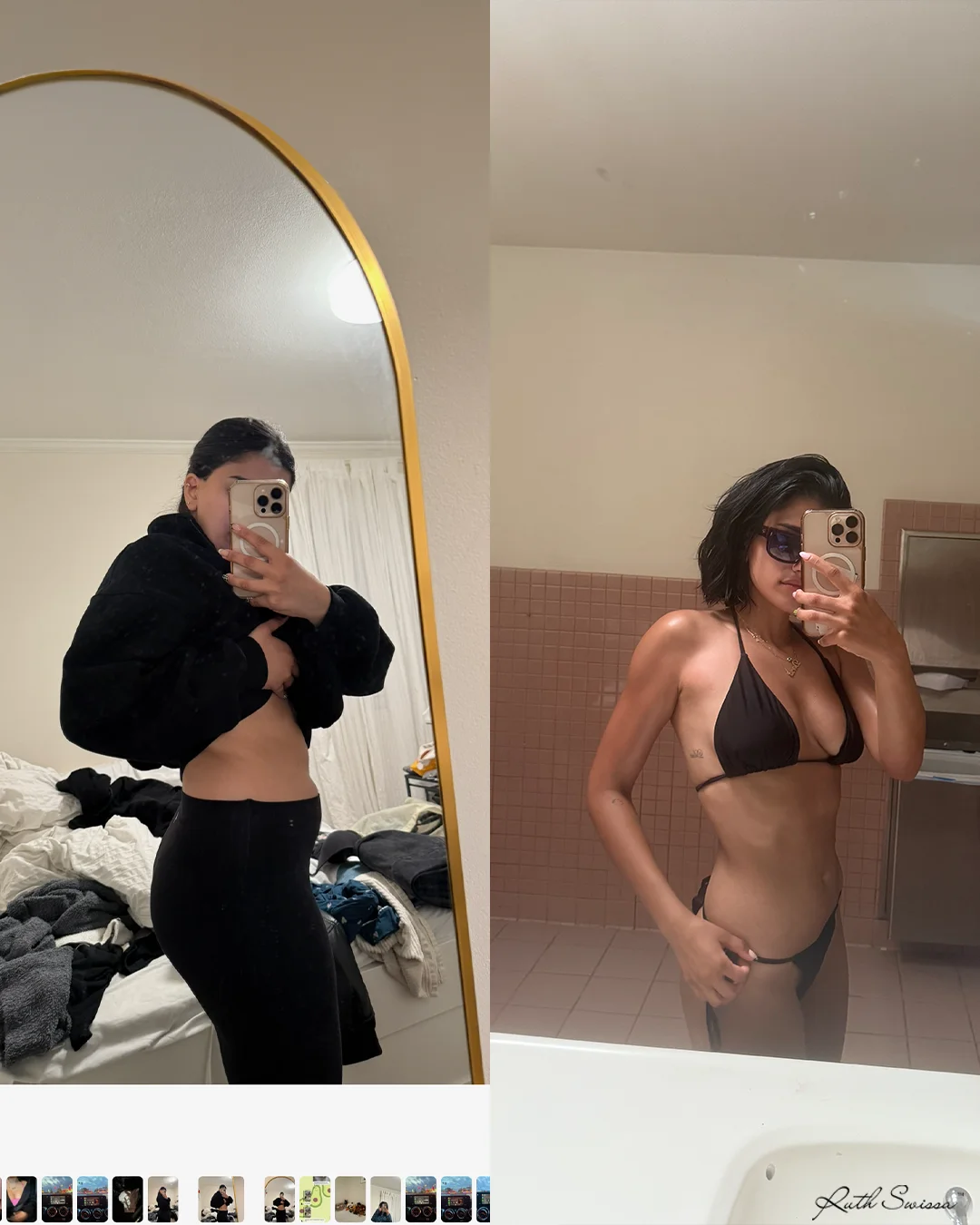
Photographs from the Ruth Swissa studio archive, shared with patient consent. Cases include both tirzepatide and semaglutide patients — the protocol is selected per-patient at intake.
Questions we get.
Is tirzepatide better than semaglutide?
On average, tirzepatide produces greater weight reduction in trials. 'Better' for an individual depends on tolerability, candidacy, prior experience, and access. We make the choice patient by patient.
Is it covered by insurance?
Mounjaro coverage for type 2 diabetes is reasonably common. Zepbound coverage for weight management is improving but inconsistent and plan-dependent. We can help you understand your specific situation.
How much does tirzepatide cost in Los Angeles?
Cash-pay branded tirzepatide (Mounjaro, Zepbound) in LA typically runs $800 to $1,200 per month at therapeutic doses. With insurance coverage, copays often range $25 to $200 per month. Compounded tirzepatide programs run $350 to $600 per month with additional sourcing tradeoffs.
Should I choose branded or compounded tirzepatide?
Cash savings on compounded tirzepatide are real — typically $300 to $400 per month less than branded. The tradeoffs in sourcing, labeling, and sometimes potency are also real. We discuss both options at consultation rather than recommending the cheaper path by default.
Can I switch from semaglutide to tirzepatide?
Yes, with a fresh titration. We don't do a 1:1 dose swap; we restart at the entry dose and titrate up. There's typically a window of overlap-period side effects to plan around.
How long is the safety record?
Tirzepatide was FDA-approved in 2022. The safety profile from registration trials and post-market surveillance to date is generally consistent with the GLP-1 class. Long-term data continue to accumulate.
Is tirzepatide more expensive than semaglutide?
Modestly, yes. Cash-pay tirzepatide programs in LA typically run $50 to $200 per month more than equivalent semaglutide programs at comparable doses. Tirzepatide produces about 50 percent greater average weight reduction in head-to-head trials, so the cost-per-result math often favors tirzepatide despite the higher monthly figure.
Continue.

GLP-1 mechanism, on-label vs off-label use, candidacy, side-effect management, what happens when you stop.

Dosing schedule, week-by-week expectations, side-effect timeline, food strategies during titration, the Wegovy vs Ozempic distinction.

Semaglutide vs tirzepatide — mechanism, trial weight-loss percentages, side-effect profiles, cost, and how we choose between them.

Mounjaro vs Zepbound — both are tirzepatide. The diabetes vs chronic-weight-management label split and what it means for access and cost.
Schedule a consultation for tirzepatide (mounjaro, zepbound).
“… The spa is beautiful, and the staff is welcoming and professional.”