Vampire Facial. Microneedling with PRP, for skin quality.
Blood-derived growth factors microneedled into skin. What it is, what it isn't, and how it differs from the broader regenerative menu.
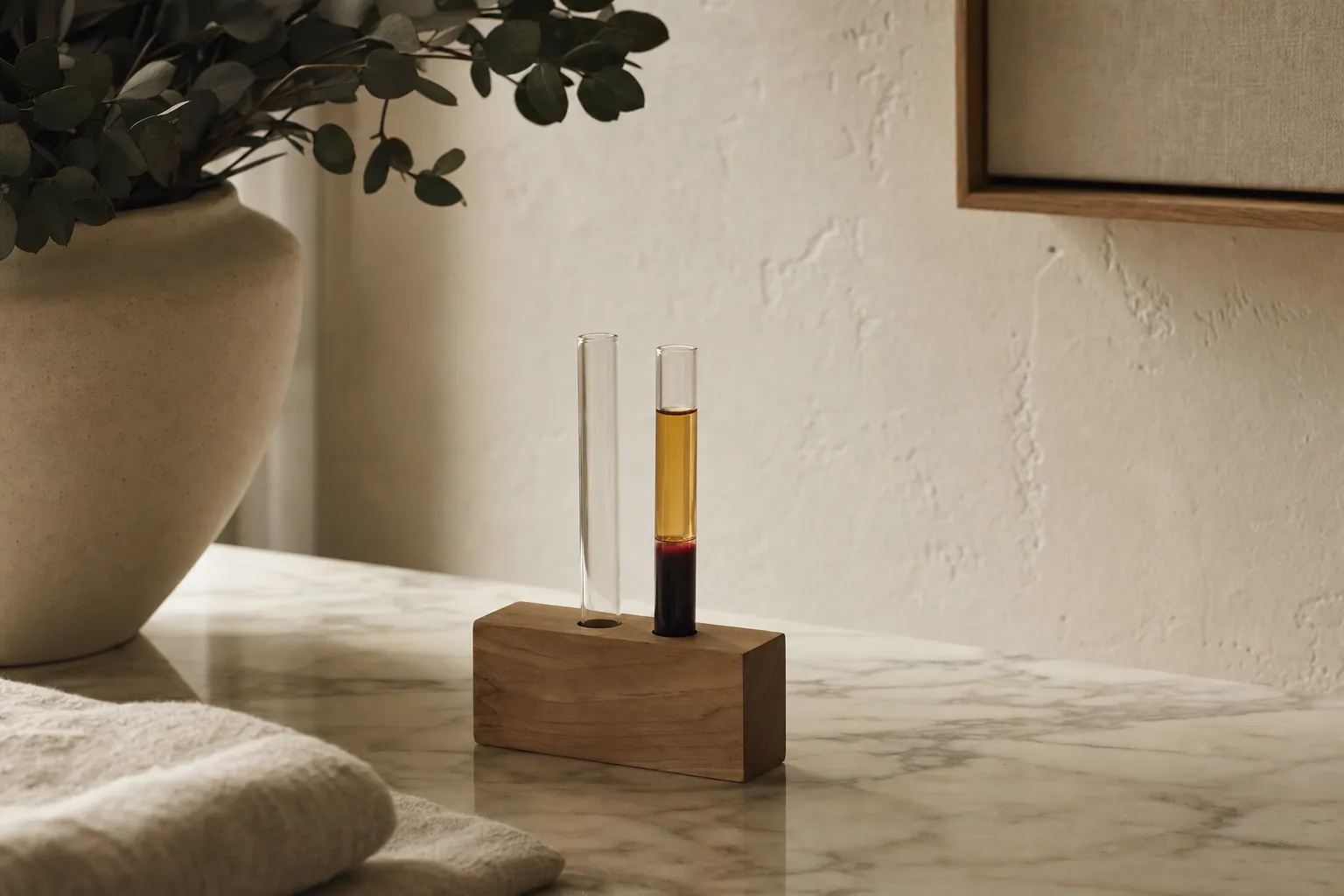
A trademark name for microneedling combined with platelet-rich plasma (PRP) drawn from the patient's own blood. The needling creates micro-channels in the skin; the PRP — concentrated growth factors from your own platelets — is applied to those channels while they're open. Same underlying treatment, dramatic branding. The real question isn't what it's called; it's whether PRP is the right add-on for what you're treating.
Vampire Facial is the brand. PRP microneedling is the treatment.
"Vampire Facial" entered the popular vocabulary because a celebrity posted a photograph of her face covered in her own blood. The name stuck. The actual treatment — microneedling with topical PRP — predates the branding by years and is performed across dermatology and aesthetic practices under several different names.
We use the term on this page because patients search for it, and because telling them the marketing name and the clinical name in the same sentence is more useful than picking one. What we're talking about is microneedling with PRP. Same SkinPen device, same depth, same protocol as our standard regenerative work — the choice that's specific to this page is PRP as the add-on.
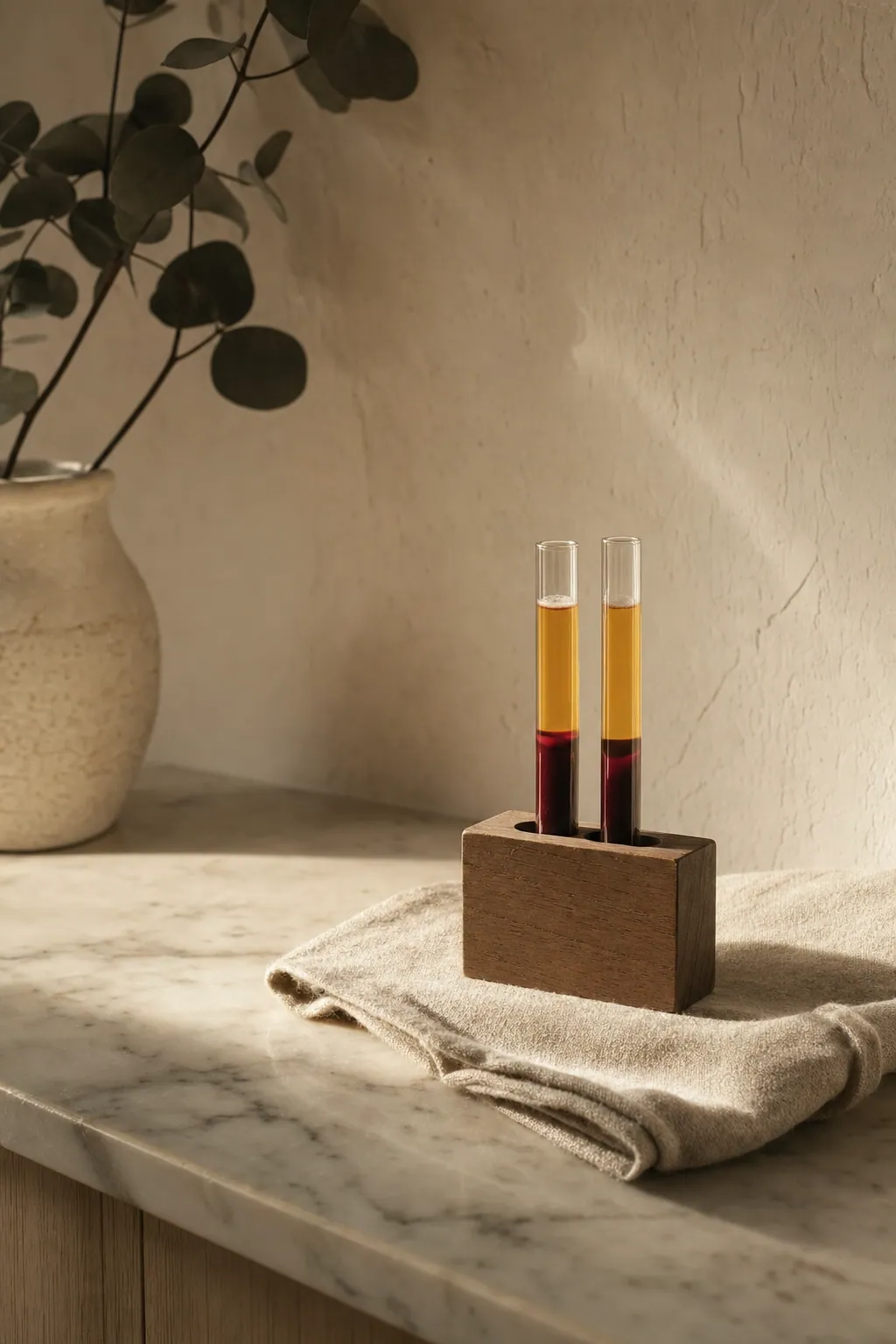
Your own blood, separated.
About 20 to 30 mL of blood is drawn from the arm at the start of the appointment. The blood goes into a sterile collection tube and is spun in a closed-system centrifuge for several minutes. The centrifugation separates the blood into three layers: red cells at the bottom, plasma at the top, and a thin buffy coat of platelets and white cells in between.
The PRP is the platelet-rich layer drawn off carefully. When platelets are activated — by contact with collagen exposed in a needling channel, for example — they degranulate and release a cascade of growth factors: PDGF, TGF-β, VEGF, EGF, IGF. These are the same signaling molecules the body uses to coordinate wound healing in any tissue.
Because the PRP is autologous — from your own body — there's no allergy risk and no risk of immune reaction. It's one of the more conservative regenerative tools for that reason alone.
On scope"PRP is one good add-on for one good indication. It isn't the strongest tool for every problem skin can present."
What this page isn't.
The Vampire Facial is a single combination — microneedling with PRP, full stop. Our broader regenerative microneedling page at /services/regenerative-microneedling/ covers the full menu: exosomes, PRP, PRF, polynucleotides (PDRN), and copper peptide (GHK-Cu). PRP is one of those five, and for some indications it's the right one. For others, it isn't. The SkinPen device, microneedling with exosomes, and the peptide add-ons each now carry their own page-depth guides — linked below — for patients comparing the alternatives.
Patients who arrive asking specifically for a Vampire Facial often want PRP because they've heard of it. We treat that as a starting point for a conversation, not a closed decision. If you've researched PRP and it's what you want, we'll run it. If you came in for "Vampire Facial" and we think PDRN or PRF would do more for your specific indication, we'll say so.
How a session goes.
- 01
Consultation and chart review.
We confirm what you're treating, review your history (anticoagulants, recent illness, current medications), and confirm you're hydrated. PRP yield is meaningfully affected by hydration status the day of treatment.
- 02
Blood draw.
20 to 30 mL drawn from the arm into a closed-system collection tube. Standard venipuncture; takes a few minutes. The tube goes directly into the centrifuge.
- 03
Centrifugation while you numb.
The PRP spins for 10 to 15 minutes. During that window, topical lidocaine is applied to your face and given time to take effect.
- 04
Needling pass with PRP applied.
The PRP is dispensed onto the treatment area and the SkinPen is moved across the skin in overlapping passes. The platelet-rich plasma is driven into the channels as they open. Mid-treatment, additional PRP is applied to keep the skin saturated.
- 05
Sealing layer and aftercare.
A final layer of PRP is left on the skin and not washed off. The skin remains flushed and faintly streaked for the rest of the day. You're asked not to wash your face for 6 hours. Bruising at the blood-draw site is common and resolves within a week.
What three sessions of PRP-needling actually do.
Across three sessions spaced four to six weeks apart, most patients see a meaningful improvement in skin quality — better tone, finer texture, softer fine lines, and a measurable refresh in patients who'd describe their main complaint as "my skin looks tired." Acne scars improve modestly. Patients with mild laxity see firmness improvement but not lifting.
What PRP-needling doesn't do well: it doesn't replace neurotoxin for dynamic lines, it doesn't replace filler for volume loss, and it doesn't reliably treat melasma or stubborn pigment. The growth-factor cocktail is good at signaling "heal better"; it isn't a substitute for treatments that target specific structural problems.
Maintenance after the initial three is typically once or twice a year. Some patients combine ongoing PRP sessions with rotating add-ons (e.g. PDRN for one cycle, PRP for the next) — discussed at consultation.
- Patients on full-dose anticoagulation without explicit clearance from the prescribing physician.
- Active bloodborne infection or systemic illness affecting platelet function.
- Patients within 6 months of isotretinoin (Accutane).
- Active acne in inflamed pustular phase — the acne is treated first.
- During pregnancy or breastfeeding (precautionary).
- Patients with severe needle aversion who don't anticipate tolerating the blood draw.
How much does a Vampire Facial cost in Los Angeles?
A Vampire Facial — microneedling with PRP — in Los Angeles typically ranges from $600 to $1,500 per session, depending on treatment area, injector experience, and location within the metro. Most plans run three sessions four to six weeks apart, with three-session packages between $1,800 and $4,200 total. Maintenance is generally once or twice a year after the initial series.
What drives Vampire Facial pricing.
Treatment area is the primary driver. Full face sits at the upper end of the range. Face plus neck and décolleté scales higher because more product volume and longer chair time. Targeted single-zone work — focal scarring, a small post-inflammatory pigment patch — runs lower per session, though multiple visits may be needed for cumulative effect.
PRP preparation matters more than patients assume. Single-spin protocols are faster and cheaper for the clinic; double-spin protocols produce more concentrated platelets and cost more in chair time. Clinics that publish their protocol typically sit at the upper end of the price range, and the premium reflects genuine outcome differences.
Injector experience is the next lever. Microneedling with PRP looks straightforward but isn't — needle depth, pass density, PRP application sequencing, and post-treatment guidance all affect the result. A practice with a long PRP track record will price above a chain med-spa that's added PRP as a checkbox upsell. The cheaper session often means a less concentrated draw and a shorter pass.
Location within LA is the final factor. Beverly Hills and West Hollywood sit at the top of the Vampire Facial market. Calabasas and the Valley generally below for comparable expertise. The branded marketing name can also add to the price; identical PRP-microneedling at one clinic may cost more than at another simply because of how it's advertised.
Typical Los Angeles Vampire Facial ranges.
Per-session pricing for PRP-microneedling across LA. Package pricing for the standard three-session protocol typically discounts the per-session rate.
| Variant | What's included | Typical LA range |
|---|---|---|
| Vampire Facial (face) | Standard PRP-microneedling session on the face, with blood draw and in-house spin. | $600 – $1,200 per session |
| Vampire Facial (face + neck) | Full face plus neck, larger area, longer pass and additional product. | $900 – $1,500 per session |
| Three-session protocol | Standard cadence — three sessions four to six weeks apart, single add-on category. | $1,800 – $4,200 total |
| Vampire Facelift (PRP + filler) | Microneedling with PRP combined with HA filler at the same visit; different procedure than the facial. | $1,500 – $3,500 per session |
| Under-eye PRF | Periorbital PRF placement in the tear trough, often paired with surface needling. | $1,200 – $1,500 per session |
Vampire Facial vs exosome microneedling vs PRF.
Exosome microneedling sits above PRP in cost — typically $1,200 to $1,500 per session — because the signaling vesicles are externally sourced from a manufacturer rather than drawn from your own blood. Per session, exosomes carry a heavier biologic load; per dollar, PRP usually carries the work for routine skin-quality goals.
PRF (platelet-rich fibrin) microneedling is a close sibling of PRP at a small premium. Same blood draw, slower spin, longer-release fibrin matrix. Patients who want a longer-acting growth-factor delivery often pay an extra $100 to $200 per session for PRF over PRP — small money for a clinically meaningful difference in some indications.
Plain SkinPen microneedling without any add-on runs $300 to $500 per session in LA — roughly half the cost of a Vampire Facial. For patients with healthy skin chasing texture maintenance, plain needling is often sufficient and the better value. The PRP premium is justified when the skin is asking for more biologic signal than the wound response alone provides.
The Vampire Facelift — PRP combined with HA filler in the same visit — is a different procedure at a higher price point, typically $1,500 to $3,500. The needling addresses skin quality; the filler addresses volume. Patients sometimes confuse the two; the consultation distinguishes them.
How we price Vampire Facial treatment.
Pricing at Swissa Med Spa is determined at consultation, where we discuss the area, your PRP draw, and the recommended series length. A written plan with line-item per-session and package totals is shared before booking — we don't charge a premium for the marketing name over the same procedure described clinically.
Performed by Orr Swissa-Amran, PA-C, board-certified Physician Associate, internationally trained in hair restoration and aesthetic medicine.
Where vampire facial. microneedling with prp, for skin quality is performed.
Our Beverly Hills satellite operates Wednesdays by appointment and performs injectables only. Lasers, regenerative protocols, medical weight loss and wellness are at our Calabasas studio.
Questions we get.
Why is it called a Vampire Facial?
Marketing. A celebrity post in the early 2010s coined the term because of the visual — your own blood, briefly visible on your face during the treatment. The clinical name is microneedling with PRP.
Will I bruise?
A small bruise at the blood-draw site is common and resolves within a week. Pinpoint bruising on the treated face is possible, more common in patients on aspirin or fish oil. Plan around photographed events.
Is PRP the same as PRF?
Related but not identical. PRF (platelet-rich fibrin) is spun at lower speed without anticoagulant and includes a fibrin scaffold that releases growth factors over days rather than minutes. We offer both. PRF is discussed on the broader regenerative microneedling page.
How much does a Vampire Facial cost in Los Angeles?
Per session in LA, the Vampire Facial typically runs $600 to $1,500 depending on area and injector. A three-session protocol totals $1,800 to $4,200. The Vampire Facelift — PRP combined with filler — is a separate procedure at $1,500 to $3,500 per session.
Why do some clinics charge more for a Vampire Facial than for microneedling with PRP?
Branding. The procedure is identical. Clinics that lead with the marketing name sometimes price above clinics describing the same work clinically. We don't add a premium for the name.
Is it actually different from regular microneedling?
Same needling device and depth; what differs is the topical applied during the session. Standard microneedling relies on the wound response alone. Vampire Facial adds your own platelet-derived growth factors into the open channels for a stronger biological signal.
How long does the result last?
The collagen and quality changes are gradual and durable — once they're in place, they age forward with your skin rather than reverting in months. Maintenance is typically once or twice a year after an initial series of three.
What if I want exosomes or PDRN instead?
Those are on the same menu, run on the same device, in the same room. See /services/regenerative-microneedling/ for the full add-on comparison.
Is the Vampire Facial worth the cost over plain microneedling?
For patients chasing skin-quality signal beyond what the wound response alone provides, yes. Plain SkinPen runs $300 to $500 per session — roughly half the cost. For routine texture maintenance on healthy skin, plain needling is often sufficient. For tired, photoaged, or texturally compromised skin, the PRP premium is justifiable.
Continue.

Microneedling layered with growth factors, exosomes, PDRN or copper peptide. What each add-on does, what it costs you in downtime.
Microneedling with exosomes — extracellular vesicles applied into SkinPen channels. What the evidence shows, how it compares with PRP.
PDRN polynucleotides and GHK-Cu copper peptide as SkinPen add-ons — salmon-DNA-derived tissue regeneration, where each fits, evidence base.
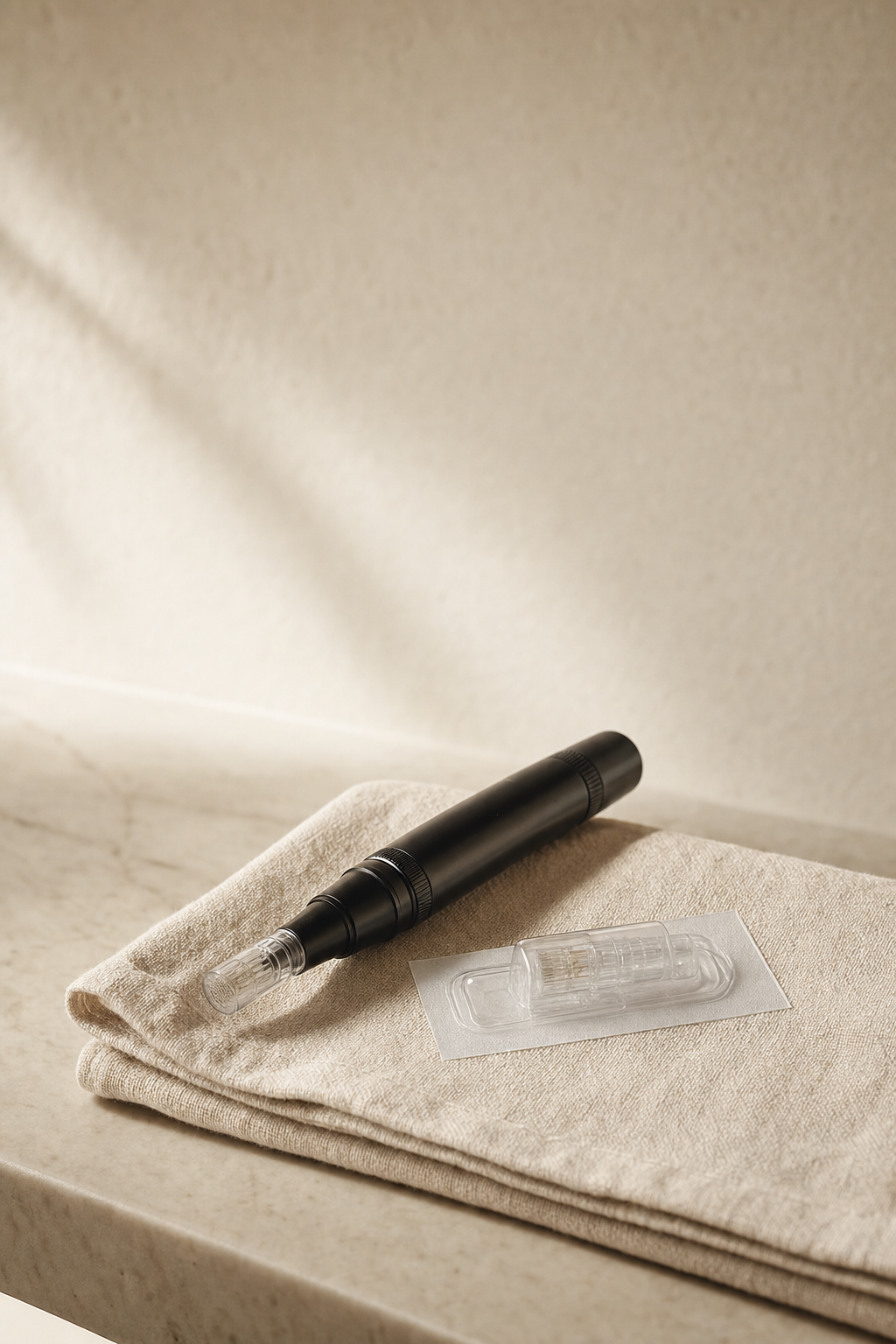
SkinPen — the FDA-cleared microneedling device we run. Depth control, single-use cartridges, the 3-session cadence, and the add-on stack.
Schedule a consultation for vampire facial. microneedling with prp, for skin quality.
“They're truly my one-stop shop for everything beauty and skincare. The entire team is so knowledgeable, honest, and always ready to help…”