Dermal fillers. Juvéderm, RHA, Restylane, Belotero, Skinvive.
Five filler families, where each one belongs, hyaluronidase if you need it dissolved, and the difference between filling and stimulating.
FDA-approved hyaluronic acid gels injected beneath the skin to restore volume, redefine contour, or soften static lines. Five product families are commonly used — Juvéderm, RHA, Restylane, Belotero and Skinvive. Same molecule, different rheology; the one that fits depends on the area, the depth, and the tissue.
What hyaluronic acid filler does, and what it doesn't.
Hyaluronic acid is a sugar molecule already present in your skin. The filler versions are cross-linked gels that hold their shape under tissue tension — placed in the right plane, in the right amount, they restore volume that has been lost or define a contour that has softened.
What filler doesn't do is lift sagging skin, treat fine surface texture, or substitute for muscle relaxation. A patient who wants their jawline tightened doesn't necessarily want filler; a patient with deep static frown lines won't get the result they want from filler alone. Picking the right tool is most of the work.
Hyaluronic acid is also reversible, which is the underrated reason we work in this family by default. If the placement isn't right, or the patient changes their mind a month later, the product can be dissolved with hyaluronidase in a single visit.
Five families. Different gels for different jobs.
We carry the five FDA-approved HA filler lines used in serious aesthetic practice. The product is chosen for the tissue — its lift capacity, its softness, how it integrates — not for the brand on the box.
| JuvédermAllergan · Voluma, Vollure, Volbella, Ultra, Ultra Plus | The most widely used family. Voluma is a high-lift gel built for the deep cheek and chin. Volbella sits at the soft end for fine lip lines and tear trough. Vollure and Ultra fill the middle. Predictable, well-studied, our default for cheek and chin volumization. |
|---|---|
| RHARevance · RHA 2, 3, 4 | Resilient HA — engineered to behave more like native tissue under dynamic movement. We reach for RHA 3 and RHA 4 around the mouth and lower face where animation is constant; the product moves with the muscle rather than against it. |
| RestylaneGalderma · Defyne, Refyne, Lyft, Kysse, Eyelight, Silk | A broad family with distinct gels for distinct anatomy. Defyne and Refyne are our workhorses for nasolabial folds and marionette lines. Lyft has lift for the cheek. Eyelight is built for the under-eye. Kysse and Silk are dedicated lip products. |
| BeloteroMerz | A softer, more cohesive gel that integrates into superficial planes without the Tyndall effect that ruins thin-skin areas. The product we use when a fine line needs filling close to the surface — peri-oral lines, fine cheek crepe. |
| SkinviveAllergan · microdroplet HA | Not a contour filler. Skinvive is microdroplet hyaluronic acid placed in the dermis to improve skin smoothness and hydration over weeks. It doesn't add volume; it changes how the skin reads. Discussed for patients whose concern is quality, not shape. |
Anatomy first, product second.
Cheek and midface: deep, structural gels placed on bone — Voluma or Lyft. The goal is to restore the projection that age has flattened, not to add volume to a face that already has it. Covered at page depth in our cheek filler guide.
Tear trough and under-eye: thin skin, demanding territory. Volbella, Restylane Eyelight, or Belotero placed conservatively. This is the area where overcorrection is most visible and where we most often choose to do less than the patient asks for — our under-eye filler guide covers the candidacy questions in full.
Lips and peri-oral: covered in detail on our lip filler page. RHA, Kysse, Volbella are the common picks.
Jawline and chin: structural projection with Voluma or RHA 4. A defined jaw is one of the most consistently effective non-surgical changes when the underlying anatomy supports it. Our jawline and chin filler guide covers both jobs at page depth.
Nasolabial and marionette lines: Restylane Defyne or Refyne, often paired with mid-face work because filling the fold without addressing the cheek that's collapsing into it is a short-term answer.
On choosing"We pick the product for the tissue, not the tissue for the product. A patient who needs three syringes in three different gels gets three different gels."
How a session goes.
- 01
Consultation and chart review.
We review your goals, medical history, prior filler, current medications and supplements. Aspirin, fish oil, and certain herbal supplements increase bruising risk and are discussed.
- 02
Mapping.
Injection points are marked while you sit upright — gravity matters in the face, and a plan made supine doesn't always survive standing. Symmetry is assessed against your resting position, not a mirror image.
- 03
Numbing and injection.
Topical numbing for surface comfort; most HA products contain lidocaine for in-product anesthesia. Cannula or needle, depending on area and depth. The injection portion is 20 to 40 minutes.
- 04
Settling.
You will see the placement immediately. Swelling peaks at 24 to 72 hours and resolves over the first week. The product fully settles into tissue at two weeks — which is when we assess the result, not before.
- 05
Two-week follow-up.
We see you back at two weeks. Most patients are finished at the first visit; some need a small adjustment. Conservatism here is a feature.
Hyaluronidase, and the case for reversibility.
HA filler is reversible. Hyaluronidase is an enzyme that breaks down the cross-linking and allows the body to clear the gel within hours to days. We use it routinely for patients who change their mind, for patients who were treated elsewhere with results they want dissolved, and rarely as an urgent measure for vascular complications.
Reversibility is part of why we work in HA by default. A semi-permanent or biostimulating product places a different bet — it builds tissue you can't easily un-build. For some patients and some anatomy that's the correct choice. For first-time filler, in most areas, on most faces, hyaluronidase being available changes the math.
Two different bets.
Dermal filler adds volume the day it goes in. The result is the result, and it's reversible. Biostimulators — Sculptra, Radiesse, the regenerative protocols — don't fill in the same way; they prompt your own collagen to build over months. They aren't dissolvable, and the timeline is slower, but the change is your tissue, not a gel.
We frequently combine them. A face that needs both lift and texture might receive Voluma in the cheek for structural lift, plus a Sculptra series over the cheek and temple for collagen rebuild. The pillar page on biostimulators covers when stimulation is the right bet.
- During pregnancy or breastfeeding.
- Active skin infection or active cold sore at the treatment site.
- Patients on anticoagulation without prescribing physician coordination.
- Patients seeking a result the anatomy can't support. We say no when the right answer is surgical.
How much does dermal filler cost in Los Angeles?
Dermal filler in Los Angeles typically ranges from $500 to $950 per syringe, with most treatments requiring one to three syringes depending on the area and goal. Cheek augmentation typically runs $850 to $1,700; jawline contouring $950 to $1,900; chin shaping $700 to $800. Pricing varies by injector experience, filler family, treatment area, and location within LA.
What moves the per-syringe and per-treatment price.
Syringe count is the dominant cost lever. Filler is dosed in milliliters, and what your face needs is a clinical question that can't be answered from a menu. A first-time patient seeking subtle midface support might need a single syringe; a patient restoring volume after weight loss might need three across multiple appointments. The per-syringe price is just the unit cost.
Filler family matters. Hyaluronic acid fillers — the Juvederm Vycross collection (Volbella, Vollure, Voluma) and the Restylane family — cluster within a narrow band. Specialty products like RHA's slow-cross-linked HA price slightly above. Calcium hydroxyapatite (Radiesse) and poly-L-lactic acid (Sculptra) are not dissolvable, last longer, and price as treatment plans rather than per-syringe.
Injector expertise sets the upper bound. Filler placement requires anatomical knowledge that goes well beyond the syringe — vascular maps differ patient to patient, and the consequences of a misplaced injection can be serious. A practice with physician oversight and a long injection history will sit at the top of the per-syringe range. The premium isn't decorative; it's underwriting safety.
Location within LA is the last factor. Beverly Hills and West Hollywood addresses run at the upper end of the syringe-priced market. Calabasas and the broader San Fernando Valley generally come in below for comparable expertise. The real-estate spread typically explains most of the difference between two otherwise comparable clinics.
Typical Los Angeles ranges by area.
Per-treatment ranges assume HA filler from major manufacturers. Biostimulators (Radiesse, Sculptra) are quoted as treatment plans on a separate page.
| Variant | What's included | Typical LA range |
|---|---|---|
| Per syringe (any HA family) | Juvederm, Restylane, RHA, Belotero — single syringe of hyaluronic acid filler. | $500 – $950 per syringe |
| Cheek filler | Midface support, typically 1 – 2 syringes of structural HA (Voluma, Lyft, RHA 4). | $850 – $1,700 |
| Jawline filler | Contour definition along the mandibular border, typically 2 – 3 syringes. | $950 – $1,900 |
| Chin filler | Forward projection or vertical lengthening, typically 1 syringe. | $700 – $800 |
| Lip filler | Volume, shape, or border definition, typically 1 syringe of Volbella or Restylane Kysse. | $500 – $1,000 |
| Filler dissolving | Hyaluronidase to dissolve unwanted or migrated HA filler. | $250 – $300 per session |
HA filler vs biostimulators vs facial balancing.
Hyaluronic acid filler adds volume directly. The result is immediate, the product is dissolvable if needed, and duration runs nine to twenty-four months depending on family and area. For patients addressing a specific contour — a flat cheek, a recessed chin, asymmetric lips — HA is usually the right tool. The per-syringe price reflects the immediacy.
Biostimulators — Radiesse ($1,000 – $2,000 per treatment) and Sculptra ($850 – $1,700 per treatment plan) — work differently. They don't fill on the day of injection; they stimulate your own collagen production over months. Per-treatment cost is higher upfront, but the result is structural and longer-lasting. For patients restoring lost volume across a face rather than filling a discrete area, biostimulators often deliver more for the money.
Facial balancing is the multi-product approach: HA filler, biostimulator, and neurotoxin combined across a planned arc. Starting around $1,000+, it scales with the plan. Patients addressing several areas at once typically pay less in a balancing plan than they would assembling the same treatments à la carte across separate visits.
For patients uncertain about whether they want commitment, HA filler is the conservative entry — dissolvable, reversible, shorter-lived. Patients confident in the plan and looking for the most efficient use of budget across a face typically prefer balancing.
How we price filler treatment.
Pricing at Swissa Med Spa is determined at consultation, where we map syringe count to anatomy and goals. The syringe count and total are confirmed in writing before injection — we won't quote per-syringe pricing in advance of seeing what your face actually needs.
Local patients can find studio directions, parking notes, and visit details on our dermal fillers in Calabasas page.
Performed by Orr Swissa-Amran, PA-C, board-certified Physician Associate, internationally trained in hair restoration and aesthetic medicine.
Jawline filler results.
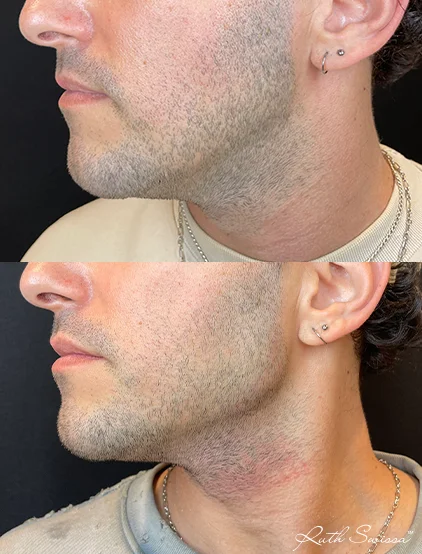
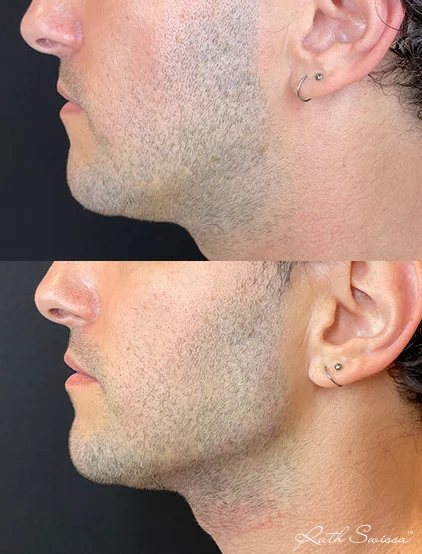
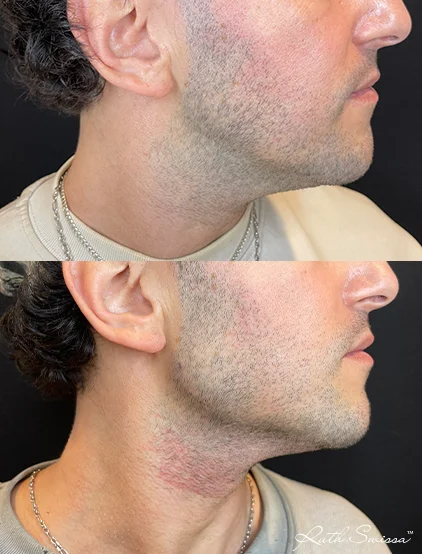
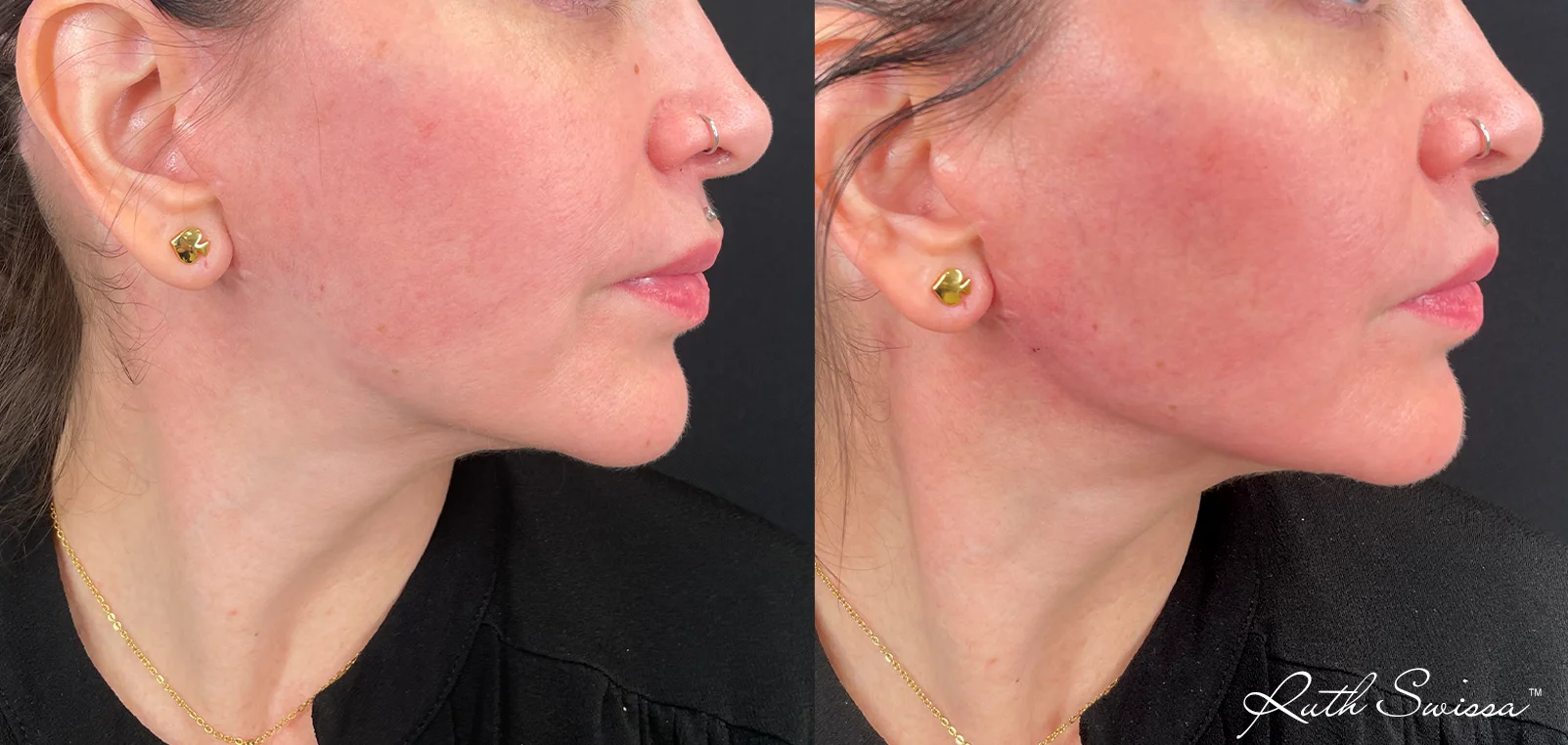
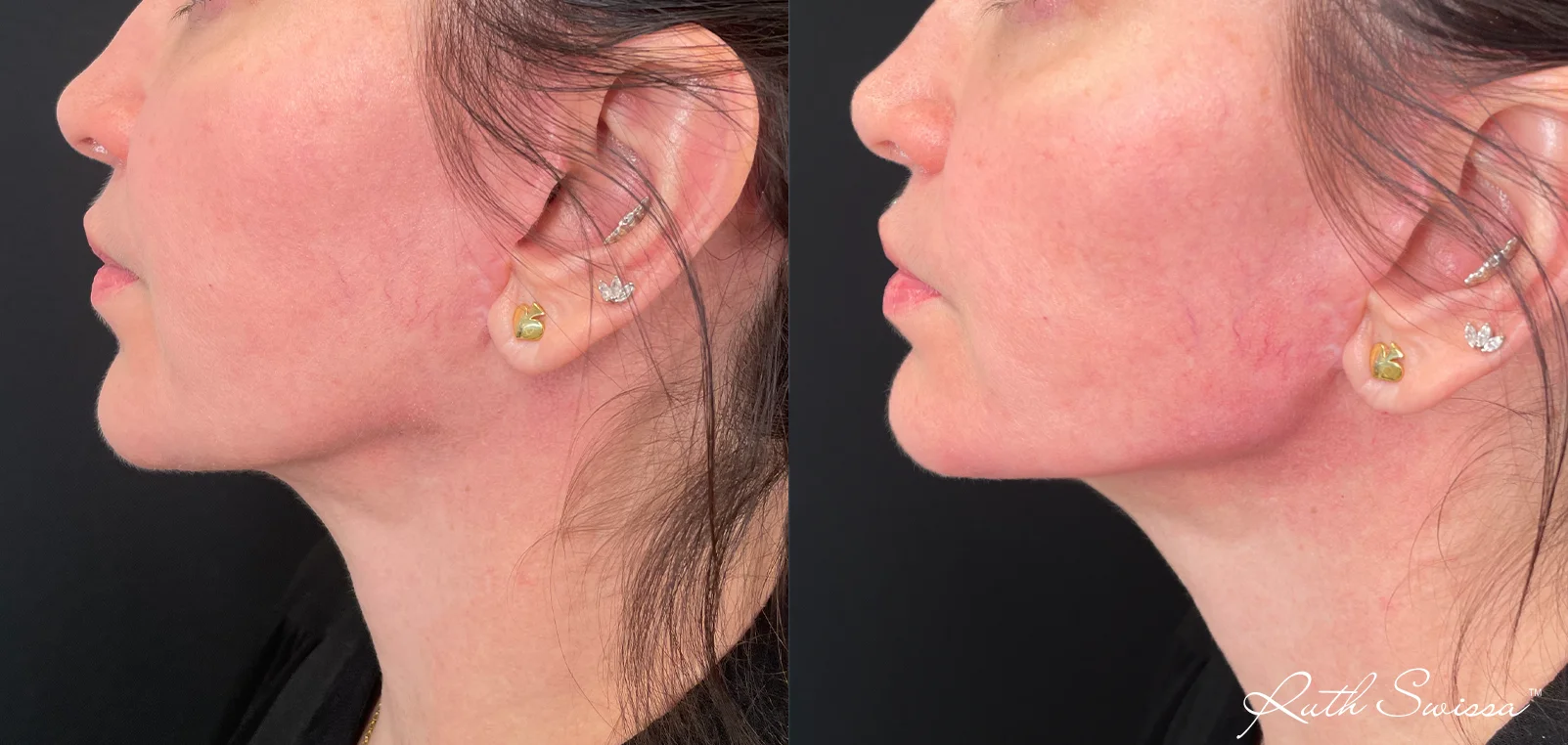
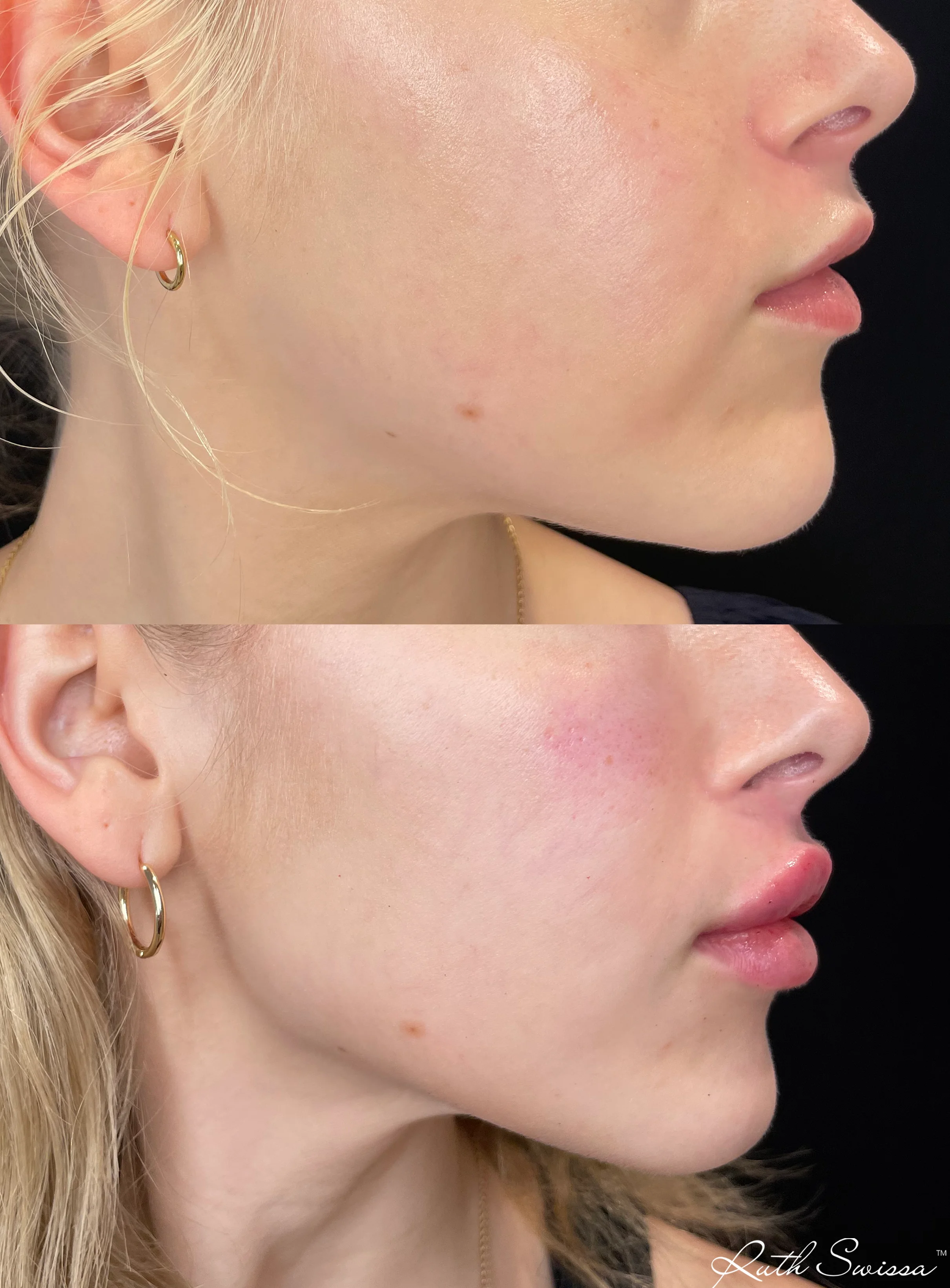
Photographs from the Ruth Swissa studio archive, shared with patient consent. Jawline cases are a representative subset of the broader filler menu.
Where dermal fillers. juvéderm, rha, restylane, belotero, skinvive is performed.
Our Beverly Hills satellite operates Wednesdays by appointment and performs injectables only. Lasers, regenerative protocols, medical weight loss and wellness are at our Calabasas studio.
Questions we get.
How long does dermal filler last?
By family: Volbella around the lips lasts 9 to 12 months; Voluma in the cheek can last 18 to 24. Restylane Defyne in the fold is closer to 12. Duration depends as much on the area and the patient's metabolism as on the product itself.
What is the downtime?
Swelling for one to three days, possible bruising for up to a week, particularly around the lips and tear trough. Avoid significant exercise, alcohol, and saunas for 24 hours.
How much does dermal filler cost in Los Angeles?
Per-syringe HA filler in LA generally runs $500 to $950. Cheek augmentation typically costs $850 to $1,700; jawline $950 to $1,900; chin $700 to $800; lips $500 to $1,000. Total cost depends on syringe count and product family, both decided at consultation.
Will I look overdone?
Only if dosed that way. Our default is to use the smallest amount that produces the result, see you back at two weeks, and add if needed. We would rather under-correct on visit one than rebuild an over-filled face.
Is dissolving the filler expensive?
Hyaluronidase to dissolve HA filler runs roughly $250 to $300 per session in LA. It's a same-day procedure, and the dissolved filler clears within 24 to 48 hours. Non-HA fillers like Radiesse and Sculptra are not dissolvable.
Does it hurt?
Most patients describe a brief pressure and sting at each injection. Topical numbing and the in-product lidocaine handle the bulk of it. Lips and tear trough are the more sensitive areas.
Can filler be dissolved if I don't like it?
Yes, when the product is hyaluronic acid. Hyaluronidase typically clears the area within 24 to 48 hours. Non-HA products — Sculptra, Radiesse — are not dissolvable; we discuss that distinction before treatment.
Why is filler priced per syringe rather than per area?
Because what your anatomy needs is a clinical decision, not a menu item. Two patients seeking the same goal can require different syringe counts of different products. Per-syringe pricing keeps the math transparent — what you pay reflects what was injected, not the area name.
How does filler cost compare to biostimulators?
Per-treatment, HA filler costs less upfront and acts immediately. Biostimulators like Radiesse and Sculptra cost more per treatment but produce gradual, longer-lasting structural change. For patients restoring volume across a face rather than a single area, biostimulators often deliver more value per dollar.
Continue.
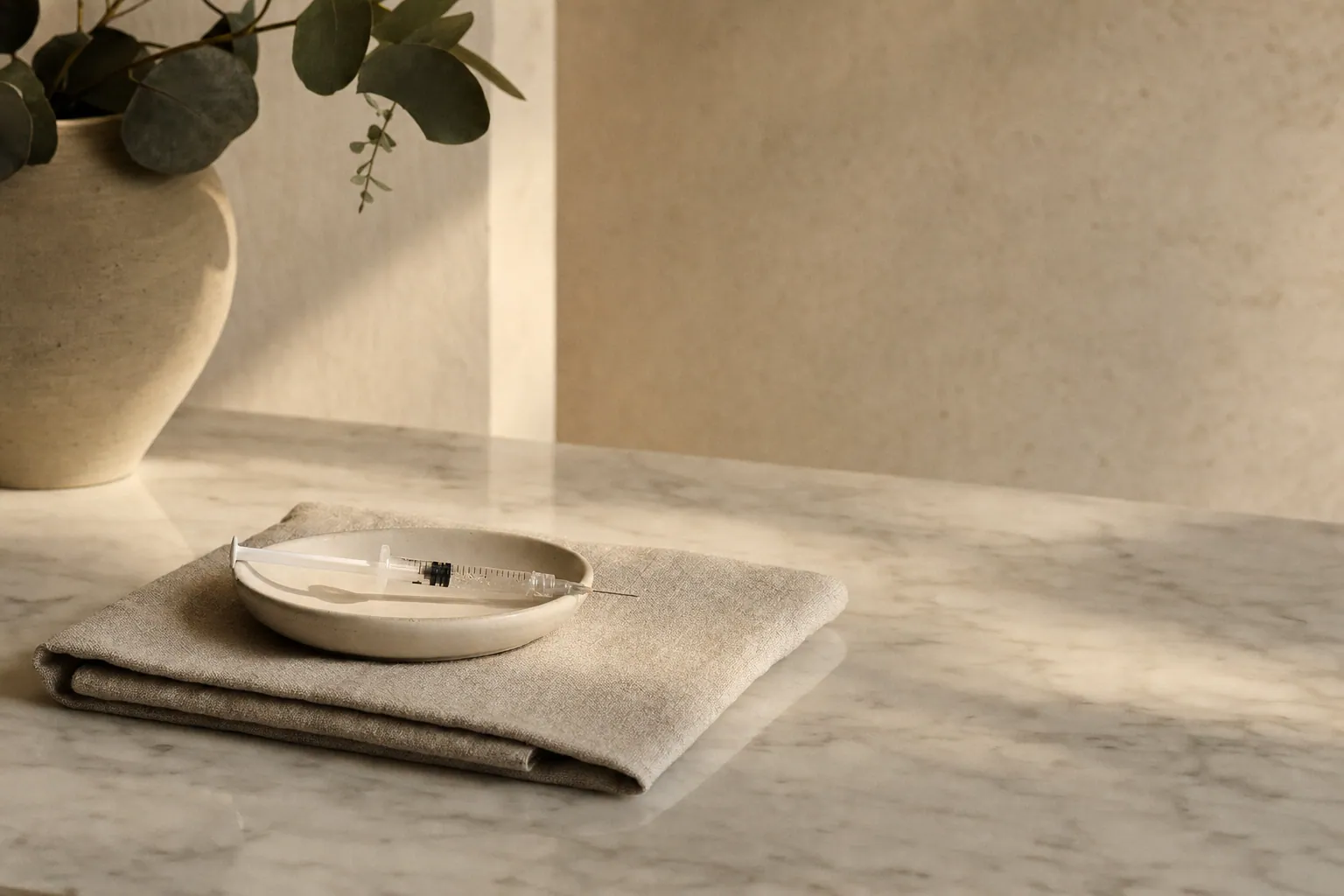
Volbella, Kysse, RHA. Half-syringe and full-syringe results, an honest natural-vs-overfilled framing, and dissolution if you ever want it gone.
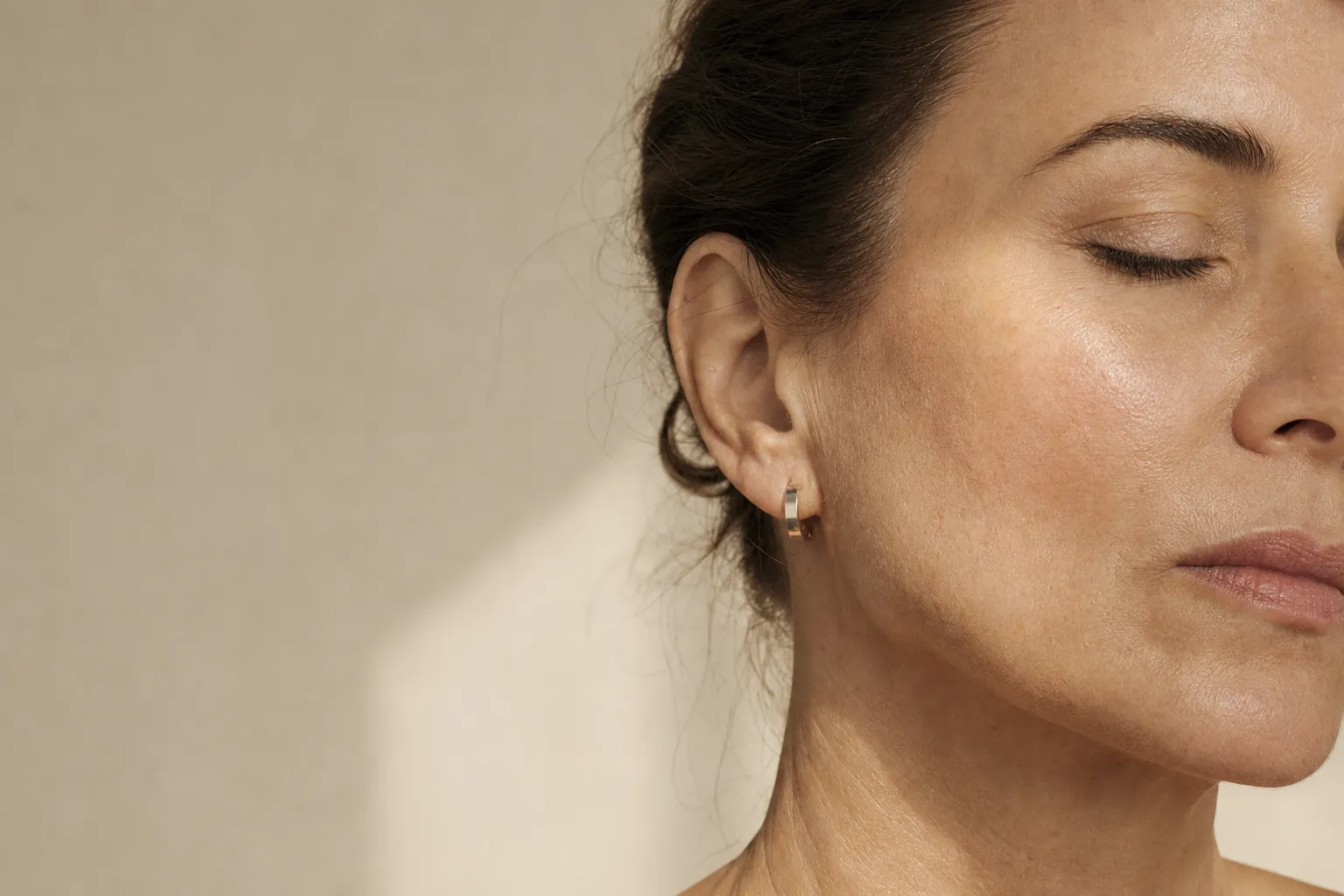
Cheek filler for midface volume loss — high-lift gels, lateral vs anterior placement, syringe counts, and the overfilled look we avoid.
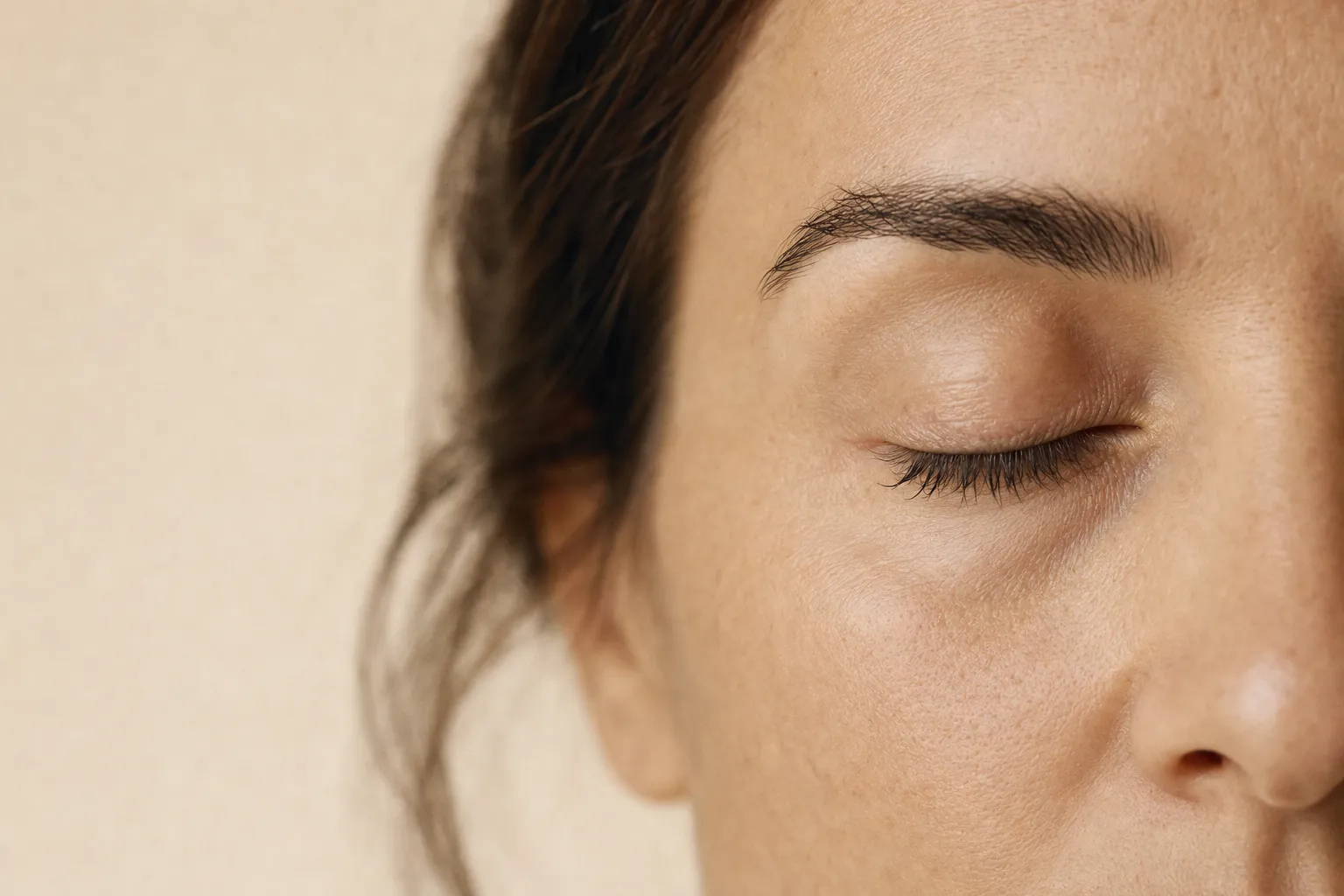
Under-eye filler for tear-trough hollowing — candidacy honesty, the low-G-prime gels we use, Tyndall risk, and when cheek support comes first.
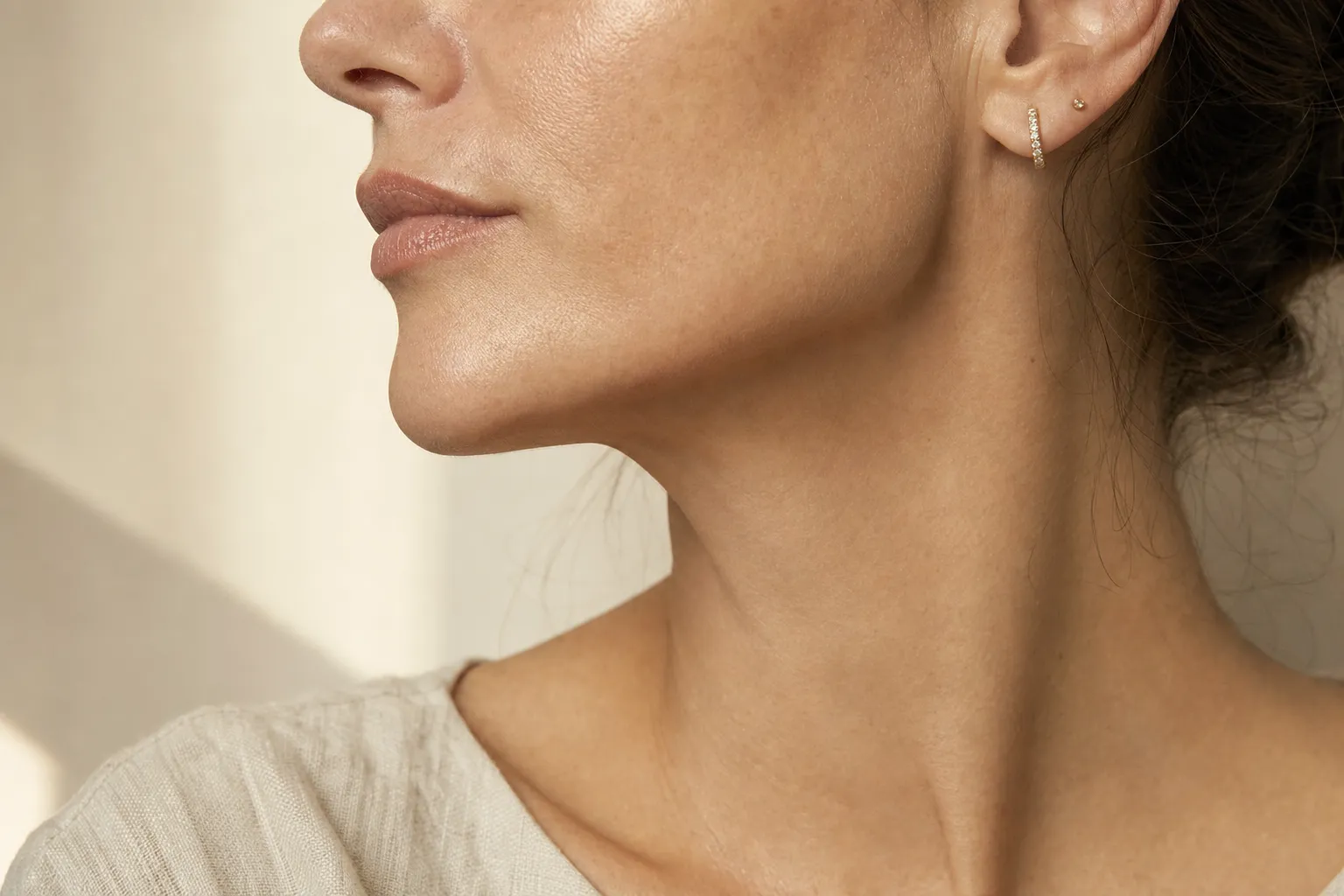
Chin filler and jawline contouring — projection, pre-jowl blending, gel selection by tissue plane, and the masseter-Botox pairing for the lower face.
Schedule a consultation for dermal fillers. juvéderm, rha, restylane, belotero, skinvive.
“I had laser for scars and injections with Orr for the first time and am so pleased with the results! She has an amazing eye and such a gentle touch.”