Vascular laser. Rosacea, redness, broken capillaries, PIE.
PDL and Nd:YAG settings for telangiectasias, rosacea redness, post-inflammatory erythema and cherry angiomas.
Visible blood vessels and redness at the skin surface — facial telangiectasias, rosacea-pattern flushing, the small red dots called cherry angiomas, post-inflammatory erythema (PIE) left behind by acne, and reticular leg veins. The laser energy is absorbed by hemoglobin in the vessel, the vessel coagulates, and the body clears it over the following weeks.
Redness has more than one cause.
Persistent facial redness can come from a handful of distinct sources. Rosacea-pattern flushing is one — diffuse, often blushing in response to heat, alcohol, or stress, with visible vessels beneath. Telangiectasias are another — fixed, fine red lines on the nostrils, cheeks, or chin from years of sun exposure or genetics. Post-inflammatory erythema is the red flat marks left behind after a cyst or papule has resolved.
These look similar at a casual glance but respond differently. A vascular laser can address all of them, but the dose, the wavelength, and the number of sessions varies. Sorting out which kind of redness you actually have is the first job at consultation.
What vascular lasers don't do well: pigment (the wrong color of the lesion), deep varicose veins (a phlebology or vein-center procedure, not aesthetic laser), and dermatitis or rashes that aren't vascular in origin.
PDL and Nd:YAG.
Vascular work runs primarily on two wavelengths, both on the Cynosure Cynergy multiplex platform. They aren't interchangeable — depth of target and the size of the vessel govern which one we choose.
| Pulsed dye laser · 595 nmPDL · Cynosure Cynergy | Strongly absorbed by oxygenated hemoglobin. Our default for superficial facial redness — rosacea flushing, fine telangiectasias on the nostrils and cheeks, post-inflammatory erythema. Sensation is a brief rubber-band snap; minor purpuric bruising can follow at higher settings. |
|---|---|
| Long-pulse Nd:YAG · 1064 nmDeeper penetration | Less melanin absorption, deeper reach. Used for larger or deeper facial vessels, blue-cast reticular veins on the legs, and patients with darker Fitzpatrick types where the 595 nm risks epidermal melanin damage. |
| Multiplex · 595 + 1064Sequenced on the same vessel | The Cynergy platform can fire both wavelengths in sequence, with the PDL pre-warming the vessel for the Nd:YAG. Useful for stubborn vessels that one wavelength alone hasn't cleared in prior sessions. |
Brief, precise, generally well tolerated.
Vascular sessions are short — fifteen to thirty minutes for most facial areas. Topical numbing isn't strictly required for PDL on small areas, though we'll apply it for full-face passes or for patients who prefer the comfort. Sensation is a rapid snapping, slightly warm.
After treatment, the treated vessels can disappear immediately, turn briefly darker, or develop a transient purpuric mark (a small bruise-like darkening) that resolves over 7 to 14 days. We'll show you what to expect for the specific settings we're using before we begin.
On rosacea"Laser addresses the vessels. It doesn't address the flush trigger. Both have to be managed."
Why one laser session rarely finishes the job.
Rosacea-pattern redness is the most common reason patients book a vascular consultation. The plan is multi-session by design — not because the device is underpowered, but because rosacea is a chronic vasomotor pattern, and laser is one part of managing it.
- 01
Identify the flush triggers.
Heat, alcohol, certain foods, topical irritation, harsh skincare. We document what's setting off the flushes before treating the vessels they've recruited.
- 02
Optimize the skin barrier.
A gentle skincare routine — non-foaming cleanser, ceramide-supportive moisturizer, mineral sunscreen — for several weeks before the first session. An irritated barrier flares with the laser; a calmed barrier doesn't.
- 03
Sequential PDL sessions.
Three to four sessions spaced 4 to 6 weeks apart. Each session reduces the existing vessel burden. The improvement is cumulative, and the diffuse background flush also responds.
- 04
Maintenance, honestly.
Most rosacea patients return once or twice a year for a maintenance session. With consistent skincare and trigger management, the maintenance is light. Without it, the vessels return faster.
Cherry angiomas, spider veins, PIE.
Cherry angiomas — the small bright-red dome lesions that develop on the trunk and arms with age — typically clear in one PDL session. Sometimes a touch-up is needed at six weeks. Most patients have several treated in a single visit.
Spider veins on the cheeks and around the nose clear well with PDL; deeper or larger vessels need Nd:YAG or the multiplex sequence. Leg veins are a separate conversation — most reticular veins respond to long-pulse Nd:YAG, but true varicose veins are a phlebology referral.
Post-inflammatory erythema — the red flat marks left behind after acne — responds well to PDL when the underlying acne is controlled. Treating PIE while active acne is still cycling is rarely worth it; the marks return.
- Tanned skin. Defer until the tan resolves.
- Active herpes simplex outbreak in the treatment area.
- Patients within 6 months of isotretinoin (Accutane).
- Vascular lesions where the diagnosis is uncertain. Atypical pigmented or vascular lesions go to dermatology for evaluation first.
- Deep varicose veins — these belong to a vein center, not an aesthetic laser suite.
How much does vascular laser treatment cost in Los Angeles?
Vascular laser treatment in Los Angeles typically ranges from $550 to $1,500 per session depending on area and condition. Facial capillaries and rosacea sessions run $550 to $800. Leg-vein sessions cost $1,000 to $1,500 per area. Most facial vascular work clears in one to three sessions; rosacea and leg veins typically need three to four sessions spaced four to six weeks apart.
What drives vascular laser pricing.
Condition treated and area set the base price. Facial capillaries and rosacea share a price band ($550 to $800 per session) because the lasers, settings, and treatment time are comparable. Leg veins sit higher ($1,000 to $1,500) because the vessel depth requires different settings, the treatment area is larger, and the procedure takes longer per session.
Device used moves the price modestly. Pulsed-dye lasers (PDL) like VBeam are the standard for facial vascular work. Long-pulse Nd:YAG handles deeper or larger vessels. Multi-platform devices that combine both wavelengths cost more to operate and price slightly higher per session, though the clinical advantage for complex cases can justify it.
Session count is the unseen multiplier. Most facial vascular work — discrete capillaries, cherry angiomas, spider veins on cheeks or nose — clears in one to three sessions. Rosacea and broader facial redness typically need three to four. Leg veins and post-inflammatory erythema run similar plans. Per-session pricing is consistent; total cost scales with session count.
Injector experience and clinic safety protocol matter for this category. Vascular lasers can cause bruising, scarring, or pigment change if dosed incorrectly. A practice with PDL or Nd:YAG experience prices at the top of the range and the premium reflects real clinical safety. Cheap vascular laser is a category where the saving is rarely worth the risk.
Typical Los Angeles vascular laser ranges.
Per-session pricing for PDL and Nd:YAG vascular work across LA. Total cost depends on session count, which varies by condition.
| Variant | What's included | Typical LA range |
|---|---|---|
| Facial capillaries · per session | Discrete capillaries or telangiectasia on cheeks, nose, or chin. | $550 – $800 per session |
| Rosacea · per session | Diffuse facial redness, telangiectasia, and rosacea flush pattern. | $550 – $800 per session |
| Cherry angiomas · single visit | Multiple cherry angiomas across trunk or arms in one session. | $300 – $600 per visit |
| Spider veins / face · per session | Small vessels on cheeks, around nose, or near eyes. | $550 – $800 per session |
| Leg veins · per session | Reticular and spider veins on legs; Nd:YAG-based protocol. | $1,000 – $1,500 per session |
| Post-inflammatory erythema | Red marks left after controlled acne, typically PDL-based. | $550 – $800 per session |
Vascular laser vs IPL vs sclerotherapy.
IPL (intense pulsed light) is the most common alternative for facial vascular work. Per-session cost in LA is roughly $300 to $500 — meaningfully below PDL. IPL handles diffuse redness and some discrete vessels reasonably well, but doesn't target individual capillaries as cleanly as PDL. For mild rosacea, IPL is often sufficient and the better value; for prominent discrete vessels, PDL outperforms.
Sclerotherapy is the standard treatment for leg spider veins — injection of a sclerosing solution into the vessel. Per-session cost in LA typically runs $400 to $700, below per-session Nd:YAG. Sclerotherapy and laser address overlapping but not identical vessels; the right approach depends on size, depth, and pattern. Many leg-vein patients end up with both modalities in sequence.
For varicose veins — the larger ropy veins that bulge — neither aesthetic laser nor sclerotherapy at a med-spa is the right answer. Those require phlebology evaluation, with ultrasound-guided treatments performed at a vein center. Treating varicose veins with an aesthetic-laser approach wastes money on a problem the device wasn't designed for.
For post-inflammatory erythema (the red marks left after acne), the alternative is patience and topical work. Both can produce real improvement; PDL accelerates the timeline. For patients tired of waiting, laser is the better return on time spent.
How we price vascular laser treatment.
Pricing at Swissa Med Spa is determined at consultation, after evaluating the vessels, distribution, and your skin type. Session count is estimated honestly — many patients need fewer sessions than they expect — and per-session and package costs are shared in writing before booking.
Supervised by Dr. Charles Peterson, board-certified physician with nearly a decade in aesthetic medicine.
Vascular laser results.
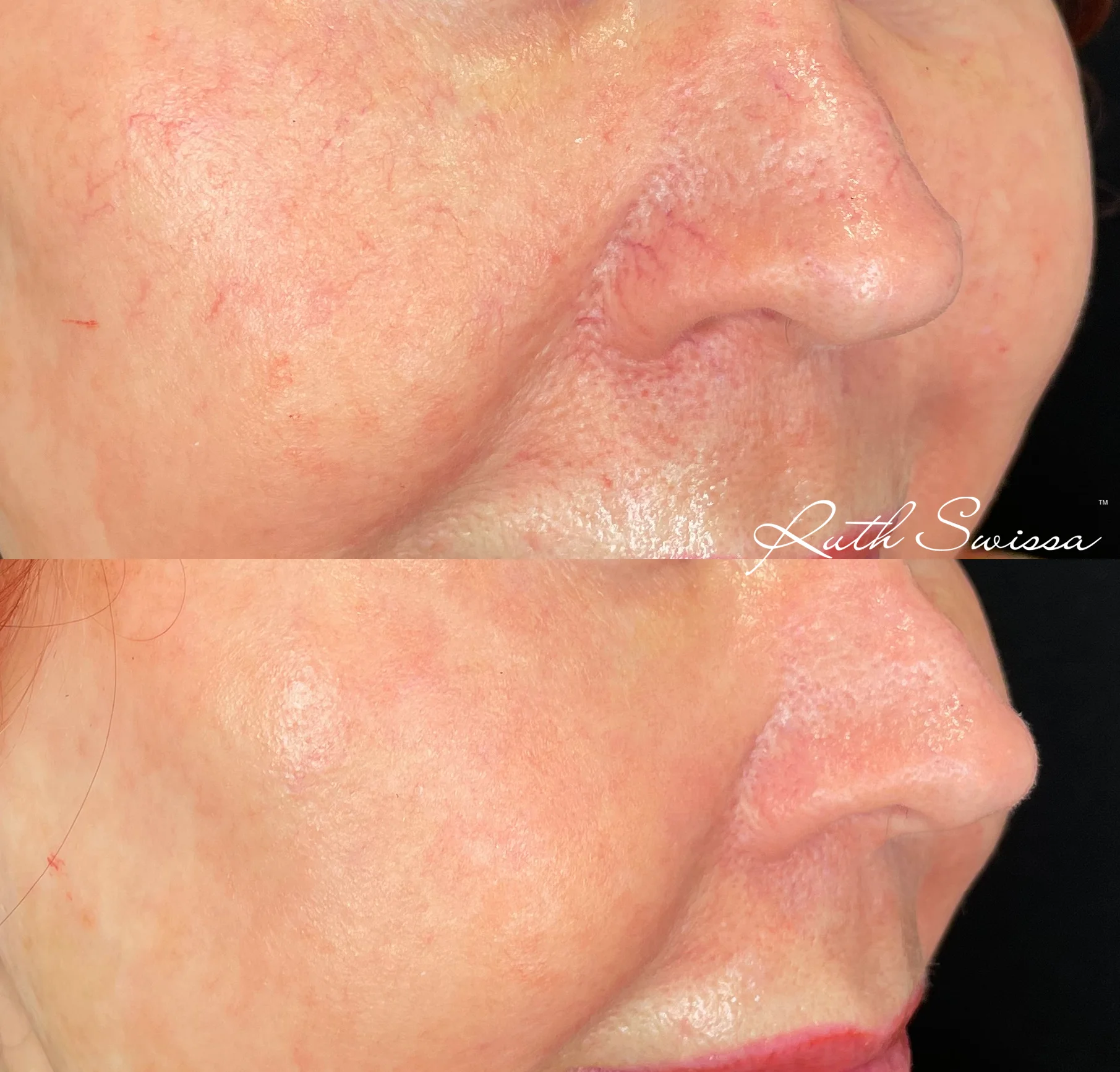
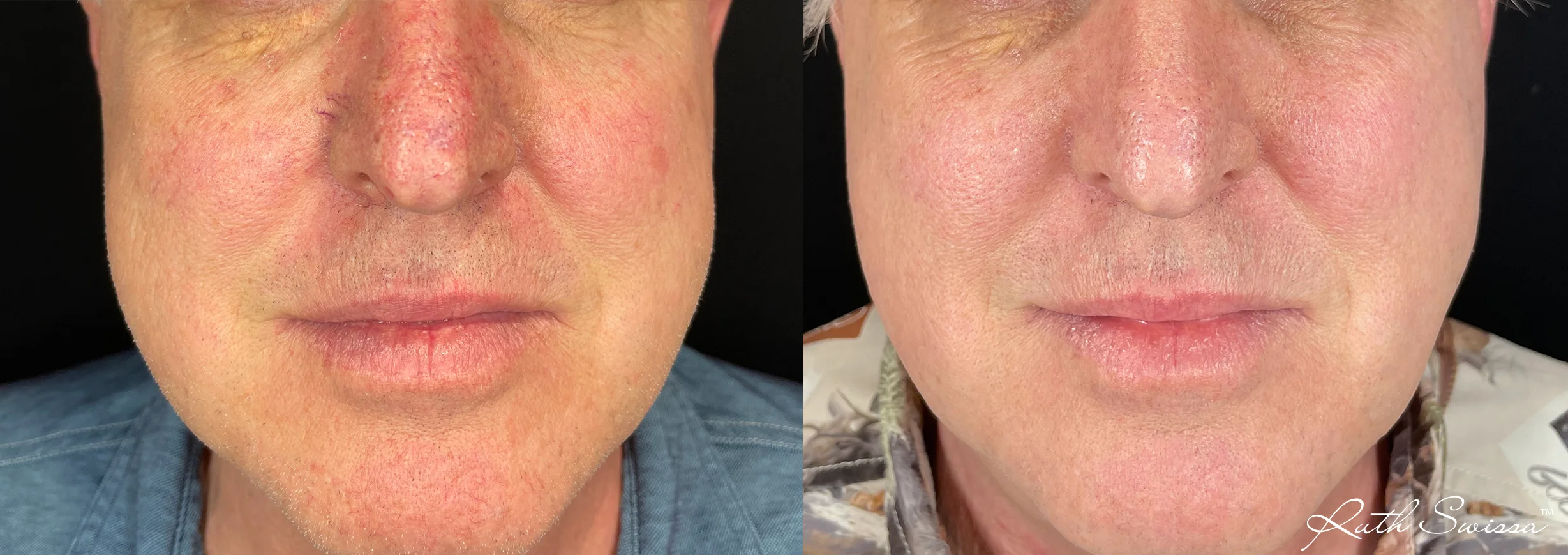
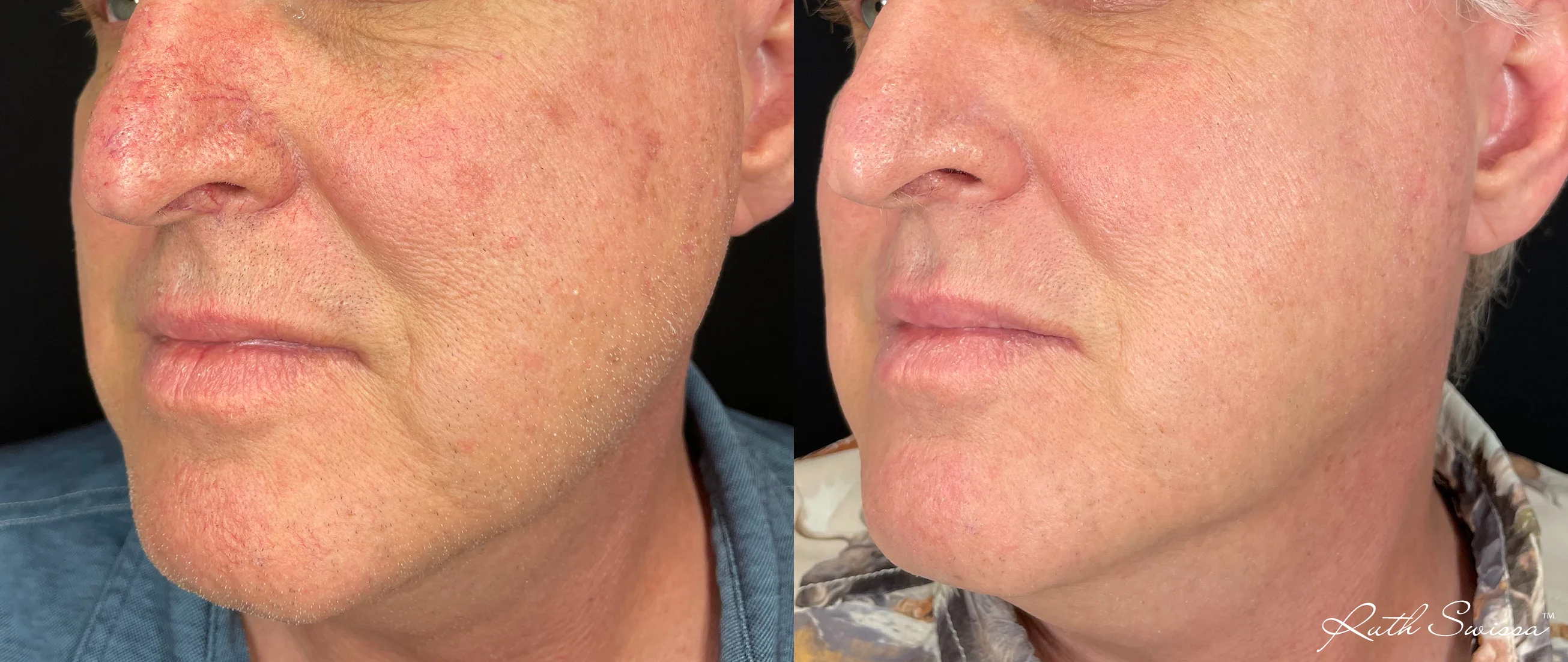
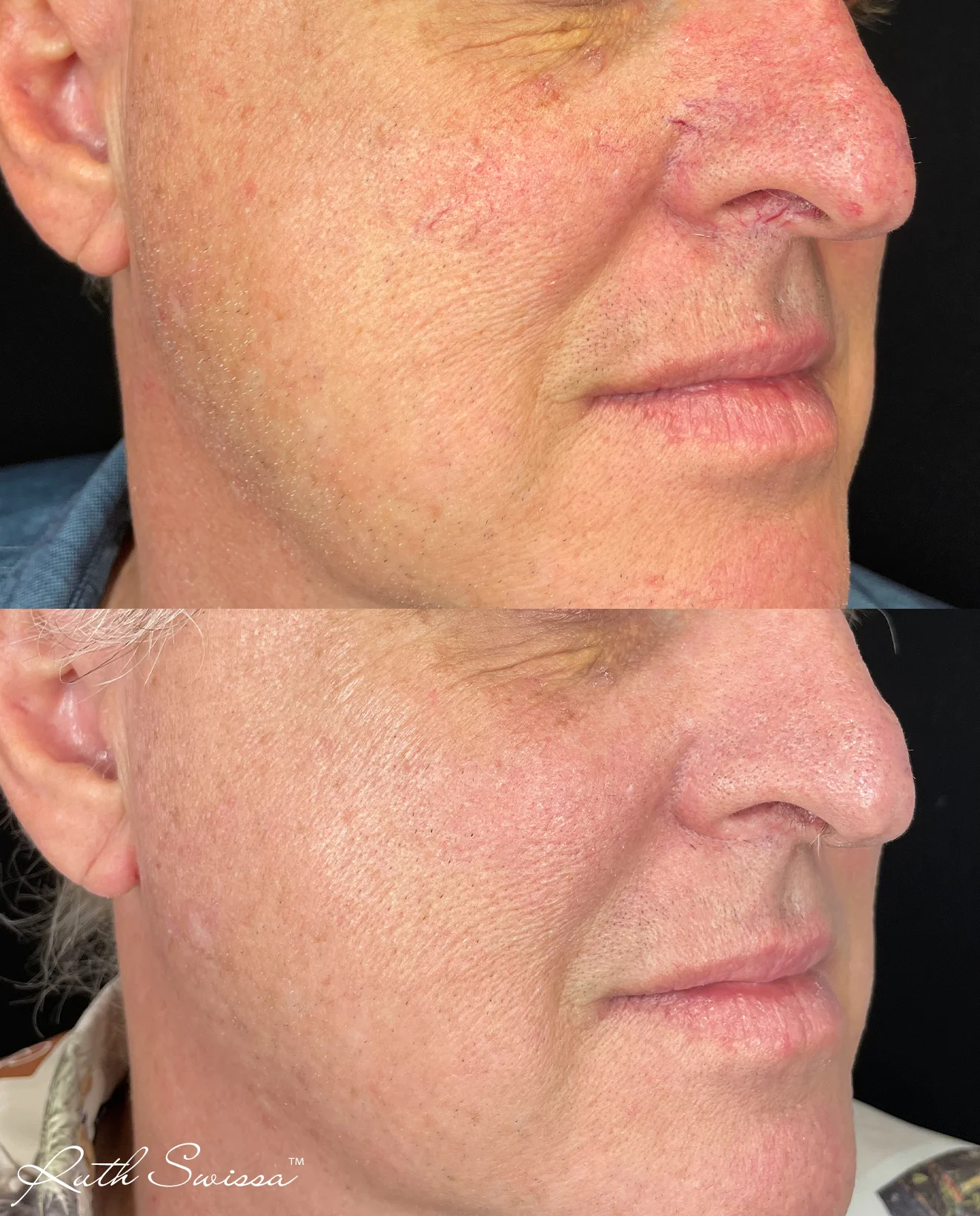
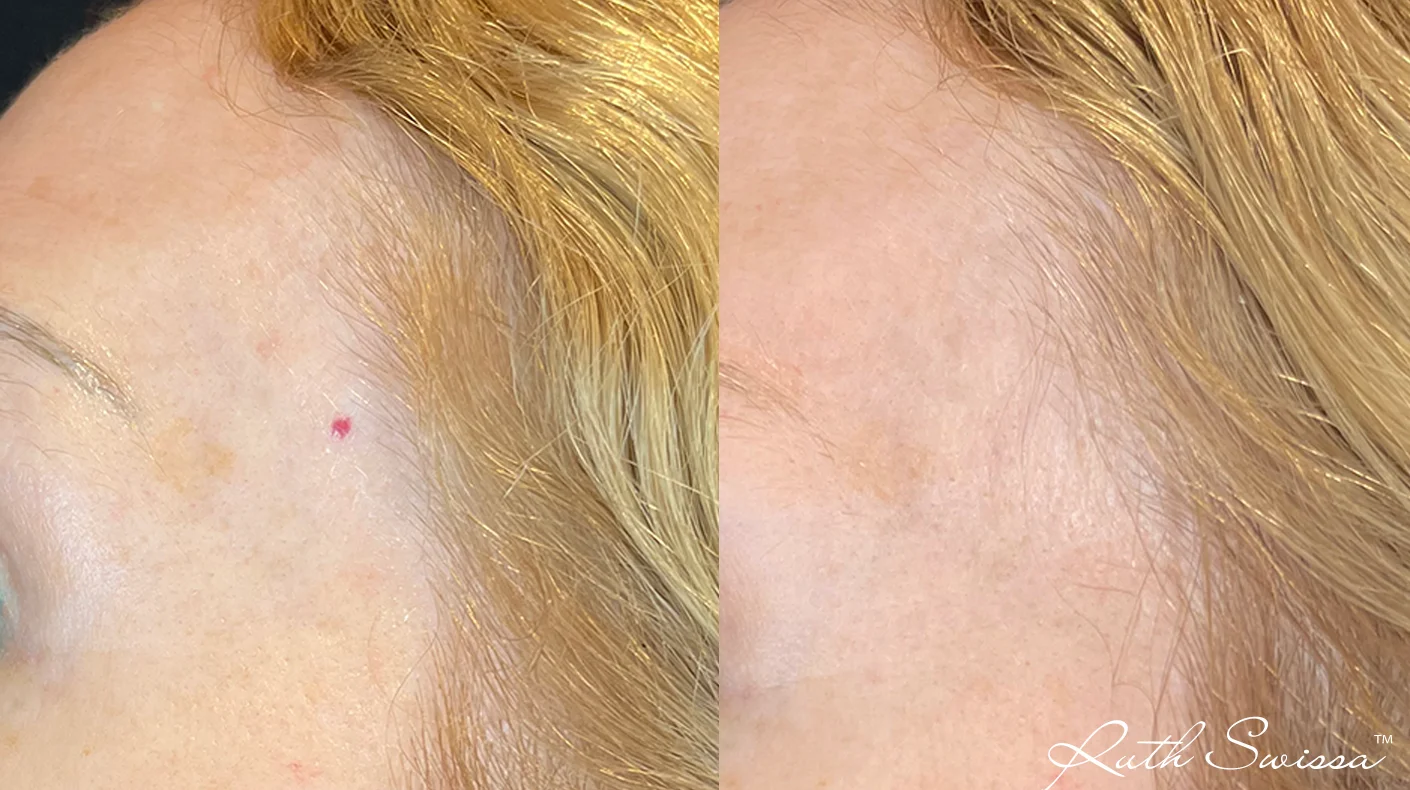
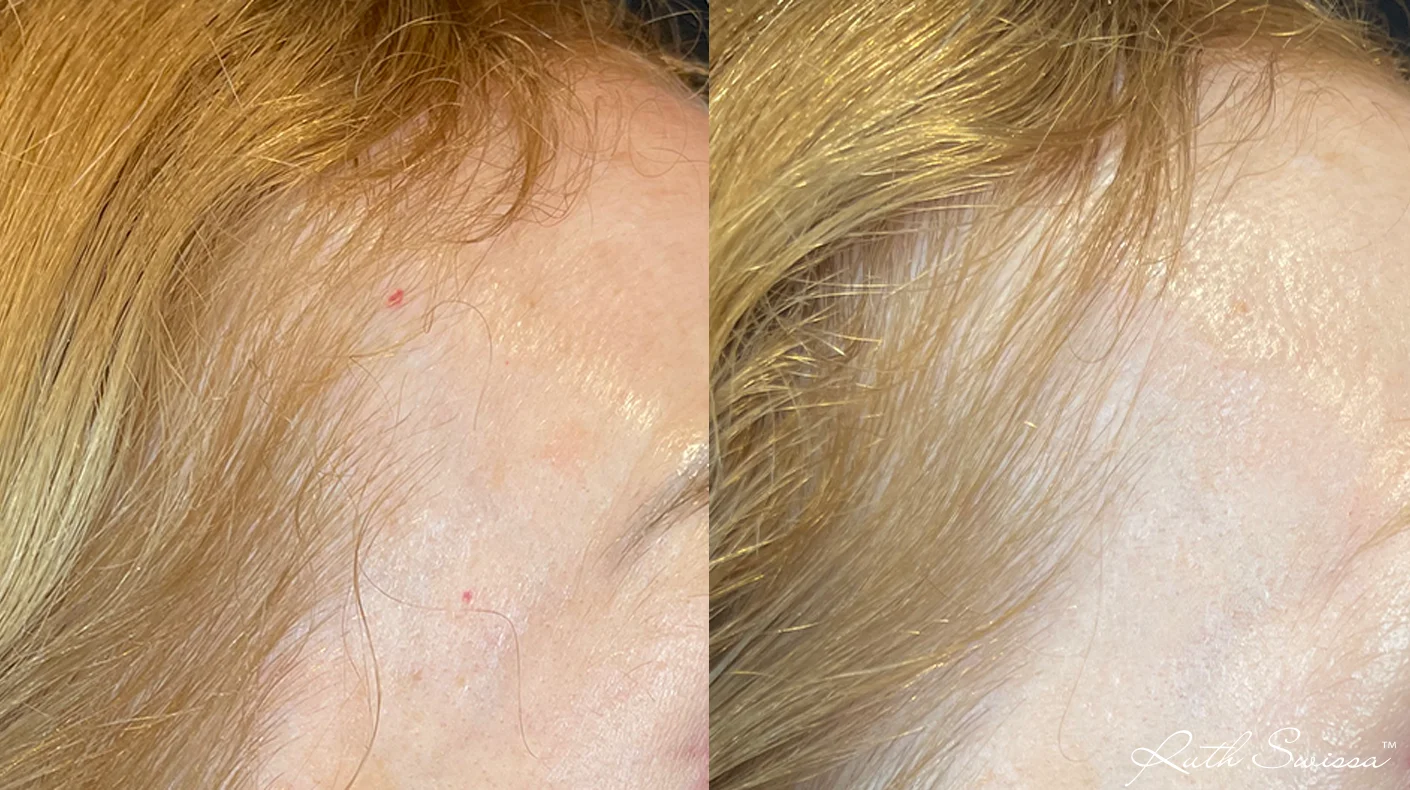
Photographs from the Ruth Swissa studio archive, shared with patient consent. Broken-capillary and cherry-angioma cases shown — rosacea-driven vasculature is evaluated separately.
Questions we get.
Will the redness come back?
Treated vessels are cleared permanently, but the underlying tendency to develop new vessels — particularly in rosacea — continues. Most patients return for light maintenance once or twice a year.
Is this the same as IPL?
No. Intense pulsed light covers a broader range of wavelengths and treats both pigment and vascular concerns less specifically. A dedicated vascular laser is more precise for vessel-focused work. Both have a place.
How many sessions for facial redness?
Telangiectasias and small spider veins: often 1 to 3. Rosacea-pattern diffuse redness: usually 3 to 4 in the active course, then maintenance.
Does it bruise?
PDL at higher settings produces a transient purpuric mark that resolves over 7 to 14 days. Lower settings and the longer-pulse Nd:YAG generally don't bruise. We choose based on what you can accommodate in your week.
Can I treat rosacea redness during a flare?
Yes, but conservative settings. We'd rather use lower fluence in active flare than push harder and risk a barrier disruption that prolongs it.
Continue.
Ablative resurfacing, pigment, vascular, RF, hair removal, tattoo and PMU removal — how we choose by concern, not by device.
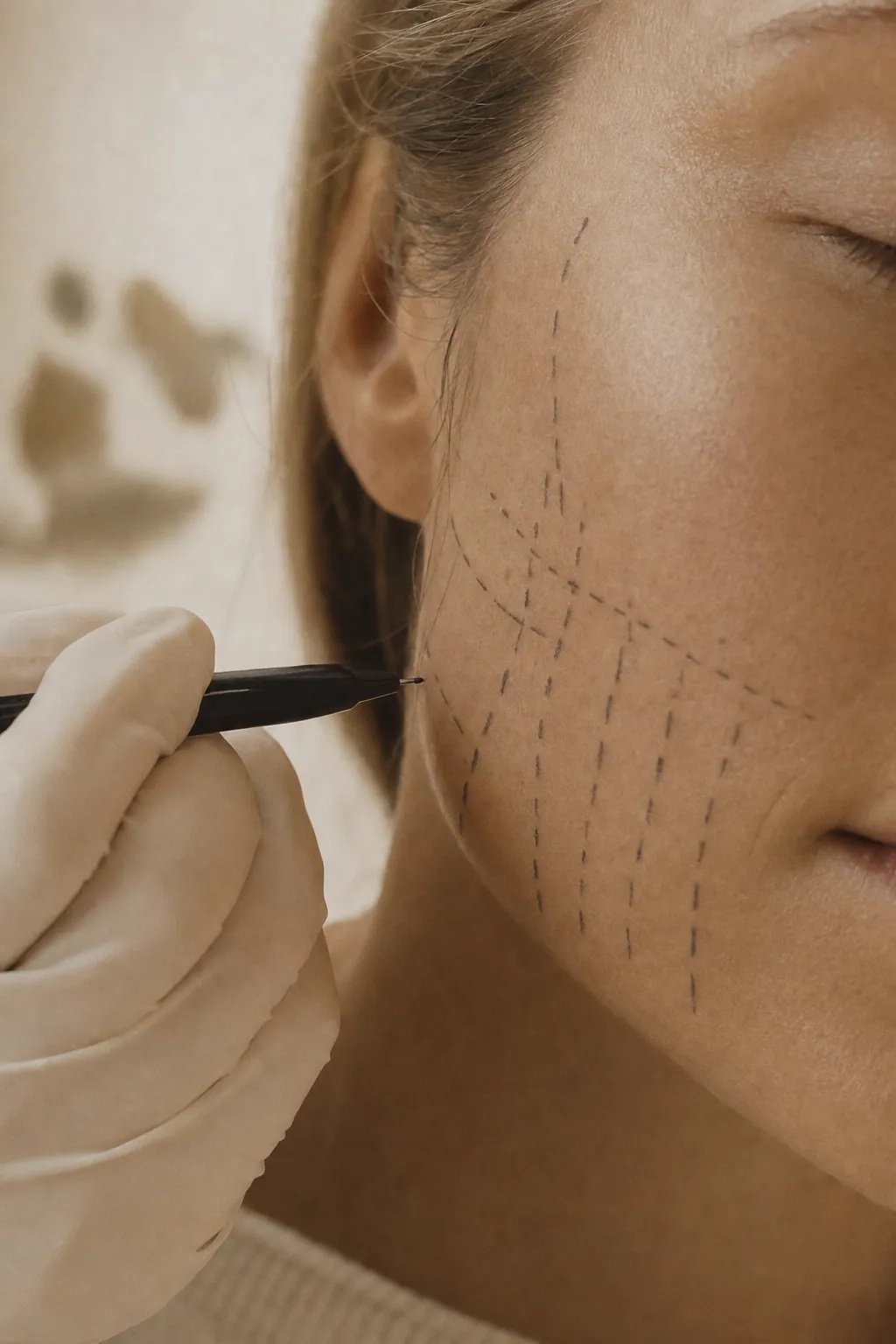
Ablative laser resurfacing for texture, pores, fine lines, crepiness and photodamage. Real downtime, Fitzpatrick caveats, recovery protocol.
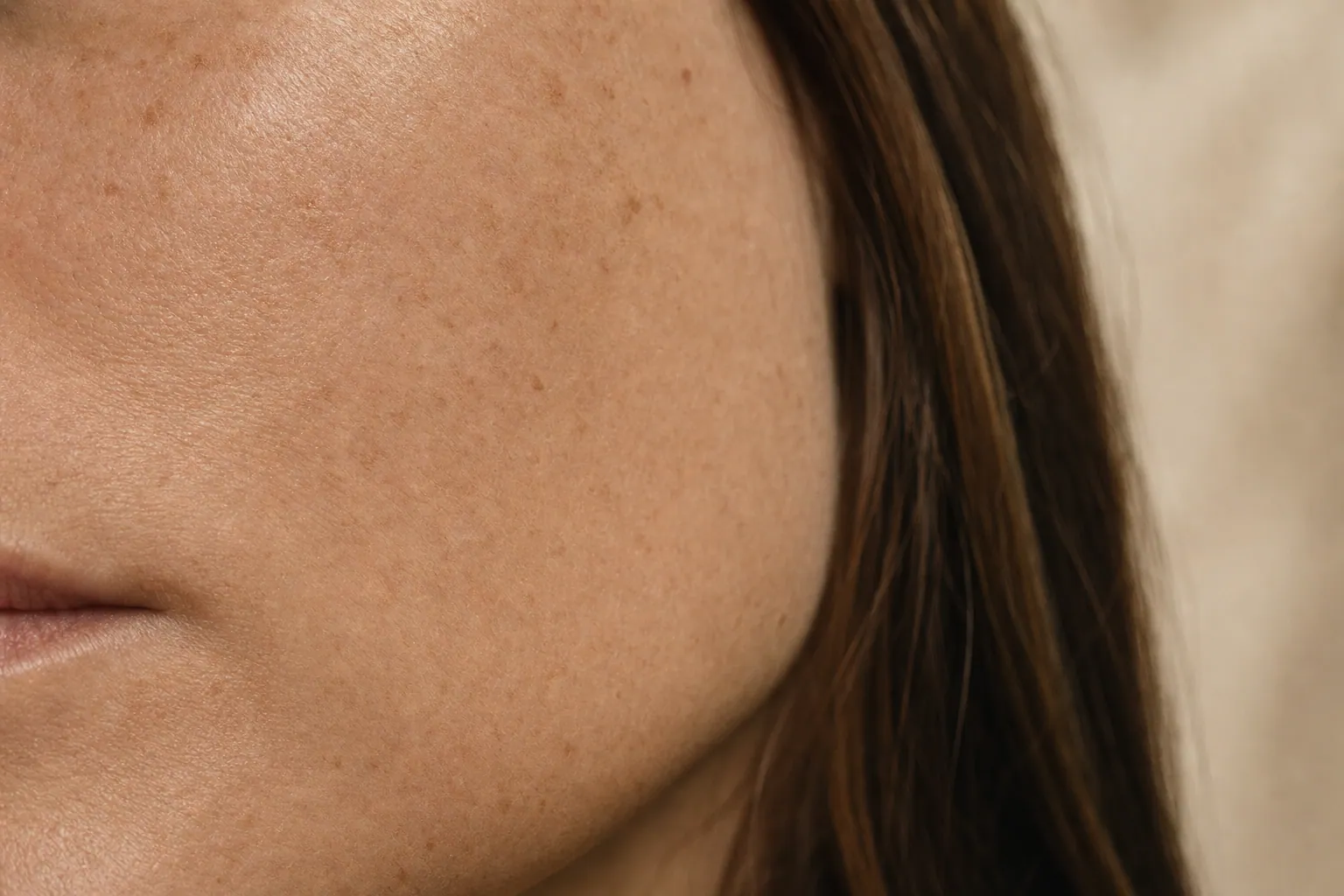
Pores, fine lines, tone unevenness, crepiness and laxity — a layered approach using regenerative microneedling, lasers and peels.
Schedule a consultation for vascular laser. rosacea, redness, broken capillaries, pie.
“I had ablative CO2 laser resurfacing. Next to no pain! … She explained everything in detail and was explicit in after care instructions…”