Lip lightening laser. For hyperpigmented lips.
Lip hyperpigmentation has multiple causes. Laser is one path; lip neutralization tattooing at Ruth Swissa is the other.
Hyperpigmented lips have more than one cause, and the cause determines whether laser is the right intervention. Smoking-related darkening, melasma extending onto the lip, friction from chronic lip biting, residual color from old lip tattoo or lip blush, and constitutional ethnic pigmentation all look similar at a glance and respond differently. Sorting that out is the first conversation.
Five different causes of lip darkening.
Constitutional pigmentation — naturally darker lip color in patients with deeper Fitzpatrick types — is not a medical concern and not a laser target. Some patients want to lighten constitutional pigment for cosmetic reasons; this is legitimate, but the conversation is different from treating a pigmentation that's developed over time.
Acquired pigmentation has several flavors. Smoking-related darkening typically presents as a diffuse blue-brown shift across the vermilion. Friction from chronic lip biting or chronic dryness can produce a darker rim along the lip border. Melasma can extend from the perioral skin onto the upper lip itself. Residual pigment from old lip tattooing or faded lip blush PMU is yet another category.
Laser is one path forward. Lip neutralization tattooing — a paramedical technique that adds a corrective pigment to the lip itself — is the other. Which one is right depends on the diagnosis.
Conservative pigment laser, sometimes a different tool.
Lip tissue is thin, well-vascularized, and unforgiving of aggressive settings. Our defaults are conservative across the board.
| PicoSure Pro · 755 nmPicosecond alexandrite | Our usual pigment-laser choice for the lip. Picosecond pulse minimizes thermal damage to the delicate vermilion border. Multiple sessions, sub-therapeutic fluence; we'd rather see a slow, durable shift than a fast, rebounding one. |
|---|---|
| Q-switched Nd:YAG · 1064 nmWhen PicoSure isn't the right match | Deeper penetration, less melanin absorption — sometimes a better fit for darker Fitzpatrick types or for pigment that sits at a depth the alexandrite doesn't reach efficiently. |
| Old lip tattoo or blush PMUA different protocol entirely | If your lip darkening is residual color from old permanent makeup, see our PMU removal page. The pigment is typically iron-oxide-based, the paradoxical-darkening risk is real, and the protocol is closer to PMU removal than to constitutional pigment work. |
Lip neutralization, across the hall.
Some lip darkening doesn't respond well to pigment laser. Vascular components, deep dermal pigment, scarring that's left behind a discolored area — these patients can benefit more from paramedical lip neutralization than from another laser session.
Lip neutralization is a tattooing technique. A custom-blended corrective pigment is implanted into the vermilion in thin layers across two or three sessions, with a maturation window between. Done well, it produces a more even, lighter-reading lip without changing the lip's natural shape or texture.
Our sister studio Ruth Swissa performs lip neutralization. If your consultation suggests it's the better path, we'll send you across the hall rather than book sessions you don't need.
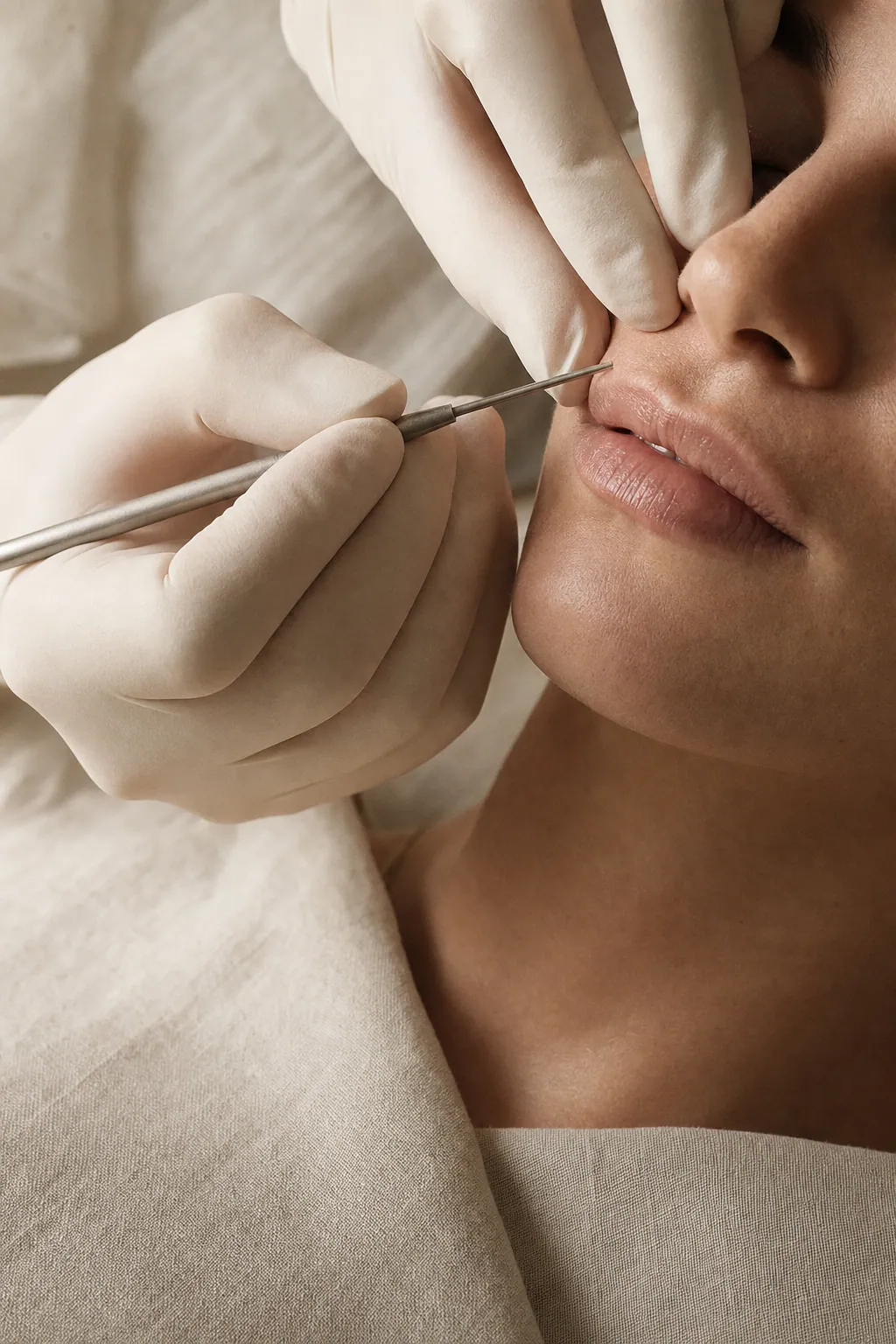
On expectations"Constitutional pigmentation is part of your face. Treating it to disappearance often leaves a result that reads as artificial."
What to do for the four weeks before.
- 01
Sun protection.
A mineral SPF 30 or higher on the lips daily, reapplied. UV is the most common driver of lip pigmentation worsening — and the most common reason a laser plan fails to hold.
- 02
Stop irritation.
No exfoliating lip scrubs, no aggressive lip plumpers, no peroxide-containing whitening products. The lip skin should be calm and intact at the time of treatment.
- 03
Hydrate the barrier.
A bland, occlusive lip balm — petrolatum, lanolin, or a ceramide formulation. We'll recommend a specific product at consultation. Dry, cracked lips don't tolerate the laser well.
- 04
Stop smoking, if possible.
Honest framing: if smoking is the driver, the pigment returns. We'll treat the existing darkening, but the treated lip will redarken unless the trigger changes. This is part of the consultation conversation.
Brief, surprisingly tolerable.
Lip sessions are short — usually under 15 minutes of active laser. Topical numbing is applied for 20 minutes before treatment. Sensation during the pass is described as a rapid warm snap; the lip can swell noticeably in the hour after treatment and settle over 48 hours.
Most lip-lightening plans run three to six sessions spaced six to eight weeks apart. We document the response at each visit; if the lip is responding well, we taper the fluence further to consolidate the result rather than push for more dramatic change in fewer sessions.
- Active herpes simplex (cold sore) outbreak on the lip. We defer until fully healed.
- Patients within 6 months of isotretinoin (Accutane).
- Old lip tattoo or PMU pigment without a test patch — paradoxical darkening risk applies.
- Pregnancy and breastfeeding.
- Patients seeking dramatic lightening of constitutional pigmentation — the result rarely lands where the patient hoped.
Supervised by Dr. Charles Peterson, board-certified physician with nearly a decade in aesthetic medicine.
Questions we get.
Will my lips look unnaturally pale?
If the plan is conservative and matched to your starting tone, no. The goal is more even color and a lighter overall reading, not a different lip color entirely. Patients who push for dramatic lightening often end up unhappy with the result.
How is this different from lip neutralization at Ruth Swissa?
Laser removes existing pigment; lip neutralization adds a corrective pigment. Some lip presentations respond better to one, some to the other. The consultation determines which.
How much does it cost?
Per-session pricing is modest given the small treatment area. Multi-session plans are priced after the first session. Pricing discussed at consultation.
Does it work if I smoke?
We can lighten the existing pigment, but smoking will continue to drive new pigmentation. The treatment doesn't hold in the way it would if the trigger weren't ongoing. We'll be honest about that at consultation.
What if I had lip blush done years ago and it's still showing?
That's PMU removal territory, not standard pigment-laser territory. The pigment is typically iron-oxide-based and has a paradoxical-darkening risk. See our PMU removal page for the specific protocol.
Continue.
Ablative resurfacing, pigment, vascular, RF, hair removal, tattoo and PMU removal — how we choose by concern, not by device.
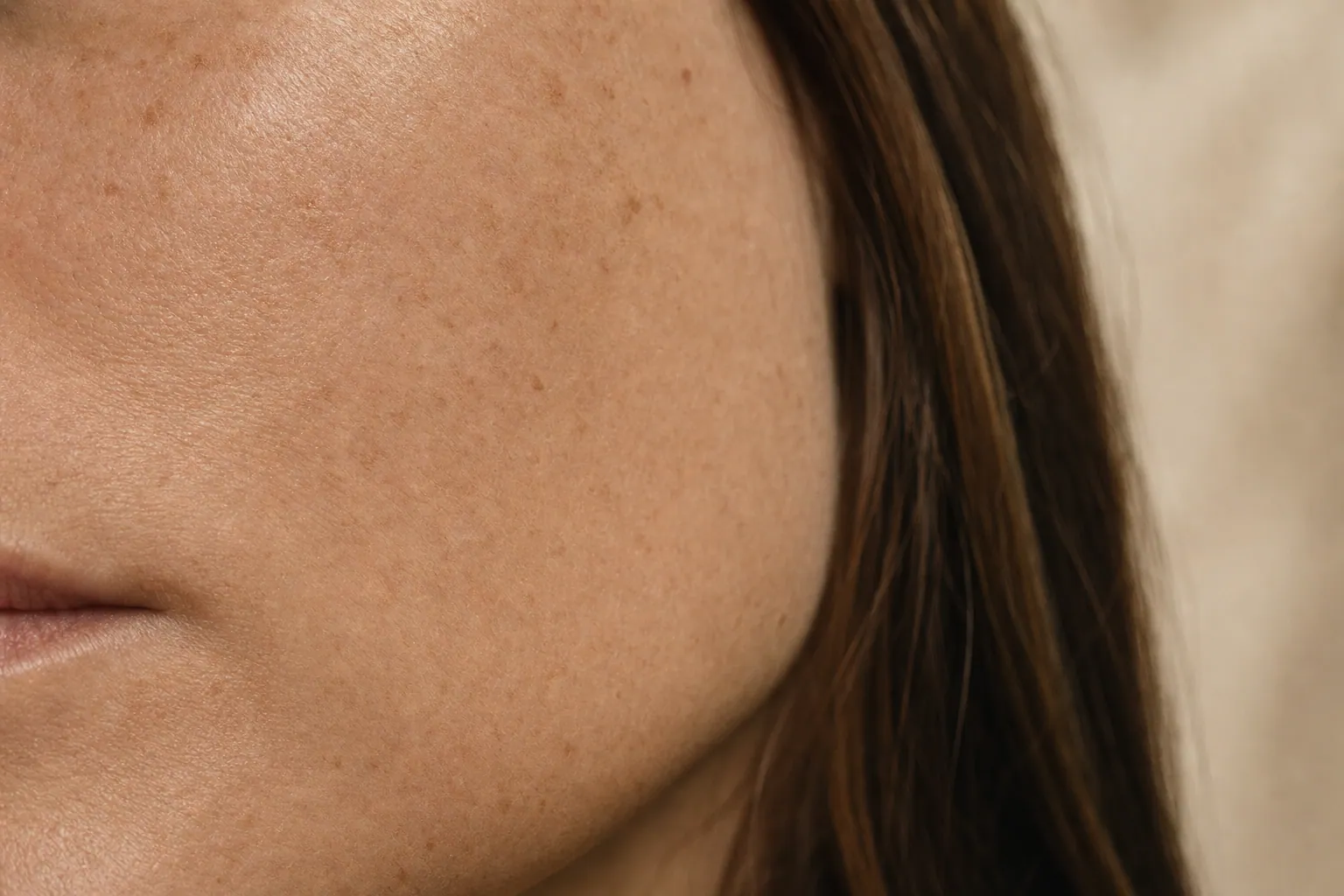
Pores, fine lines, tone unevenness, crepiness and laxity — a layered approach using regenerative microneedling, lasers and peels.
Swissa Med Spa shares a building, a clinical team and a thirty-year history with Ruth Swissa, the paramedical tattooing practice.
Schedule a consultation for lip lightening laser. for hyperpigmented lips.
“I had ablative CO2 laser resurfacing. Next to no pain! … She explained everything in detail and was explicit in after care instructions…”