Laser treatments. A clinic-grade device menu.
Ablative resurfacing, pigment, vascular, RF, hair removal, tattoo and PMU removal — how we choose by concern, not by device.
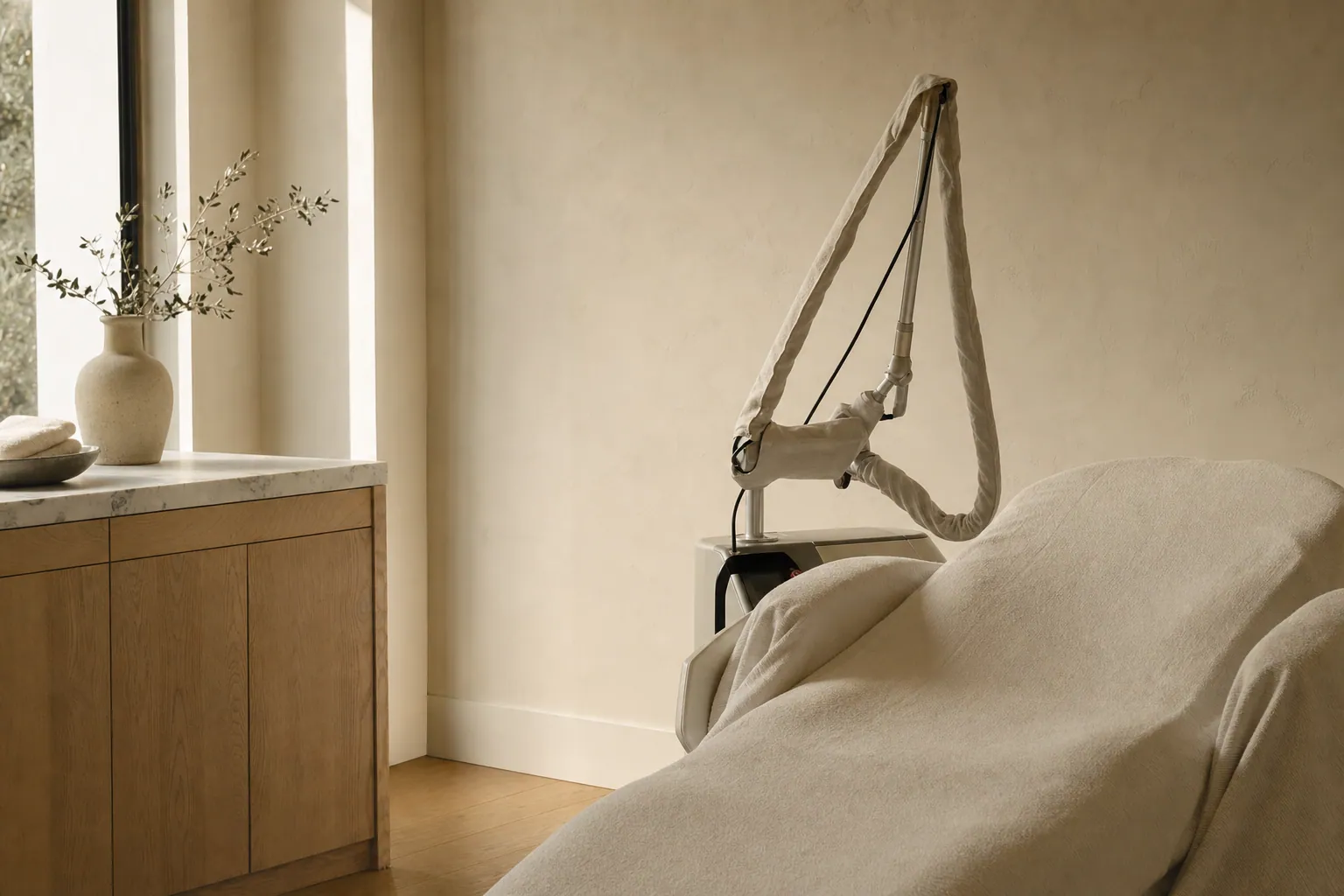
Six device categories live under one roof — ablative resurfacing, pigment, vascular, hair removal, tattoo and PMU removal, and radiofrequency. We pick by concern, not by device. The right laser for hyperpigmentation in Fitzpatrick V skin isn't the right laser for textural acne scars in Fitzpatrick II, and a clinic that owns one machine treats every concern with that machine.
By concern, not by device.
Most laser clinics own one or two machines and route every concern through them. The result is a treatment plan that's shaped by the equipment in the room rather than by the patient on the table. We've built the menu the other way around.
What sits on the floor is determined by the work we want to do. Pigment lasers and vascular lasers are different machines because melasma and rosacea behave differently in the skin, and a device that treats one well will often worsen the other. Ablative resurfacing wants a CO₂ or an Er:YAG depending on whether you're after deep collagen remodeling or precise textural refinement. Tattoo ink and iron-oxide PMU pigment look similar to a patient but require different wavelengths and pulse durations to address safely.
The first conversation is always about the concern. The device follows.
Six device categories. Each one earns its place.
Below is what we actually own and use. We don't subcontract to a different studio for any of these, and we don't book a treatment we can't perform with the device that's right for it.
| Ablative resurfacingSciton Halo · Lumenis AcuPulse Er:YAG | Fractional CO₂ and Er:YAG for textural irregularity, pores, fine lines, photodamage, and mild skin laxity. Real downtime — five to seven days of social recovery — in exchange for measurable, durable change. Fitzpatrick caveats apply. |
|---|---|
| PigmentPicoSure Pro · Q-switched Nd:YAG | Picosecond and Q-switched wavelengths for melasma, sun spots, and post-inflammatory hyperpigmentation. Conservative dosing on melasma; we'd rather see slow progress over a year than a worsening flare in a month. |
| VascularCynosure Cynergy · pulsed dye + Nd:YAG | PDL for facial redness, rosacea, post-inflammatory erythema, and the small surface telangiectasias around the nostrils and cheeks. Long-pulse Nd:YAG for deeper leg veins and reticular vessels. |
| Tattoo and PMU removalPicoSure Pro | A single picosecond device handles both decorative tattoos and iron-oxide-based permanent makeup, with different protocols. PMU work especially benefits from the same team that does corrective tattooing across the hall at our sister practice. |
| Hair removalDiode · Nd:YAG | Diode for the broadest range of patient skin types and hair colors; long-pulse Nd:YAG when coarseness or skin tone make the diode the wrong tool. A full program, face to full body — Brazilian, underarms, legs, the back — with its own dedicated page, and a deeper back-specific page beneath it. |
| Radiofrequency microneedlingRF · companion to laser | Not a laser but lives next to the laser menu in patient planning. RF microneedling addresses mild laxity, acne scarring, and texture in patients for whom an ablative laser is the wrong fit. See our RF microneedling page. |
One floor. Each device, deliberate.
The laser suite at Calabasas is built for the work, not for the photo. Each device has its place; each protocol has its consumables drawn before you arrive. The room is quiet, the light is warm, and the appointment runs on time because the equipment is already prepared for you by name.
We don't run a laser party. The patient before you isn't another patient — they're somebody whose appointment was scheduled to end before yours began, with enough buffer that the practitioner is unhurried.

On device-first clinics"If a clinic owns one laser, every concern looks treatable with that laser. The patient pays for that assumption."
What a laser consultation looks like.
Almost every laser plan starts with an in-person consultation. Skin tone, prior treatments, medication history and seasonal sun exposure all change what's reasonable. A laser plan made by photo over text rarely survives contact with the patient.
- 01
Concern, history, expectations.
We listen first. What you're trying to change, what you've tried, what didn't work, what scared you out of trying again. Photos from earlier seasons help.
- 02
Fitzpatrick assessment and screening.
We classify your skin's response to UV (Fitzpatrick I through VI) because device choice and dosing follow from it. We screen for active infection, photosensitizing medication, recent isotretinoin, and any history of keloid scarring.
- 03
Device match and test patch.
Some plans require a small test patch on inconspicuous skin before the first full session — typical for darker Fitzpatrick types on pigment or resurfacing work. We'd rather wait two weeks for the test to settle than discover a reaction on the full treatment area.
- 04
Plan, cadence, and price.
You leave with a written plan: device, sessions, intervals, expected downtime, aftercare, and the package or per-session pricing for that plan. Pricing discussed at consultation; quoted on paper before you book.
One word about packages.
Multi-session laser packages make sense when the work genuinely takes multiple sessions — tattoo removal, hair removal, melasma maintenance. They don't make sense as a way to lock a patient in before the first treatment has proven the device is right for them.
We start most plans on a pay-as-you-go basis. After the first or second session, when the response is clear, we'll price a package only if it would save you money on what we already know you need.
- Patients within six months of isotretinoin (Accutane).
- Active herpes simplex or bacterial infection at the treatment site.
- Pregnancy, for most ablative or pigment work.
- Patients with a personal history of keloid scarring without an explicit risk discussion.
- Tanned skin on pigment work — we'll defer until the tan resolves.
Supervised by Dr. Charles Peterson, board-certified physician with nearly a decade in aesthetic medicine.
Laser scar revision results.
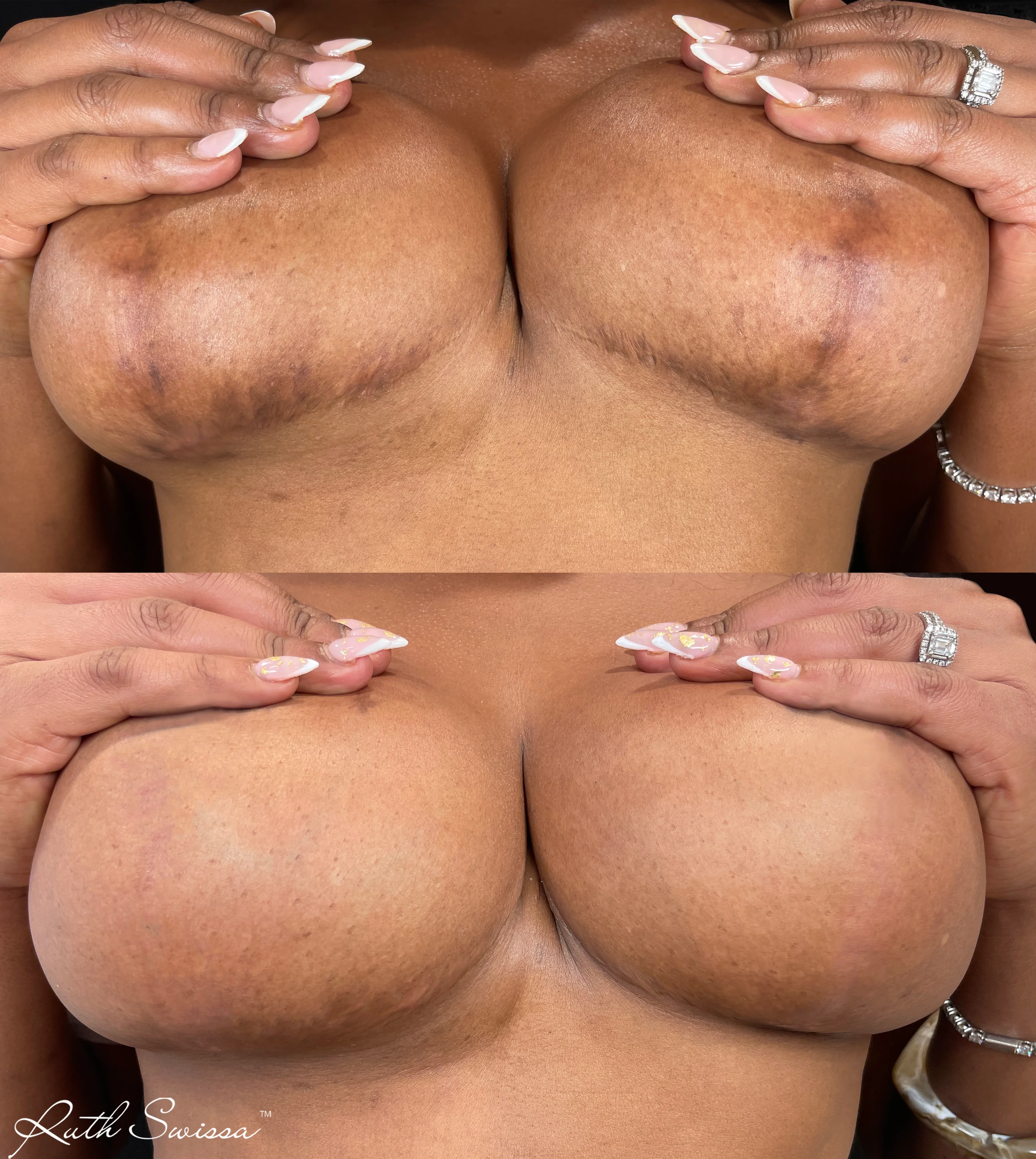
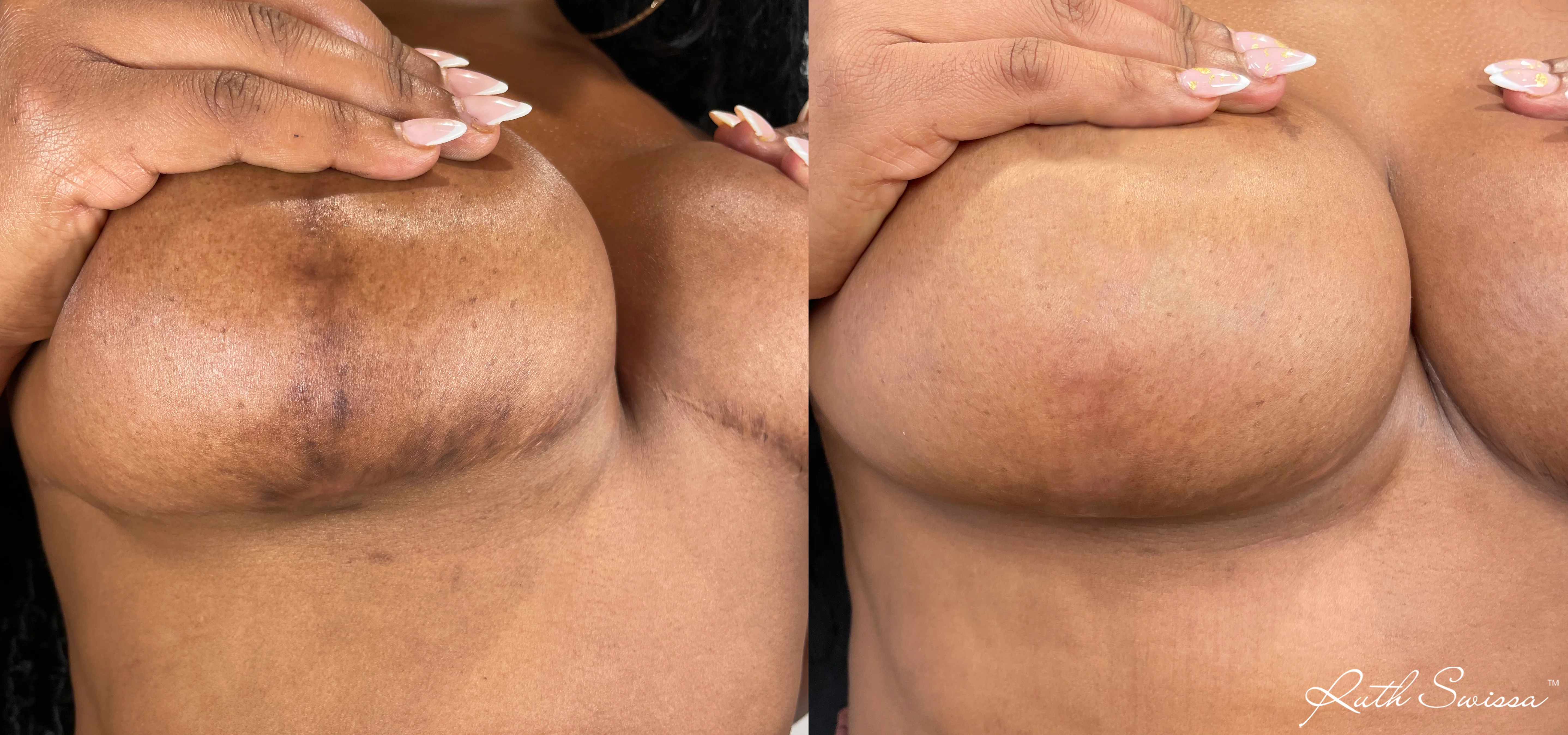
Photographs from the Ruth Swissa studio archive, shared with patient consent. Scar revision is one of several laser modalities offered — pigment, vascular, and resurfacing outcomes are reviewed individually.
Where laser treatments. a clinic-grade device menu is performed.
Our Beverly Hills satellite operates Wednesdays by appointment and performs injectables only. Lasers, regenerative protocols, medical weight loss and wellness are at our Calabasas studio.
Questions we get.
Are lasers safe in darker skin tones?
Most are, with the right device, the right wavelength, and conservative dosing. Some lasers — older alexandrites in particular — should not be used on Fitzpatrick IV through VI for pigment work. We classify Fitzpatrick at consultation and pick accordingly.
Why do you only do lasers in Calabasas?
The devices live there. Our Beverly Hills satellite is injectables-only on Wednesdays — building out a second laser suite would mean splitting the equipment and the practitioner who trained on it.
What does pricing look like?
Per-session pricing varies by area, device, and treatment time. Pricing discussed at consultation; written quote before you book.
Can I do multiple laser treatments at once?
Sometimes. Pigment and vascular work can occasionally be done in the same session on different areas. Ablative resurfacing typically isn't stacked with anything else on the same day.
How long until I see results?
Varies by device. Vascular and pigment changes are visible within a week or two; resurfacing peaks at three months when the new collagen has organized; hair removal and tattoo removal are session-by-session over months.
How long has the clinic been doing laser work?
The practice was established in 1998. The laser suite has evolved as the technology has — we update devices when a meaningful improvement comes to market, not on a marketing cycle.
Continue.
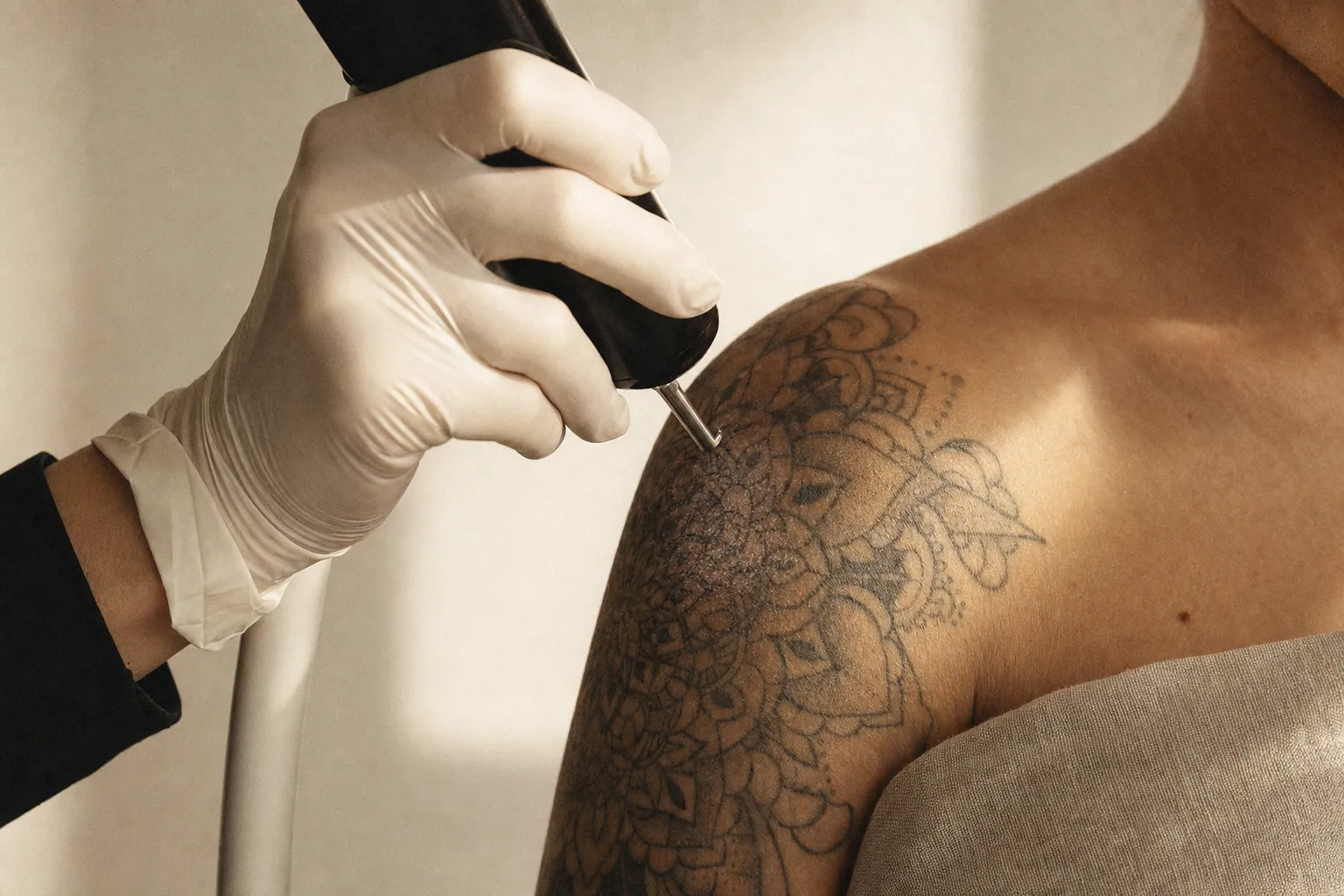
Picosecond laser tattoo removal. Sessions, sensation, the ink the older lasers can't reach, and why removal sometimes belongs with the same team that does the cover-up.

Iron-oxide pigments don't behave like ink. Our PicoSure pathway, sessions to expect, and the paradoxical-darkening risk we disclose up front.
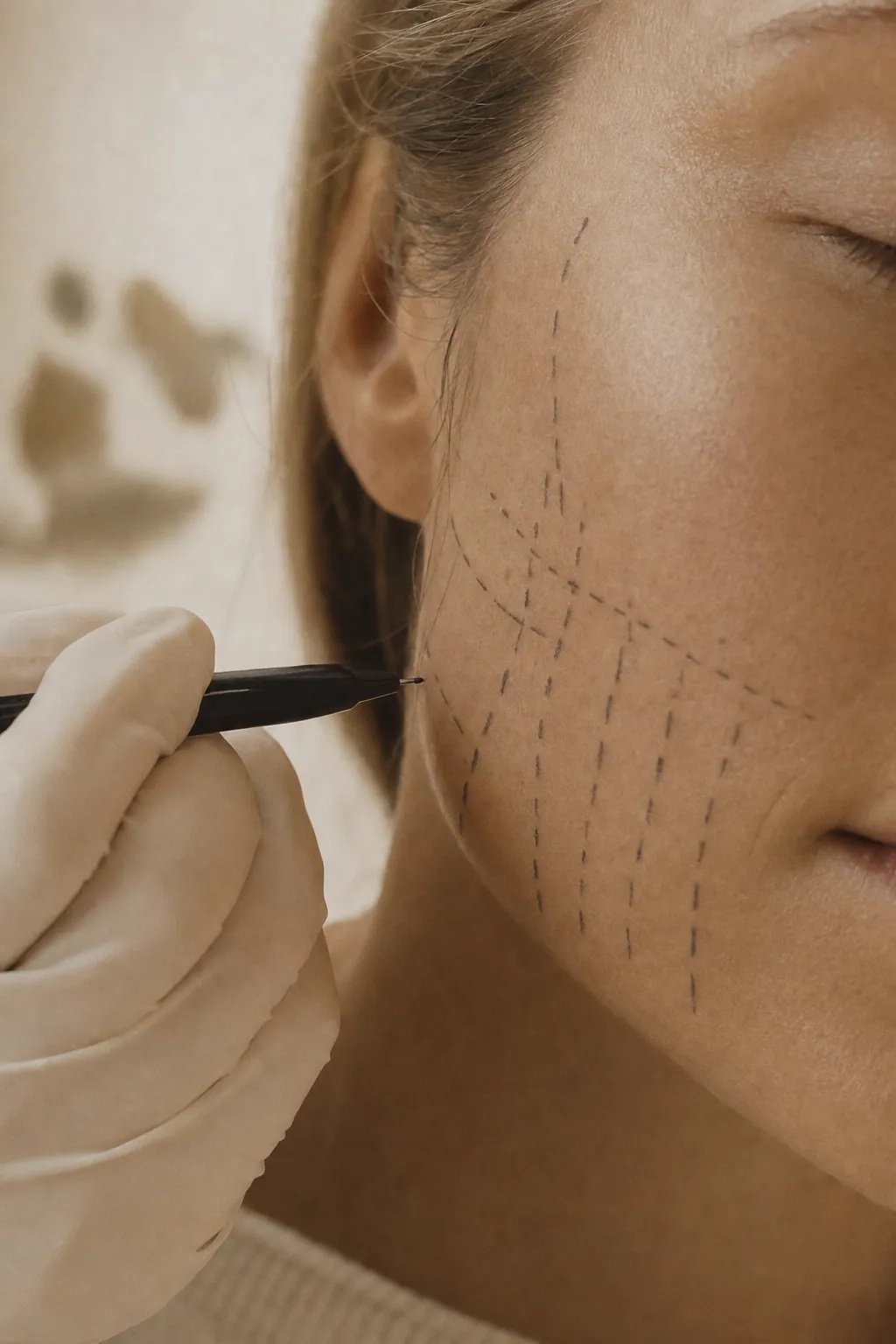
Ablative laser resurfacing for texture, pores, fine lines, crepiness and photodamage. Real downtime, Fitzpatrick caveats, recovery protocol.

Melasma is a hormonal-and-UV chronic condition, not a spot to zap. Our conservative protocol, sun spots vs melasma, realistic outcomes.
Schedule a consultation for laser treatments. a clinic-grade device menu.
“I had ablative CO2 laser resurfacing. Next to no pain! … She explained everything in detail and was explicit in after care instructions…”