Facial balancing. Non-surgical rejuvenation.
Multi-syringe, multi-area planning anchored to anatomic landmarks — not lots of filler everywhere.

A planned, multi-area treatment that uses filler, biostimulators, and neurotoxin together to address the face as a system rather than treating one area in isolation. The goal is proportion, not volume — restoring the structural relationships between cheek, jawline, chin, lip, and temple.
Facial balancing is not lots of filler everywhere.
The phrase has been diluted. In the way it is used by serious injectors, facial balancing means looking at the whole face and identifying the anatomic relationships that have shifted — cheek projection that has dropped, chin that has receded behind the lip, jawline that has lost its line — and addressing those relationships, in order, with the right tool for each area.
It is not a package. It is not a discount on multiple syringes. It is not an excuse to treat areas a patient hadn't been thinking about. It is a treatment plan, the same way a cabinet maker has a treatment plan before opening any drawers.
When patients arrive having been treated under the heading of facial balancing elsewhere and the result is over-filled, the issue is almost always that the diagnosis was missing — every area received product, no area received structure.
What we are actually working with.
A balanced face has predictable proportions. Where each landmark sits — and how it relates to the next — is what we evaluate before deciding whether and where to inject.
| Midface and cheek | The malar projection. When this drops with age, the upper cheek flattens and the nasolabial fold deepens. Voluma or Restylane Lyft placed on bone gives back the lift that supports the rest of the face. |
|---|---|
| Temple | An often-overlooked area. When the temple hollows, the lateral brow falls and the upper face looks gaunt. A small volume of structural HA or a Sculptra series here can restore the upper frame. |
| Jawline and gonial angle | A defined mandible reads as youthful and structured. Filler placed along the angle and the body of the jaw can restore the line; in some patients, masseter neurotoxin is the right tool because the issue is muscle hypertrophy rather than volume loss. |
| Chin | A chin that has receded behind the lip changes the entire side profile. Strategic projection here is one of the most commented-on changes in facial balancing because it shifts the relationship between every other landmark. |
| Lips and peri-oral | The lip and the area around it. We balance the upper-to-lower ratio, the philtral columns, and the vermillion border, often with conservative volume. Detailed on the lip filler page. |
| Brow and forehead | Often neurotoxin's territory, sometimes filler in the lateral brow to restore lift. The brow position changes the rest of the face's perceived shape; we plan for it explicitly. |
Sequencing matters more than syringe count.
Most balancing plans are not delivered in one visit. We work in a sequence — typically structural first (cheek and chin to set the frame), then refinement (jawline, temple), then surface (lip, peri-oral, neurotoxin) — over two to three visits spaced two to four weeks apart.
The reasoning is partly practical: too much product in one visit creates too much swelling to assess what you have. The reasoning is also surgical: when you build the structure first, you often need less product downstream, because the relationships you were going to fill have already partially corrected themselves.
A typical full plan for a new patient is three to six syringes total across all visits, plus 30 to 60 units of neurotoxin if indicated. Some patients need less. Some need more. The number is the answer to the plan, not the input to it.
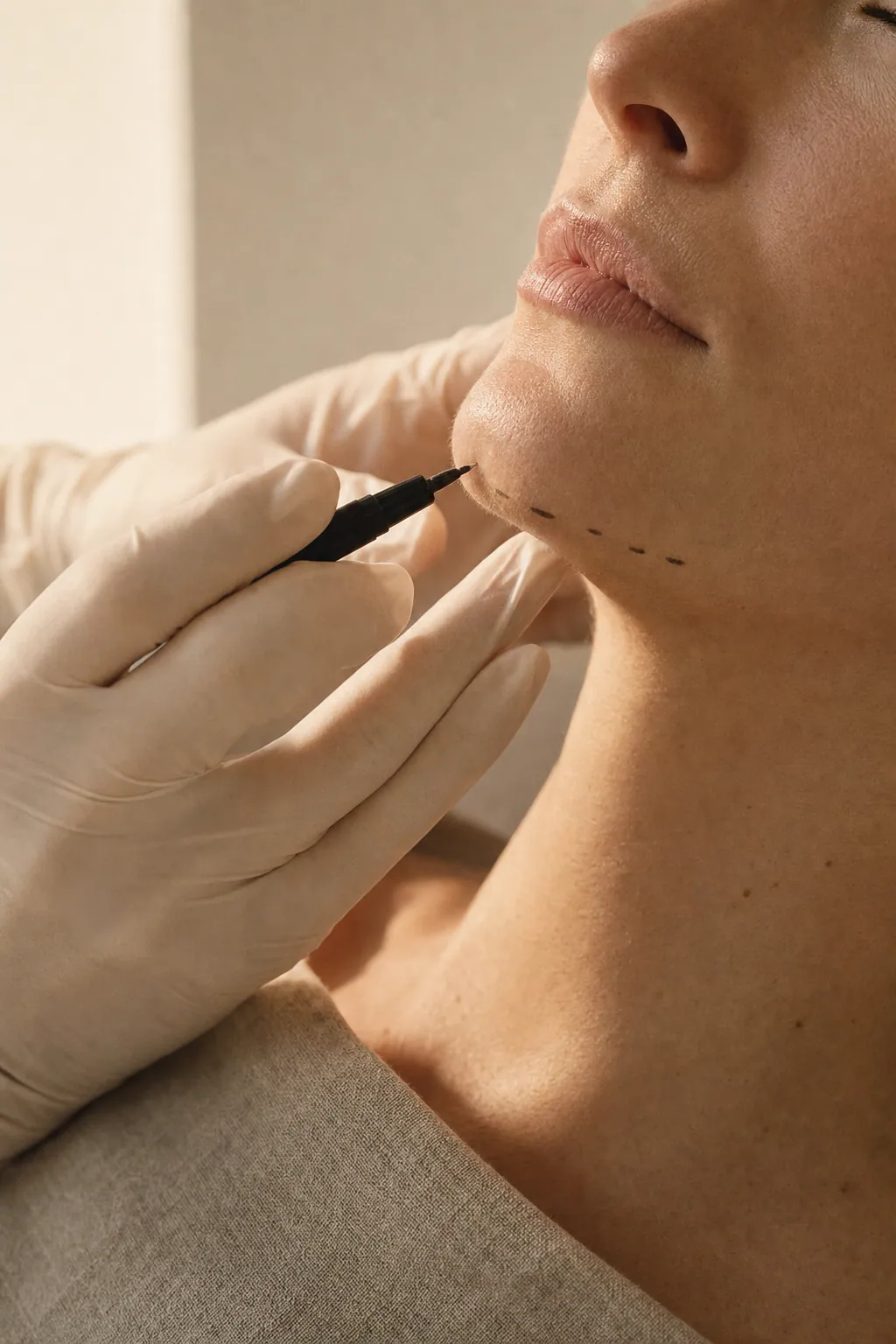
On planning"Build the structure first. Refine on top. The patient who needs three syringes often only needs them once you've seen what one syringe in the right place already did."
How we typically stage a plan.
- 01
Consultation and photography.
A standing assessment with even light, front and three-quarter views. We mark the asymmetries that exist at rest and discuss which we will and won't address. We write down the plan and share it with you before any product is opened.
- 02
Visit one — structure.
Cheek, chin, and sometimes temple. Typically two to three syringes of high-lift HA or, where the goal is collagen rebuild over time, the first session of a Sculptra series.
- 03
Visit two — refinement.
Two to four weeks later. Jawline, lips, peri-oral, plus neurotoxin if part of the plan. By this point we have seen how the tissue accepted the structural work and can adjust the rest accordingly.
- 04
Visit three — touch-up if needed.
Two weeks after visit two. For many patients this visit isn't necessary. For others, a half-syringe or 5–10 units of neurotoxin completes the result.
What facial balancing borrows from biostimulators and neurotoxins.
A balancing plan that uses only HA filler is almost always over-filled. The reason is structural: when the face needs lift over a broad area — the lateral cheek, the temple, the pre-jowl — HA volume scales linearly, and the syringe count climbs quickly.
Biostimulators do different work. Sculptra in the cheek and temple builds collagen across a wider area than a syringe of filler can address; Radiesse along the jaw can lift and stimulate where pure volume would look heavy. The combination of structural HA in specific landmarks plus a biostimulator over a broader area is more efficient than either alone.
Neurotoxin completes the picture. A masseter that has hypertrophied widens the lower face; relaxing it slims the jawline without filler. A pulled-down lip corner reads as serious or tired regardless of how much volume sits above it; a small dose at the DAO releases that. The plan that ignores muscle does so at its own cost.
- Patients seeking dimensions their underlying bone cannot support. We will say so.
- First-visit comprehensive plans without consultation. The plan is the work; we will not skip it.
- Patients on anticoagulation without coordinating with their prescribing physician.
- During pregnancy or breastfeeding.
How much does facial balancing cost in Los Angeles?
Facial balancing in Los Angeles starts around $1,000 and scales with the plan, because the price is the sum of every product the plan requires. A focused two-area HA plan typically runs $1,500 to $3,000. A multi-area plan combining HA, biostimulator, and neurotoxin across two or three visits commonly lands $3,500 to $8,000. Pricing varies meaningfully with syringe and vial count.
What moves a balancing plan's total.
Syringe and vial count is the dominant driver. A balancing plan is an inventory: HA syringes for direct volume in landmark areas, biostimulator vials (Sculptra, Radiesse) for broader collagen support, and neurotoxin units where muscle is part of the problem. The plan totals the components, and what your face needs is a clinical decision rather than a menu pick.
Number of staged visits matters. Patients balanced in a single sitting almost always look overdone, so the better plans split the work across two or three visits over three to six months. The visit count doesn't change the materials cost meaningfully, but it changes the cadence of spend — and how the result lands.
Product family selection shifts the math. Structural HAs like Voluma and Lyft in the cheek versus broader Sculptra collagen-building over the same area address overlapping goals at different price points. A clinician confident in biostimulators often delivers more change per dollar for patients restoring volume across a wider zone.
Injector experience and location set the final band. Beverly Hills addresses sit at the top of the LA balancing market; Calabasas and the Valley generally below for comparable expertise. Real-estate cost, not clinical quality, explains most of that spread. The skill premium is real and worth paying for once — choosing the cheapest plan typically costs more in revisions or in dissolving later.
Typical Los Angeles facial-balancing ranges.
Balancing pricing is the sum of components. The table breaks out the unit costs that combine into a plan total.
| Variant | What's included | Typical LA range |
|---|---|---|
| HA filler per syringe | Structural or refinement HA placed in landmark areas (cheek, chin, jaw, lip). | $500 – $950 per syringe |
| Sculptra plan | Collagen-building biostimulator, typically 1 – 4 vials across staged visits. | $850 – $1,700 per treatment plan |
| Radiesse treatment | Calcium hydroxyapatite biostimulator for jaw, hand, neck, or knee. | $1,000 – $2,000 per treatment |
| Neurotoxin add-on | Per-unit pricing across upper face, masseter, or DAO as part of balancing. | $13 – $16 per unit |
| Focused two-area plan | Cheek plus chin, or jaw plus chin, with 2 – 3 syringes total. | $1,500 – $3,000 |
| Multi-area balancing plan | Combined HA + biostimulator + neurotoxin across two or three visits. | $3,500 – $8,000+ |
Balancing vs single-area filler vs surgical lift.
Single-area filler addresses a single concern at a single price — a cheek augmentation for $850 to $1,700, a jawline for $950 to $1,900, a chin for $700 to $800. For patients with a specific contour issue and no broader proportional concern, à la carte filler is the right tool and the lower spend.
Facial balancing is the plan that recognizes the face as a system. A flat cheek changes how the jawline reads. A recessed chin changes how the lips relate to the lower face. Treating one area in isolation can leave the proportions worse than before, and patients who balance after a year of à la carte work typically pay more in total than they would have paid for a planned balancing arc.
Compared to surgical options — deep-plane facelift in the $50,000 to $100,000 range, mini-lifts in the $15,000 to $30,000 range — balancing is an order of magnitude less expensive and entirely non-surgical. It addresses different things: surgery moves tissue, balancing replaces volume and changes proportions. For appropriate candidates, balancing produces meaningful change without an operating room.
When the answer is surgical, we say so. Significant skin laxity, severe volume loss across the entire face, or specific anatomic concerns are not balancing problems. We have surgeons we refer to.
How we price facial balancing.
Pricing at Swissa Med Spa is determined at consultation, where we map a balancing plan to your anatomy, goals, and budget. The plan is staged across visits and shared in writing before the first treatment — we do not offer a flat-rate balancing package.
Supervised by Dr. Charles Peterson, board-certified physician with nearly a decade in aesthetic medicine.
Facial balancing results.
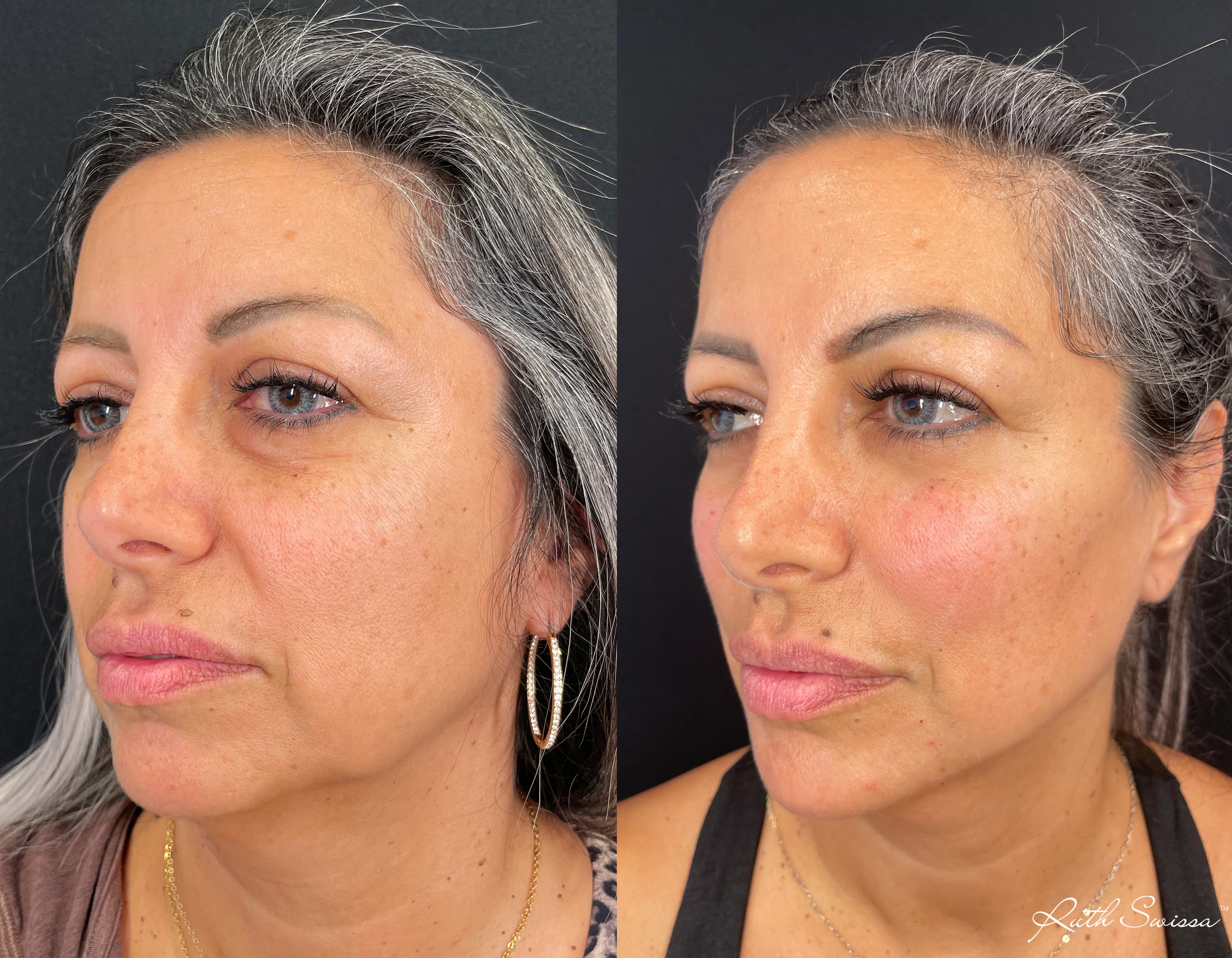
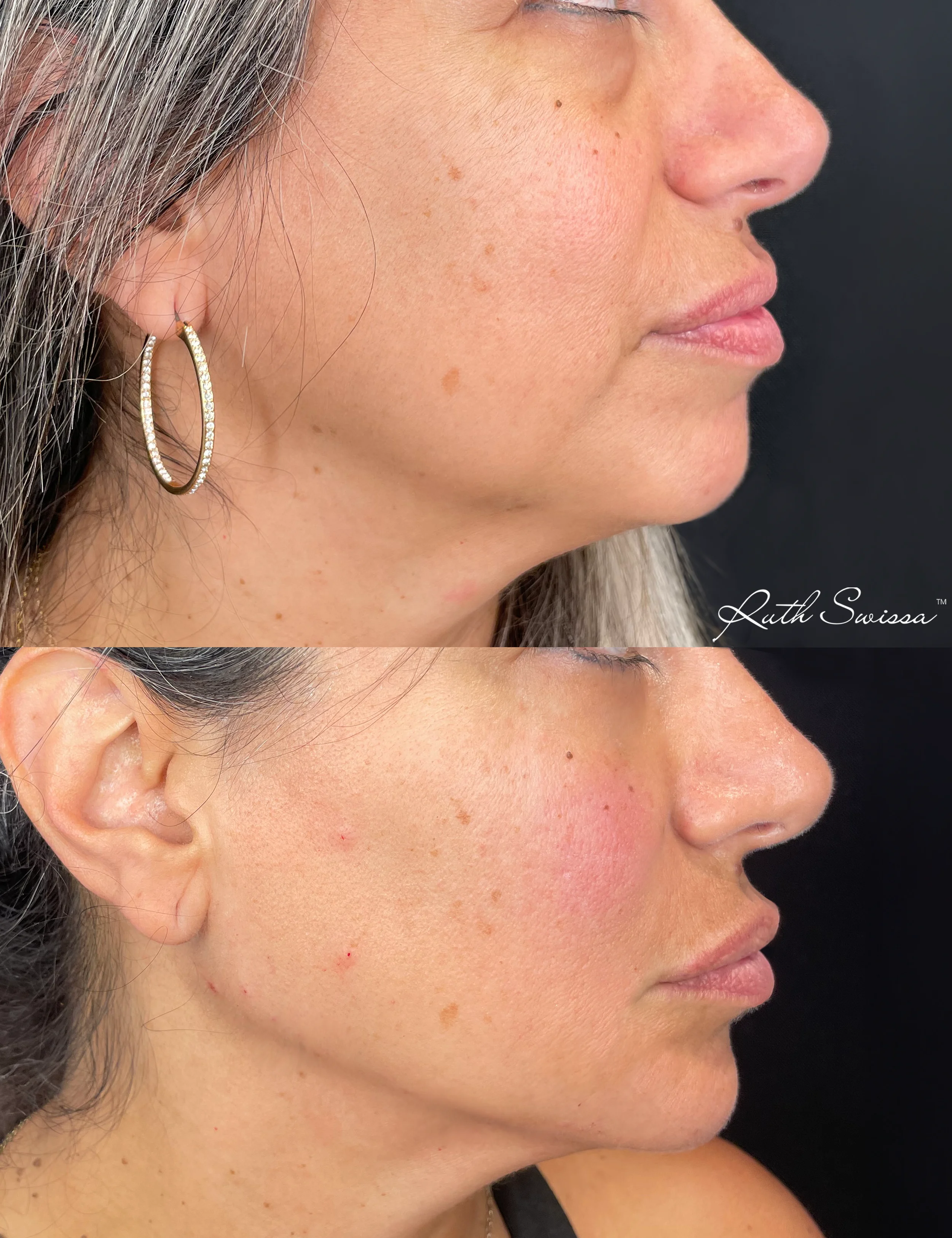
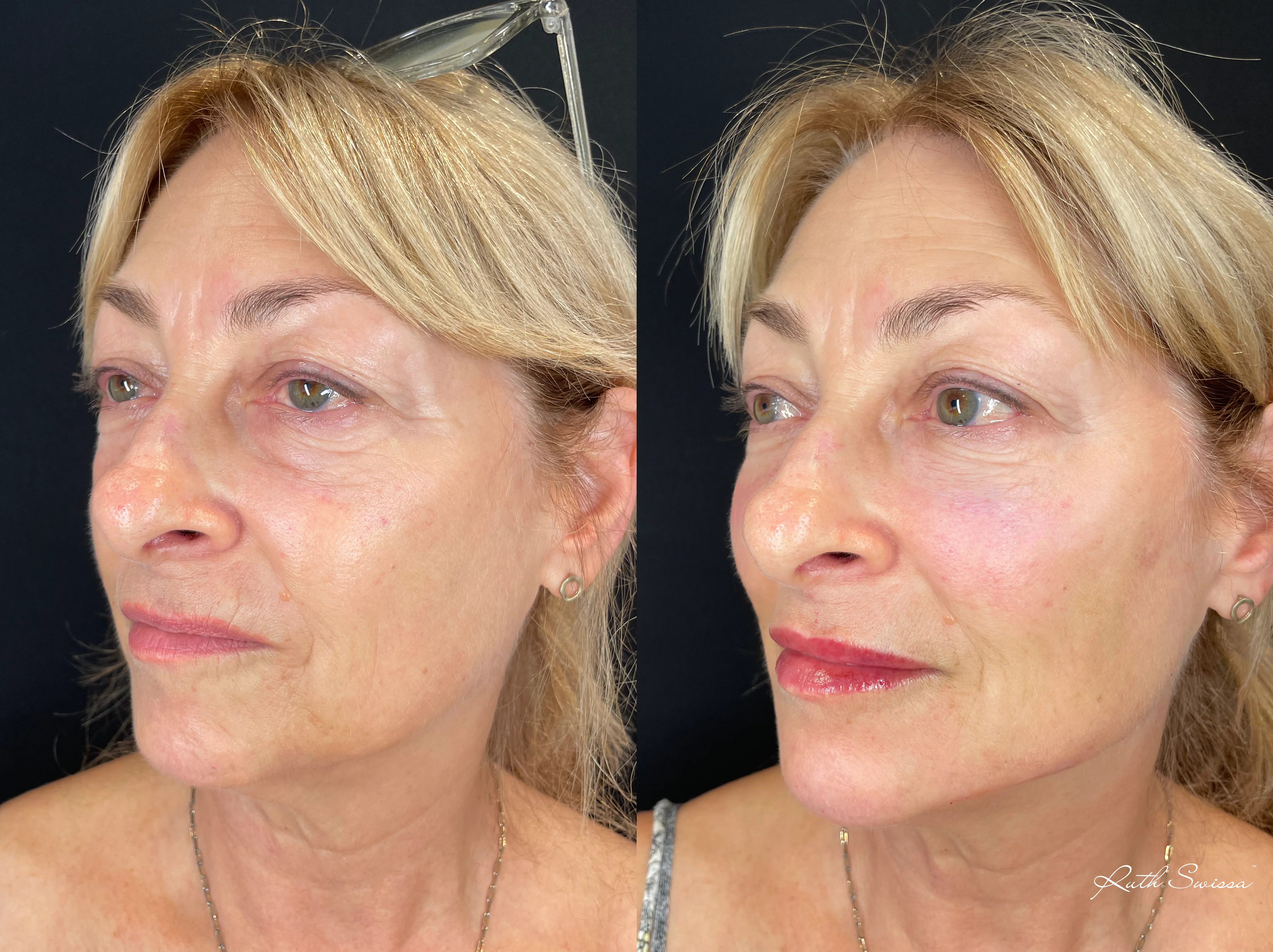
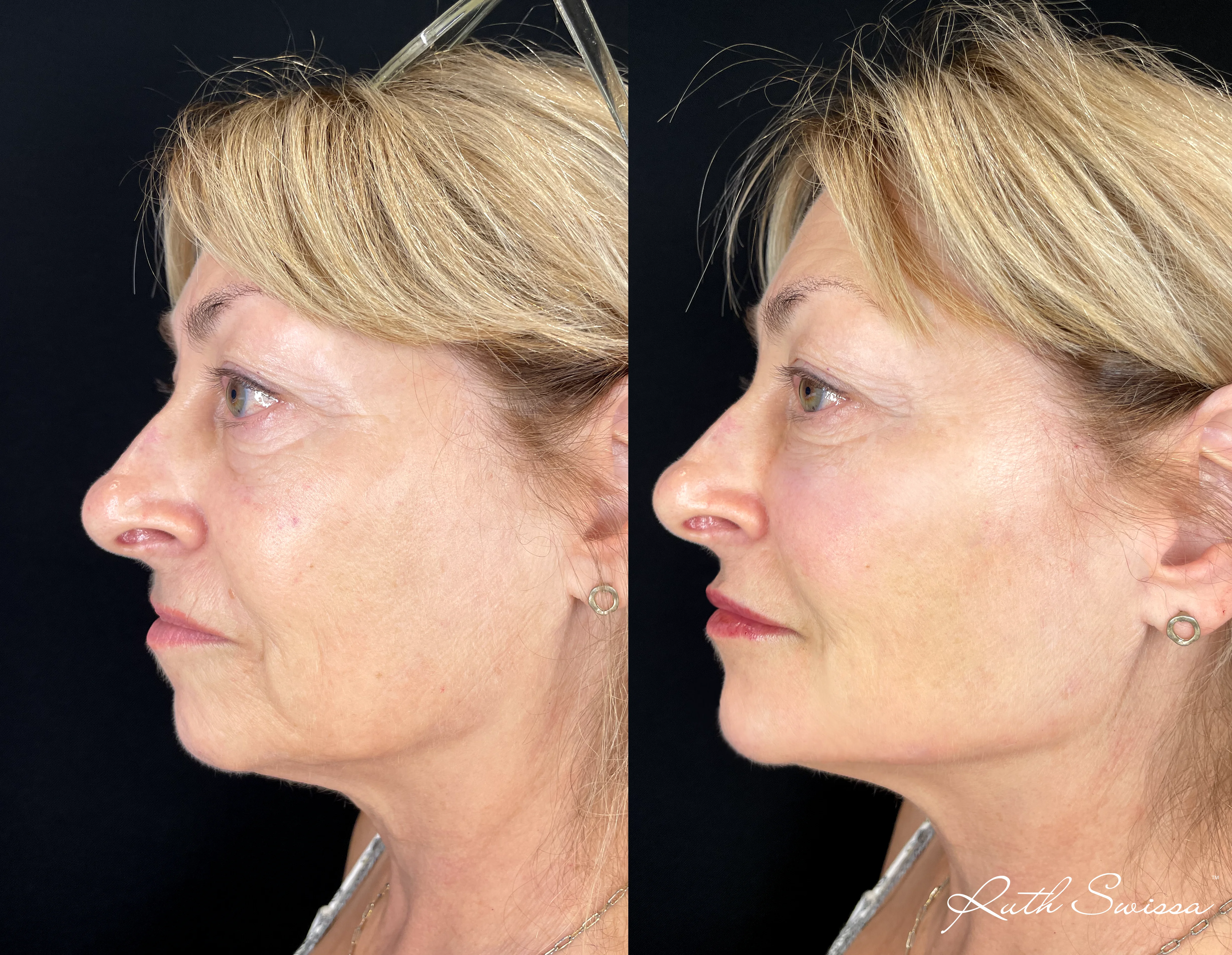
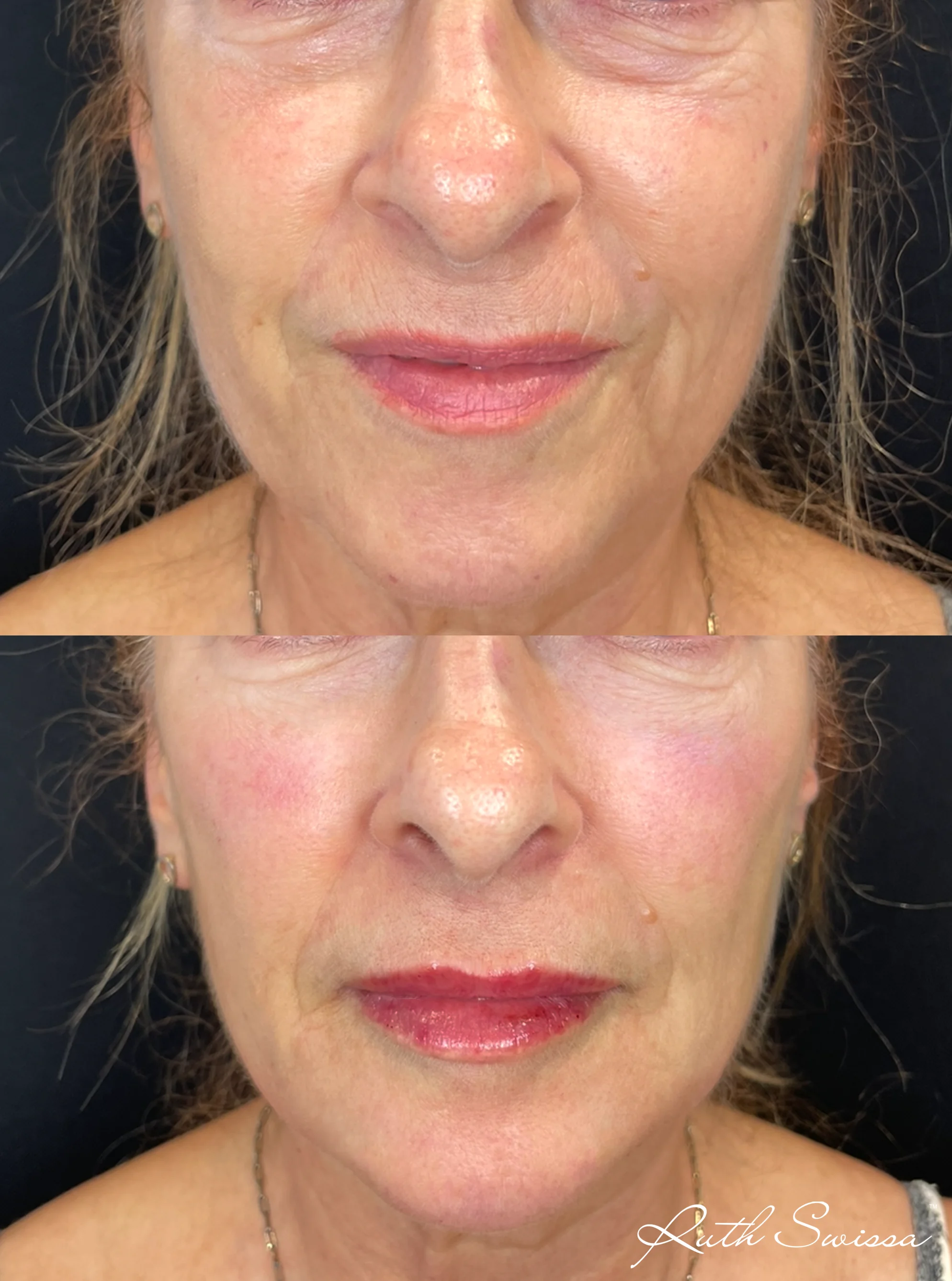
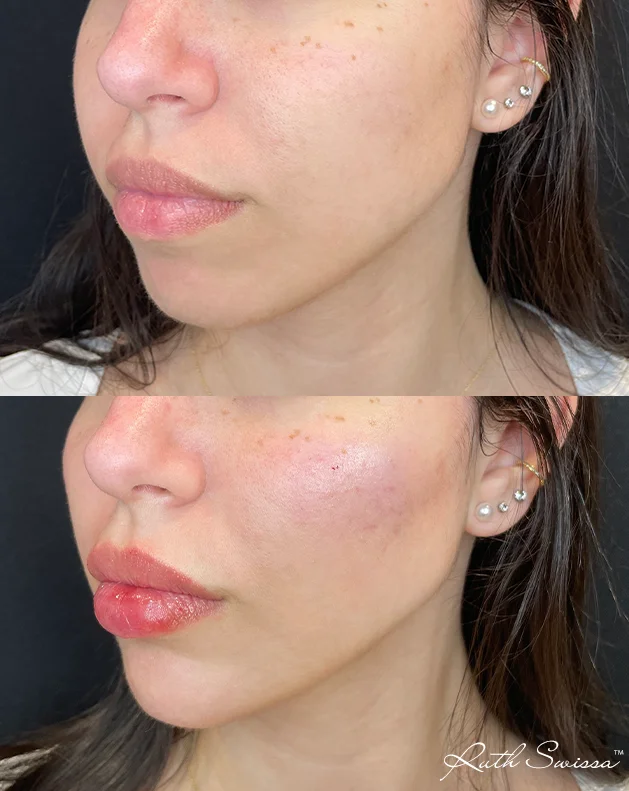
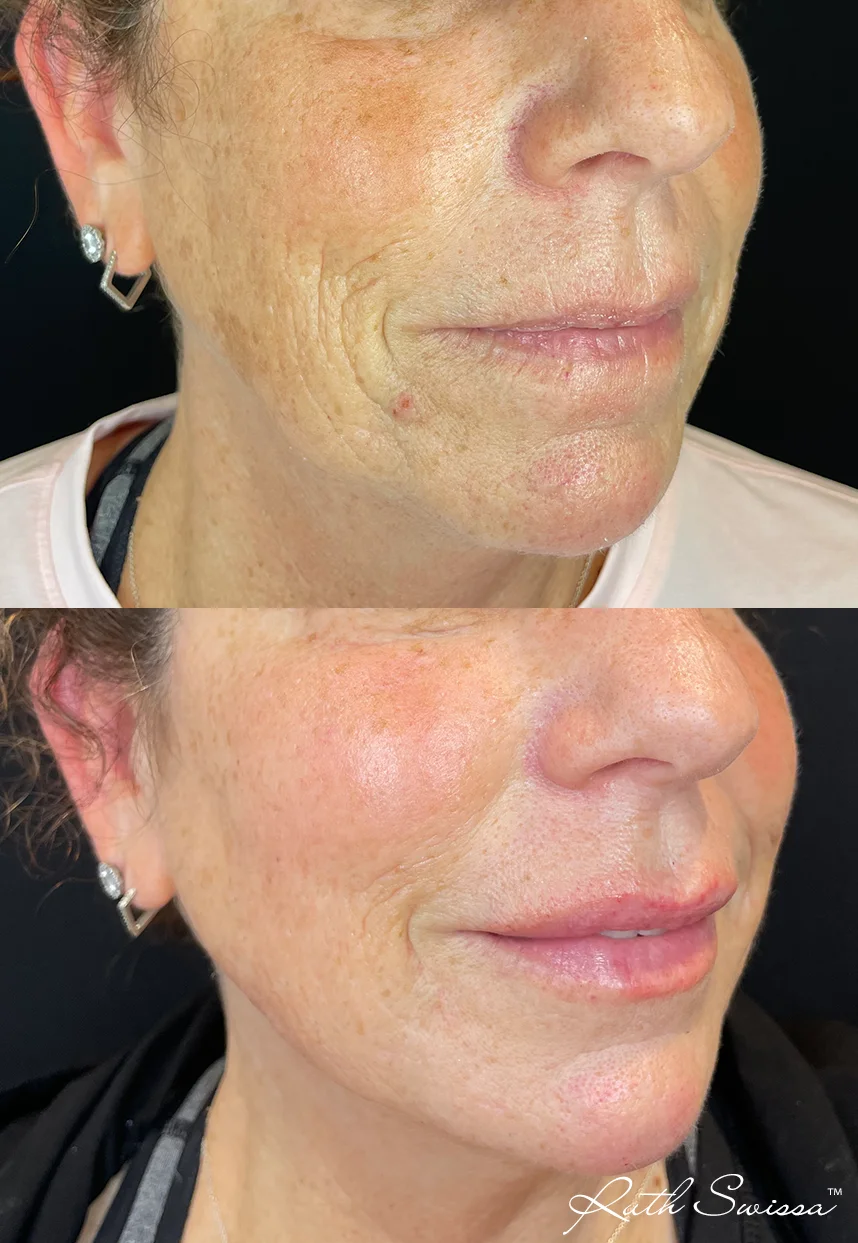
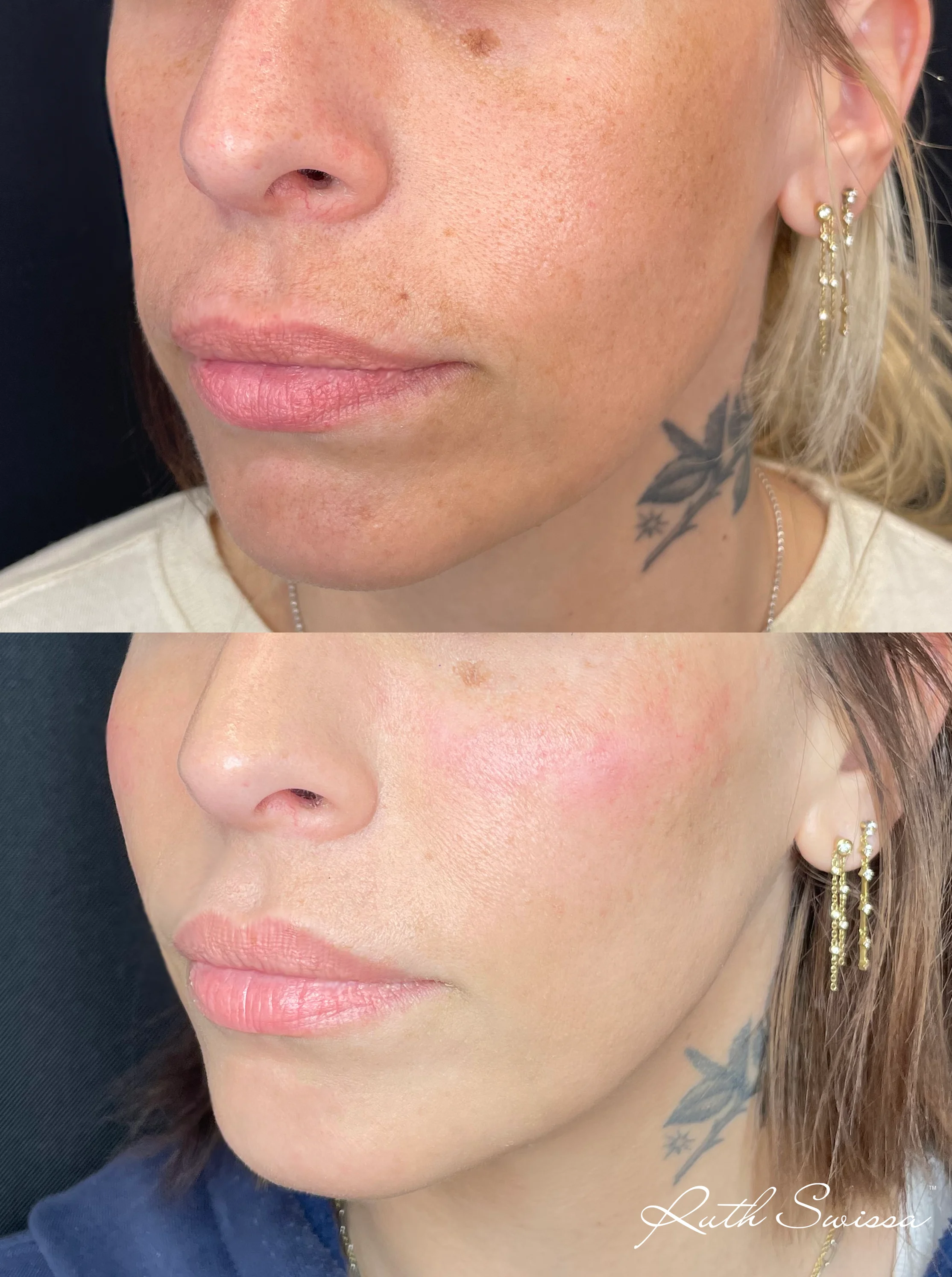
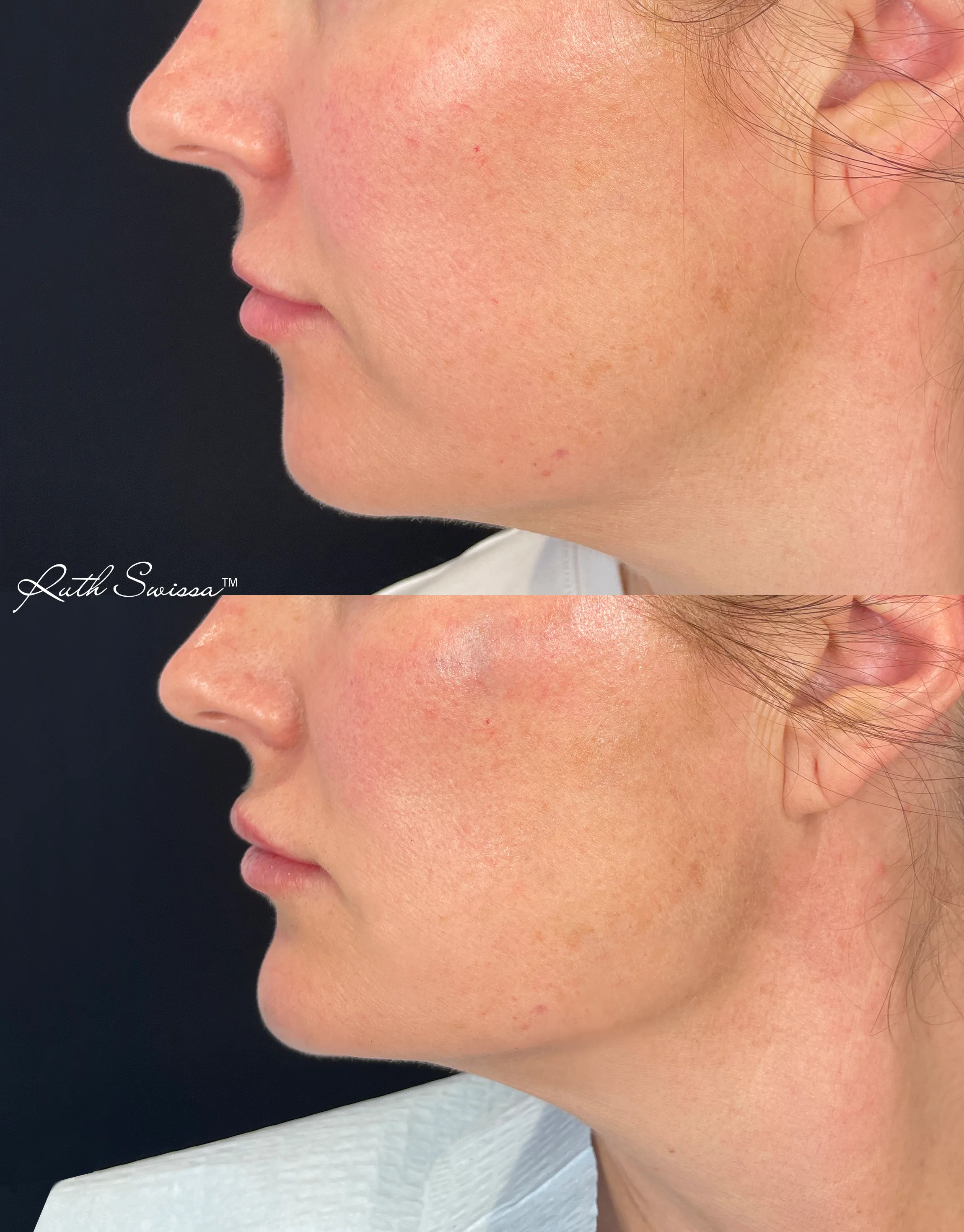
Photographs from the Ruth Swissa studio archive, shared with patient consent. Multi-area cases (chin, cheek, jawline) — angles vary per patient.
Where facial balancing. non-surgical rejuvenation is performed.
Our Beverly Hills satellite operates Wednesdays by appointment and performs injectables only. Lasers, regenerative protocols, medical weight loss and wellness are at our Calabasas studio.
Questions we get.
How many syringes does facial balancing take?
Most first-time plans run three to six syringes total across two to three visits, sometimes plus a biostimulator series and neurotoxin. The number is an output of the plan, not the input. We will quote a range at your consultation.
How long does facial balancing last?
Structural HA in the cheek and chin lasts 18 to 24 months. Lip and finer refinement is closer to 12. Biostimulator results — Sculptra, Radiesse — last two years or more because they're remodeling your own collagen.
How much does facial balancing cost in Los Angeles?
Balancing plans in LA typically start around $1,000 and scale with the components. Focused two-area HA plans run $1,500 to $3,000. Multi-area plans combining HA, biostimulator, and neurotoxin commonly land $3,500 to $8,000. The plan is priced by what it requires, not by area.
How does balancing compare to surgery?
Balancing is an order of magnitude less expensive than surgical alternatives — typically $3,500 to $8,000 versus $15,000 to $100,000 for surgical procedures — and entirely non-surgical. It addresses different things, and we say so when surgery is the better answer.
Will I look done?
Done well, no. Done quickly — too much product in too few visits — yes. Our default is to stage the work across visits so the result accumulates rather than appears all at once.
Can balancing be reversed?
The HA portion is dissolvable with hyaluronidase. Biostimulators are not. We default to HA for first-time balancing patients for exactly that reason.
Is balancing cheaper than à la carte filler?
Per visit, no — the plan totals more upfront. Across two or three years, often yes. Patients who address areas one at a time over multiple visits frequently pay more in total than patients who balance once, because the cumulative syringe count tends to be higher when work isn't planned.
Do I need filler, or is this a surgical conversation?
If the answer is surgical, we will say so. Significant skin laxity, severe volume loss, and certain anatomic features are not filler problems. We have surgeons we refer to.
Continue.
Five filler families, where each one belongs, hyaluronidase if you need it dissolved, and the difference between filling and stimulating.

Cheek filler for midface volume loss — high-lift gels, lateral vs anterior placement, syringe counts, and the overfilled look we avoid.
Under-eye filler for tear-trough hollowing — candidacy honesty, the low-G-prime gels we use, Tyndall risk, and when cheek support comes first.

Chin filler and jawline contouring — projection, pre-jowl blending, gel selection by tissue plane, and the masseter-Botox pairing for the lower face.
Schedule a consultation for facial balancing. non-surgical rejuvenation.
“… Nicole's adeptness in facial balancing ensured that the enhancements were seamlessly integrated with my natural features.”