Biostimulators. Sculptra, Radiesse, PRP, PRF, EZGel.
Collagen induction over months rather than instant fill — Sculptra, Radiesse, PRP, PRF, EZGel.
Injectable products that prompt your body to produce its own collagen and elastin over months. Unlike hyaluronic acid filler — which adds volume the day it goes in — biostimulators don't fill in the conventional sense. They rebuild. The category includes Sculptra, Radiesse, PRP, PRF, and EZGel.
Collagen rebuild, on the body's clock.
Hyaluronic acid filler delivers a known volume in a known place on the day of the injection. Biostimulators don't work that way. The product placed into the dermis or subcutaneous plane is not the result; the result is what your tissue builds in response to it, over weeks to months.
That is why we describe the category in time rather than in syringe counts. Patients who come in looking for an instant change are usually better served by filler. Patients who want a longer-arc improvement in skin quality, lift, and tissue density — and who can wait six to twelve weeks to see it — are the patients biostimulators are built for.
We almost always combine the two categories. Filler restores landmarks; biostimulators improve the canvas the landmarks sit on. The combined plan ages more gracefully than either alone.
What we use, and what each one is for.
The biostimulator category has expanded considerably in the last five years. The five products below cover the work we do; each one has a specific tissue indication, mechanism, and timeline.
| SculptraPoly-L-lactic acid · Galderma | The classic broad-area collagen stimulator. Placed in the deep dermis and subcutaneous plane, it triggers fibroblast activity over weeks. Best for global volume loss across cheek, temple, and lower face. A typical series is two to three sessions spaced four to six weeks apart; results build over three to six months and last two years or longer. |
|---|---|
| RadiesseCalcium hydroxylapatite · Merz | Both an immediate volume agent and a long-term collagen stimulator. Lifts on the day of injection and builds collagen over the following months. Often used along the jawline, in the pre-jowl area, and in hyper-diluted form across the décolletage and the back of the hand. |
| PRPPlatelet-rich plasma · autologous | A patient's own blood drawn, spun in a centrifuge, and the platelet-rich layer reinjected into the area being treated. Growth factors trigger local tissue repair. Used for facial skin quality, scalp for hair restoration (see our dedicated page), and as an adjunct to microneedling. |
| PRFPlatelet-rich fibrin · autologous | A second-generation refinement of PRP. Spun differently so a fibrin matrix forms, which releases growth factors more slowly over days rather than hours. Increasingly our preference over PRP for under-eye and skin-quality work where sustained release matters. |
| EZGelAutologous serum gel · heat-processed | A heat-and-cool processed autologous serum that forms a gel for sub-dermal placement. Combines structural support with growth-factor release. Used for under-eye texture, peri-oral lines, and skin-quality augmentation. |
Filling vs stimulating, in concrete terms.
HA filler is a known volume in a known place on day one. You see the result immediately. It is reversible with hyaluronidase. It lasts 12 to 24 months by product, and at the end of that window the result returns toward baseline.
Biostimulators do not produce a day-one result. The collagen that drives the change is built over six to twelve weeks. They are not dissolvable — the product itself is metabolized over months, but the collagen you build is yours, and is not reversible the way HA is.
The duration is also different. Sculptra results commonly persist two to three years from the final session, because the change is in tissue density rather than in implanted gel. The patient who is going to be a long-term aesthetic patient often ends up doing less work over time on a biostimulator-led plan.
On patience"The patient who wants to see the result tonight should get filler. The patient who wants to see it in six months and keep it for three years should consider Sculptra."
The most common protocol.
- 01
Consultation and mapping.
We confirm that you are a candidate — patients with active autoimmune disease or skin infection are not — and identify the broad areas where collagen rebuild will most help. Sculptra is poorly suited to under-eye and peri-oral; it shines in cheek, temple, and lower face.
- 02
Session one.
The product is reconstituted to a specific dilution for each treatment area and injected across the subcutaneous plane. The vial volume looks dramatic in the mirror immediately — most of that is dilution fluid, and it resolves within 24 hours. The collagen has not started yet.
- 03
Session two, four to six weeks later.
The first wave of collagen response has begun. We assess and place the next round, often in slightly different distribution based on what the tissue did with session one.
- 04
Session three if indicated.
Some patients are finished at two; some need three for the full effect. We don't pre-sell a three-session package; we decide after we see the response.
- 05
Massage and aftercare.
The five-five-five rule — five minutes of massage, five times a day, for five days — minimizes the risk of nodule formation. We coach the technique at the visit.
PRP, PRF, and EZGel.
The autologous protocols — PRP and PRF — use your own blood. The visit starts with a draw, the tube is spun in a centrifuge, and the active layer is reinjected. There is no introduced material; the patient is the source.
PRF differs from PRP in the spin and the absence of anticoagulant. The fibrin matrix that forms releases growth factors slowly over days rather than hours. For under-eye work, where the tissue is thin and the sustained release matters, we typically choose PRF.
EZGel sits alongside these — a heat-processed gel made from your own serum, combining structural support with growth-factor release. We discuss the right pick by concern at the consultation. Polynucleotide (PDRN) protocols are delivered as a SkinPen microneedling add-on rather than as a standalone injectable here.
Where we redirect.
Some patients arrive asking for Sculptra because they have read about it. After consultation, we sometimes recommend HA filler instead — particularly when the issue is a single landmark that has shifted (cheek projection, chin recession) rather than broad tissue thinning across an area.
Conversely, patients asking for a syringe of filler in the temple, when the temple is hollow across a wide territory, are often better served by Sculptra. The right product is the one the anatomy is asking for, not the one the patient walked in naming.
- Patients with active autoimmune disease, in the case of Sculptra and Radiesse, without specialist coordination.
- Active skin infection or active acne at the treatment site.
- Pregnant or breastfeeding patients.
- Patients who want a same-day visual result. The category isn't built for that, and we will recommend HA filler instead.
How much do biostimulators cost in Los Angeles?
Biostimulator treatments in Los Angeles typically range from $850 to $2,000 per treatment, depending on product and area. Sculptra plans run $850 to $1,700 across staged sessions. Radiesse for jaw, neck, hands, or knees runs $1,000 to $2,000 per treatment. EZ Gel sessions cost $1,200 to $1,500. PRP sessions run $600 to $1,500 depending on treatment area.
What drives the biostimulator price.
Product type sets the base price. Sculptra is priced as a treatment plan (typically two to three sessions, two to three vials per session) because the result builds across visits. Radiesse is priced per treatment because the calcium hydroxyapatite produces immediate volume in addition to the collagen response. PRP and PRF are blood-derived, so pricing reflects the in-house processing time rather than externally-sourced materials.
Vial or session count is the key variable. A patient with mild volume thinning across the temple and cheek might use two vials of Sculptra over two sessions. A patient with significant facial-volume loss after weight reduction might use three vials across three sessions. The total scales linearly with materials and chair time.
Treatment area matters most for PRP. Full-face PRP sits at the top of the range; smaller targeted areas (under-eye PRF, focal scarring) run lower. The blood draw and spin protocol is consistent; the application time and product volume varies by area.
Injector experience and location set the upper bound. Biostimulators reward injector skill more than HA filler does — placement is in deeper planes, and the consequences of misplacement can persist longer because the product isn't dissolvable. Premium for an experienced injector is real and worth paying for in this category.
Typical Los Angeles biostimulator ranges.
Sculptra and Radiesse are not dissolvable. Per-treatment pricing reflects materials and injector time across staged plans.
| Variant | What's included | Typical LA range |
|---|---|---|
| Sculptra plan | Poly-L-lactic acid; typically 2 – 4 vials across 2 – 3 staged sessions. | $850 – $1,700 per treatment plan |
| Radiesse | Calcium hydroxyapatite for jaw, neck, hand, knee rejuvenation. | $1,000 – $2,000 per treatment |
| EZ Gel | Heat-processed albumin gel from your own blood; injectable scaffold. | $1,200 – $1,500 per session |
| PRP (facial / scalp) | Platelet-rich plasma drawn and spun in-house; topical or injected. | $600 – $1,500 per session |
| Under-eye PRF | Platelet-rich fibrin for tear-trough volume and skin quality. | $1,200 – $1,500 per session |
Biostimulators vs HA filler vs facial balancing.
HA filler delivers immediate volume and is dissolvable. Per-syringe cost ($500 to $950) is lower than per-treatment biostimulator cost, but for restoring volume across a broad area, the syringe count multiplies fast. Patients who need volume in one or two landmark areas usually pay less with HA; patients restoring volume across a face usually pay less per result with biostimulators.
Sculptra versus Radiesse turns on the result you want. Sculptra builds collagen gradually over three to six months; the change is structural and subtle, ideal for broad volume support. Radiesse produces immediate volume plus collagen stimulation, ideal for the jawline where a same-day contour matters. The price overlap is meaningful; the choice is clinical.
Facial balancing combines biostimulators with HA and neurotoxin in a planned arc. For patients addressing the face as a system rather than a single area, balancing typically delivers more per dollar than à la carte biostimulator treatment. Plans run $3,500 to $8,000+ across staged visits.
PRP and PRF sit in a different category — regenerative rather than volumizing. They cost less per session than HA or biostimulators, but they don't add volume directly. For patients chasing skin-quality improvement rather than contour change, PRP is the right tool at the lower price point.
How we price biostimulator treatment.
Pricing at Swissa Med Spa is determined at consultation, where we match the product family to your anatomy and goals. Sculptra plans and Radiesse treatments are quoted in writing before the first session, with the staging spelled out across visits.
Performed by Orr Swissa-Amran, PA-C, board-certified Physician Associate, internationally trained in hair restoration and aesthetic medicine.
PRF undereye results.
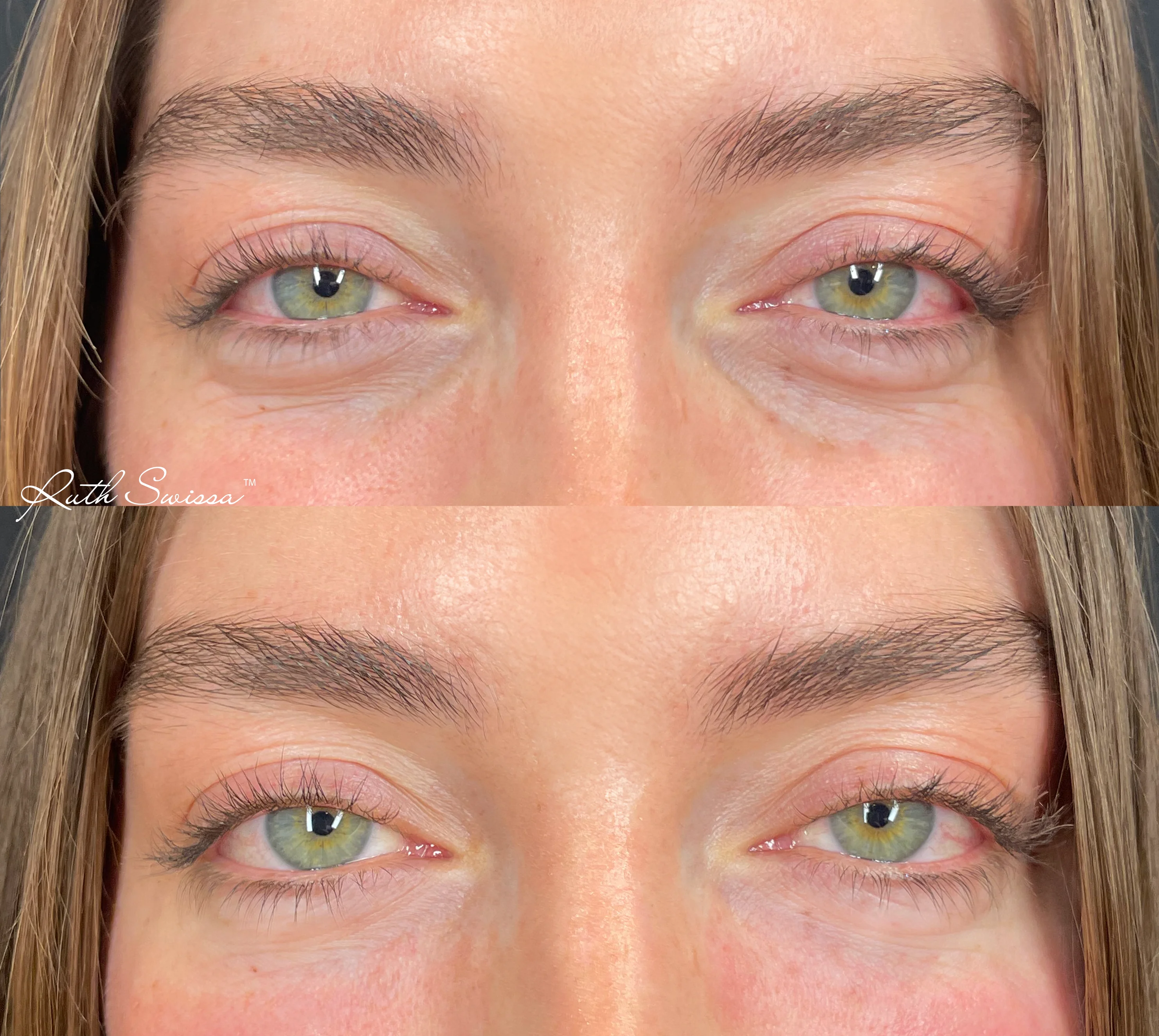
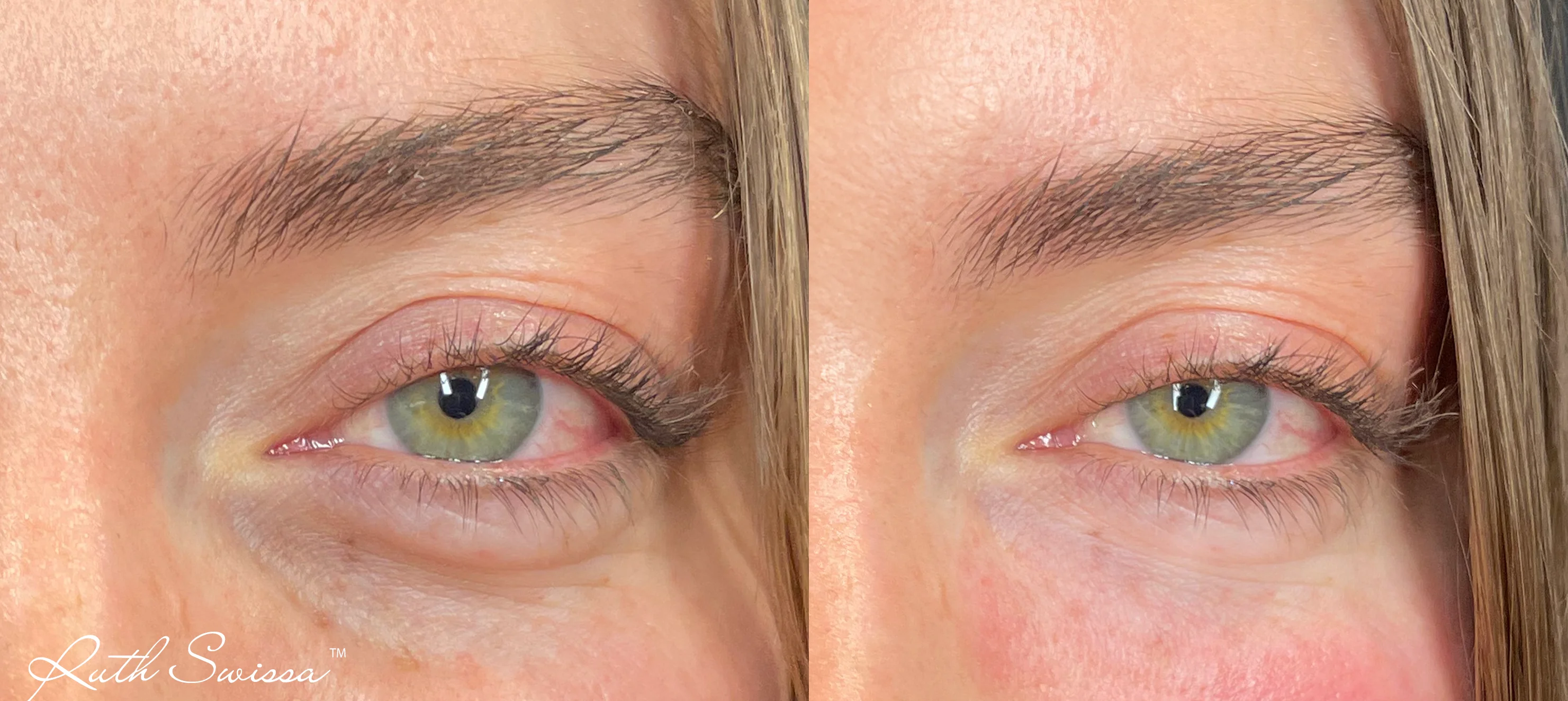
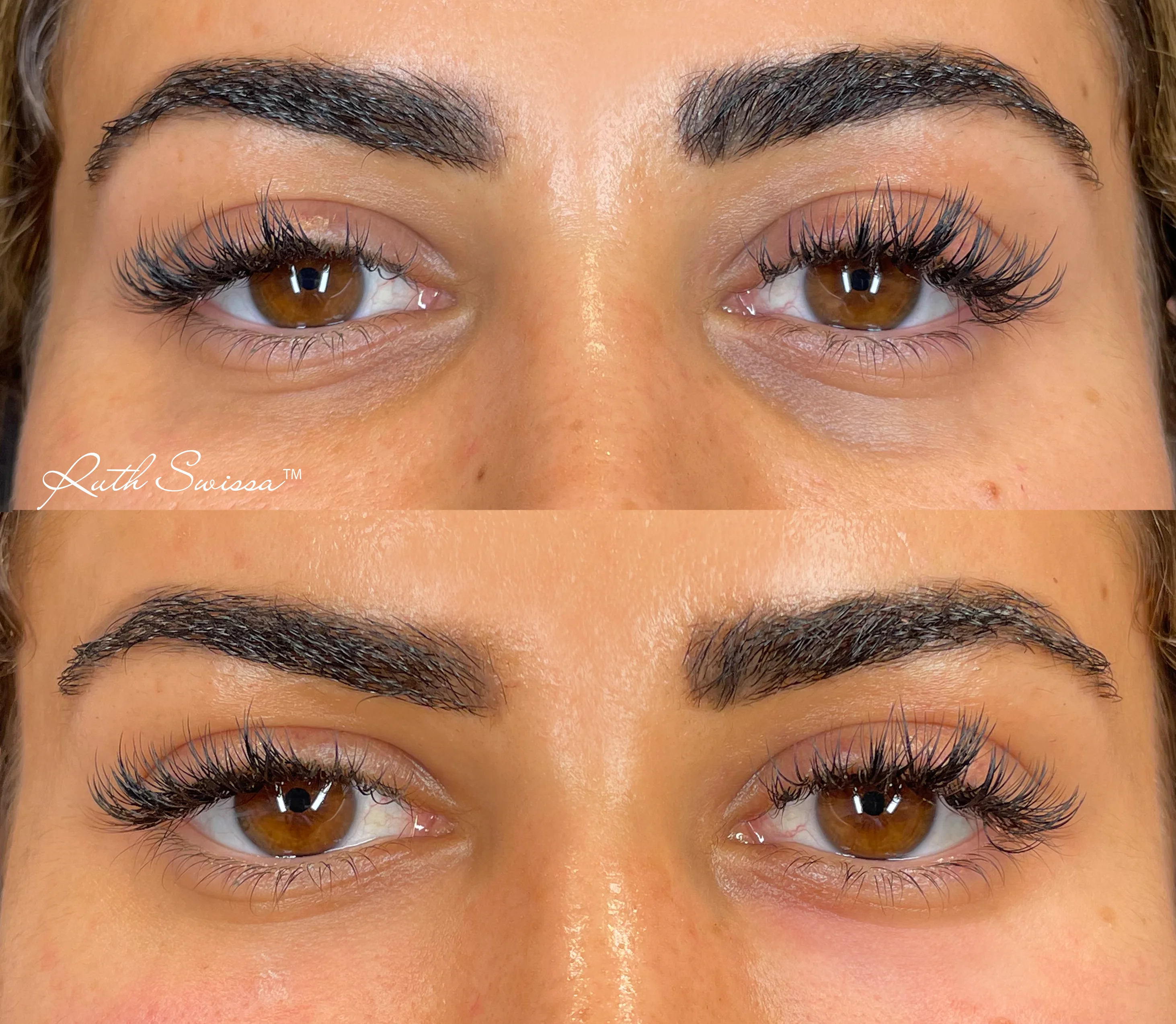
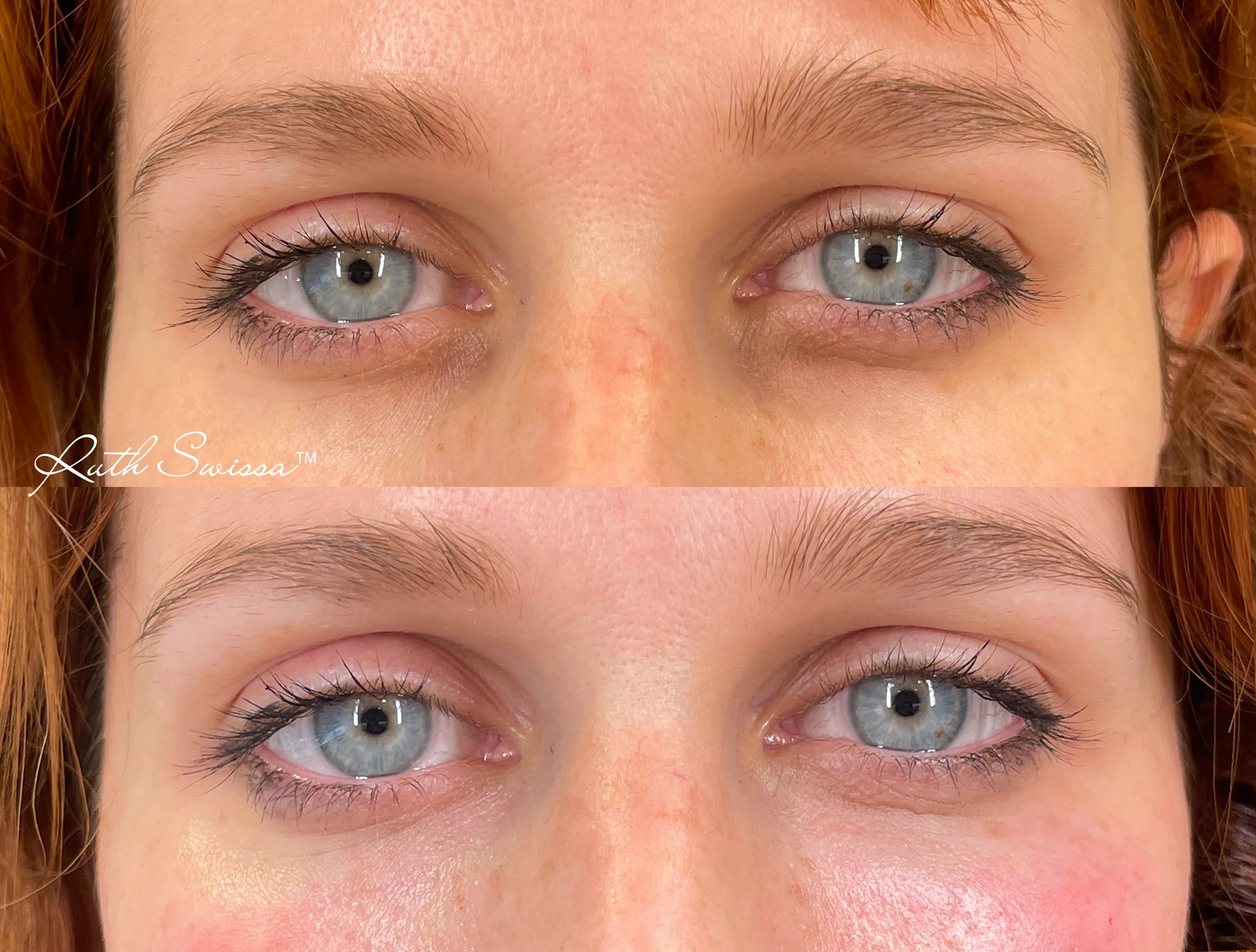
Photographs from the Ruth Swissa studio archive, shared with patient consent. PRF undereye cases shown — Sculptra and Radiesse outcomes are reviewed in person at consultation.
Where biostimulators. sculptra, radiesse, prp, prf, ezgel is performed.
Our Beverly Hills satellite operates Wednesdays by appointment and performs injectables only. Lasers, regenerative protocols, medical weight loss and wellness are at our Calabasas studio.
Questions we get.
How long until I see results from Sculptra?
The first changes appear at six to eight weeks; full effect at three to six months. The product itself dissolves quickly — what you see is the collagen your tissue has built, on its timeline.
Can biostimulators be reversed?
Not the way HA filler can. Sculptra and Radiesse are metabolized over months; the collagen built in response is your own tissue. For patients who want reversibility, we default to HA.
How much do biostimulators cost in Los Angeles?
Sculptra plans in LA typically run $850 to $1,700 across two to three staged sessions. Radiesse for jaw, neck, hand, or knee rejuvenation runs $1,000 to $2,000 per treatment. PRP sessions run $600 to $1,500. EZ Gel and under-eye PRF cluster at $1,200 to $1,500 per session.
How much does a Sculptra series cost?
Pricing is by vial, and most patients use two to three vials per session over two to three sessions. Pricing discussed at consultation.
How long do biostimulator results last?
Sculptra commonly persists two to three years from the final session. Radiesse is closer to one to two years. PRP and PRF results from a series typically last 12 to 18 months. Maintenance is shorter and less frequent than with filler.
Is PRP the same as PRF?
Same source — your own blood — different spin protocol. PRF forms a fibrin matrix that releases growth factors more slowly, which we prefer for under-eye and skin-quality work. PRP is still the more common choice for scalp hair restoration.
Is Sculptra cheaper than HA filler?
Per treatment plan, often comparable. Per result, frequently cheaper — Sculptra builds collagen over months and lasts two to three years, where HA syringes need replacement every twelve to twenty-four months. For broad-area volume restoration, the cost-per-month math usually favors Sculptra.
Can I combine biostimulators with filler in the same visit?
Often yes, when the plan calls for both. We usually do the biostimulator first and the HA refinement a separate day, so the tissue response from each can be assessed separately. Practical scheduling varies.
Continue.
Sculptra (poly-L-lactic acid) builds collagen over months — how it differs from HA filler, session cadence, and where it belongs.
Five filler families, where each one belongs, hyaluronidase if you need it dissolved, and the difference between filling and stimulating.
Multi-syringe, multi-area planning anchored to anatomic landmarks — not lots of filler everywhere.
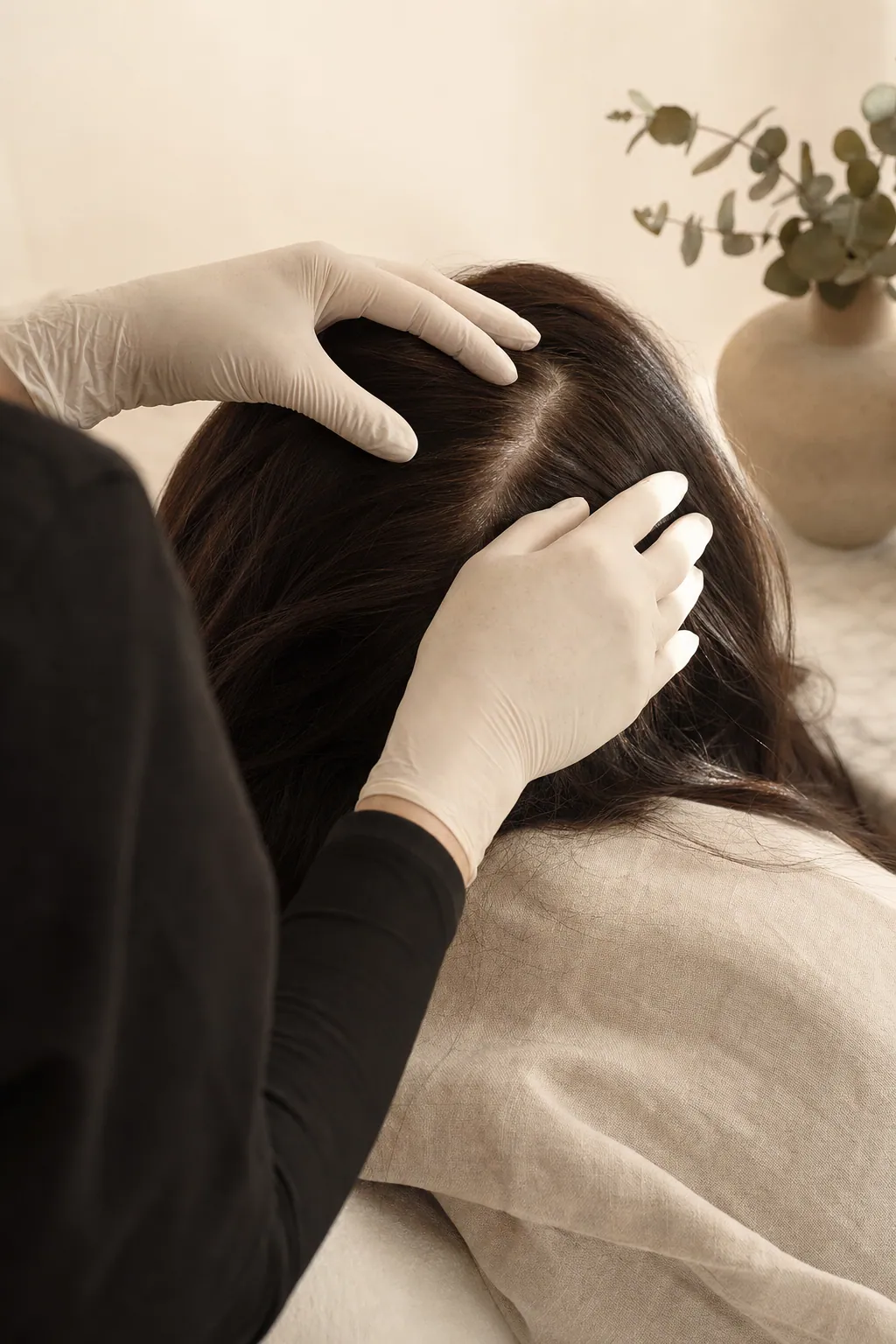
Growth factors injected into the scalp to stimulate dormant follicles. Candidacy, protocol, and the typical results timeline.
Schedule a consultation for biostimulators. sculptra, radiesse, prp, prf, ezgel.
“I had laser for scars and injections with Orr for the first time and am so pleased with the results! She has an amazing eye and such a gentle touch.”