Laser scar revision vs scar camouflage tattooing. Which one for which scar?
Laser scar revision changes the scar tissue itself — flattening, softening, addressing color irregularity. Camouflage tattooing conceals a stable, mature scar with skin-tone pigment. Lasers treat the scar; camouflage hides it. The right choice depends on scar type, age, and skin tone.
Laser revision vs camouflage tattooing.
If you only read one section, this is the one. Detailed reasoning below.
| Laser revision | Camouflage tattooing | |
|---|---|---|
| What it changes | Scar tissue · color · texture | The visual appearance only |
| Best for | Active, hypertrophic, or new scars | Stable, flat, mature scars |
| Skin tone | Adjustable across all Fitzpatrick types with caution | Works best when pigment matches the surrounding skin |
| Sessions | 1 – 6 depending on device | 2 – 4, with a 12-month maturation window |
| Permanence | Permanent change to tissue | Pigment fades 2 – 5 years; may need refresh |
| Our preference | When the scar can still change | When the scar is mature and unchanging |
What lasers actually do to a scar.
Fractional CO₂ resurfacing remodels the scar tissue through controlled ablative injury — the body's repair response produces new collagen that's better organized than the scar's. Best for hypertrophic scars, atrophic acne scars, and textural irregularity.
Pulsed dye lasers target the vascular component of red or pink scars. Useful for newer scars where redness dominates, and for keloid management alongside intralesional steroid.
Pigment lasers can address the hyperpigmentation that surrounds some scars in darker skin tones, although the conservative protocol matters — aggressive pigment lasering can worsen what it's trying to treat.
Laser scar revision is most effective when the scar is still actively remodeling — typically the first year after the injury or surgery. Older scars respond, but less dramatically.
What camouflage does that lasers can't.
Some scars don't change. A long-mature surgical scar, a hypopigmented patch where melanocytes were lost, or a stretched flat scar that's lost its color — these aren't going to respond meaningfully to a laser. They're stable. What they need is concealment.
Scar camouflage is a paramedical tattooing technique. A custom-blended skin-tone pigment is implanted into the dermis of the scar, in thin layers across two to four sessions, with a 12-month maturation window so the result can settle and be refined.
Done well, the scar is no longer visually identifiable as a scar at a normal conversational distance. Done poorly, it draws more attention. The technique requires both an artist's eye for skin tone and a clinician's understanding of how pigment settles in compromised tissue.
Ruth Swissa, our sister practice, is one of the longest-running scar camouflage practices in Los Angeles — established 1998, with cases documented across thousands of patients.
Heuristic"If the scar is still capable of changing, lase it. If it's stable and the issue is visual, camouflage it. Often the answer is both, sequenced."
When we recommend which.
If your scar is younger than 18 months and the color is still active — red, pink, raised, textured — we start with laser. The tissue is still capable of remodeling, and a laser pass at this stage often closes the gap meaningfully without needing pigment.
If your scar is older than two years and the issue is purely visual — stable color, flat surface, no functional concern — we lean toward camouflage. Trying to lase a mature, hypopigmented scar usually produces little change and can introduce new color irregularity.
Often the answer is both, sequenced. Lase first to optimize the tissue, wait the maturation window, then camouflage the residual visual signature.
We coordinate this across the two studios. The same intake informs both the laser plan and the camouflage plan; you're not consulting twice.
Questions we get.
Will a laser remove a scar completely?
No laser removes a scar completely. Lasers reduce textural and color difference between the scar and surrounding skin. A meaningfully improved scar is the realistic goal.
Can I lase over a camouflaged scar later?
Not directly — the pigment will respond to the laser and shift unpredictably. If you anticipate wanting laser later, do the laser first.
Is camouflage tattooing permanent?
Permanent in the same sense any tattoo is. The pigment fades over two to five years and typically benefits from a touch-up. Some patients refresh; some don't.
What about new surgical scars?
Most surgeons advise waiting at least six months from suture removal before any aesthetic intervention. We follow that timeline.
Continue.
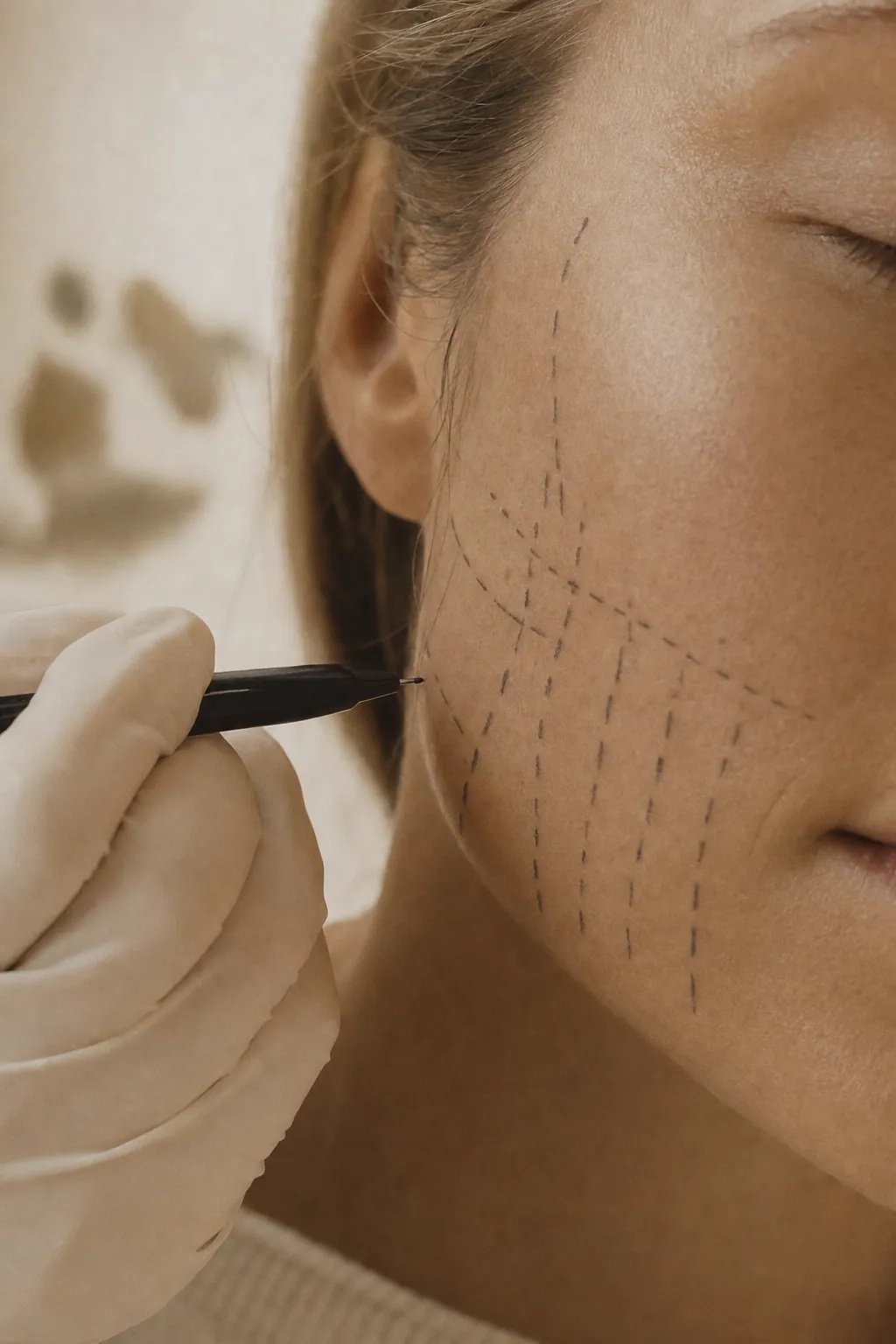
Ablative laser resurfacing for texture, pores, fine lines, crepiness and photodamage. Real downtime, Fitzpatrick caveats, recovery protocol.
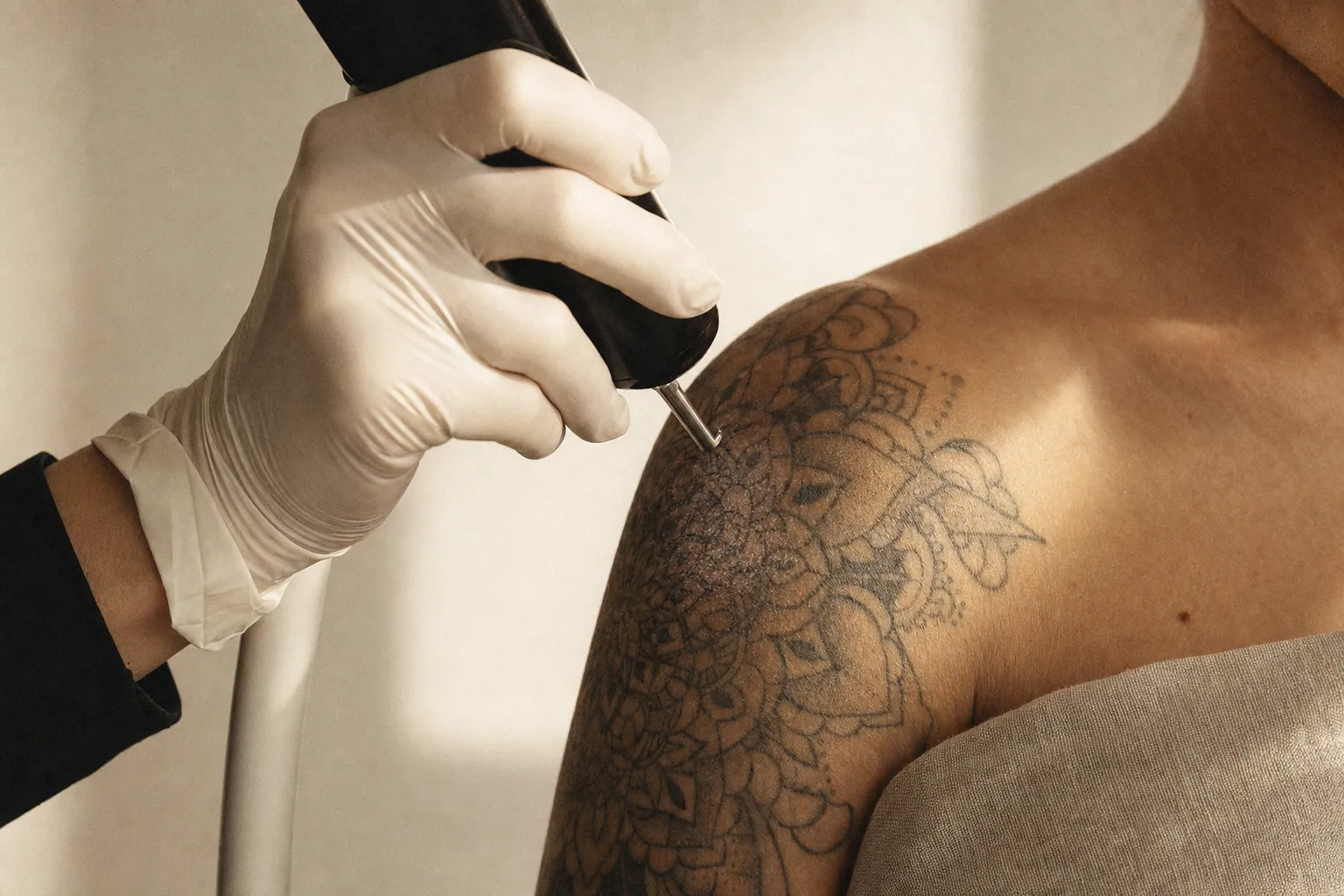
Picosecond laser tattoo removal. Sessions, sensation, the ink the older lasers can't reach, and why removal sometimes belongs with the same team that does the cover-up.
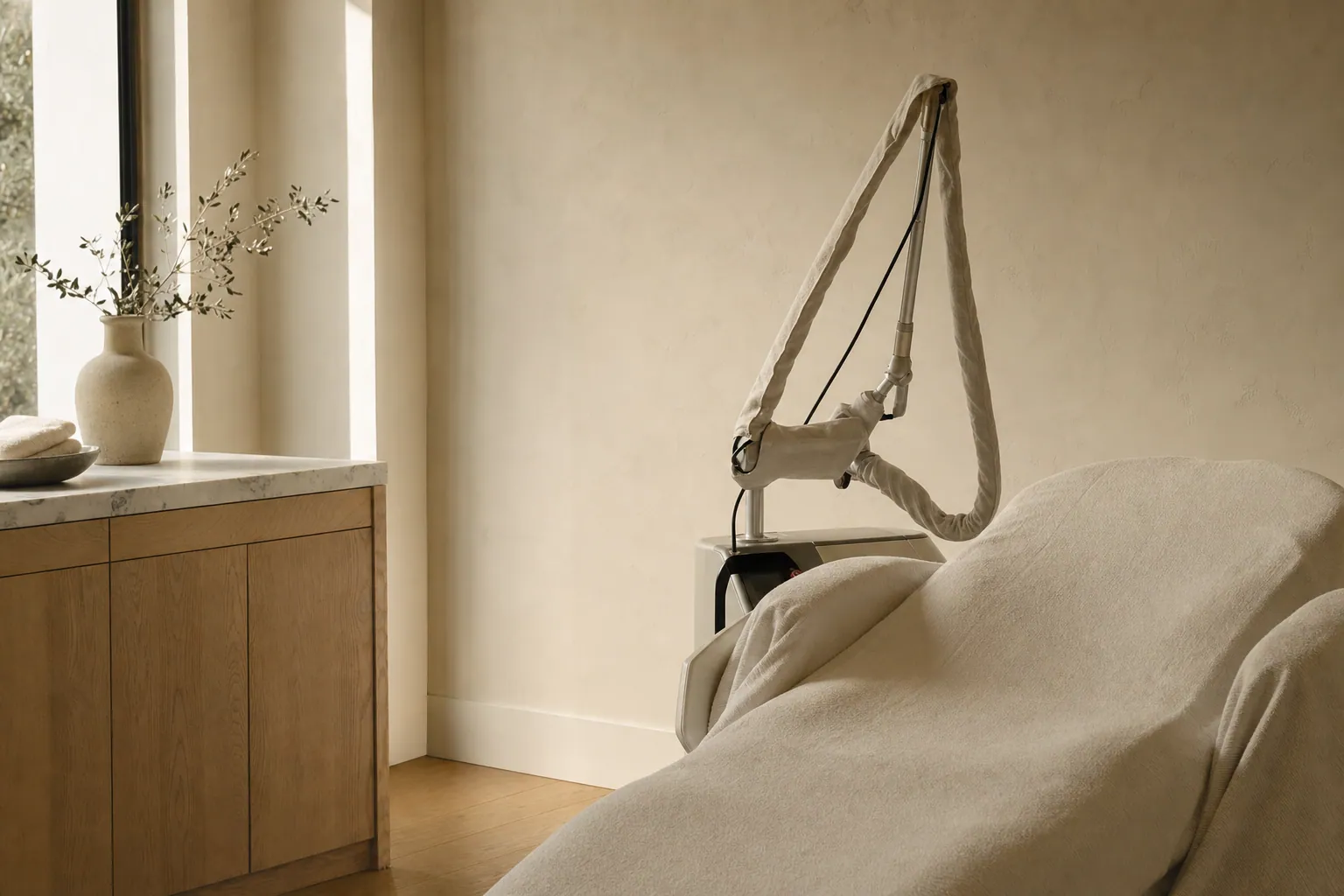
Ablative resurfacing, pigment, vascular, RF, hair removal, tattoo and PMU removal — how we choose by concern, not by device.
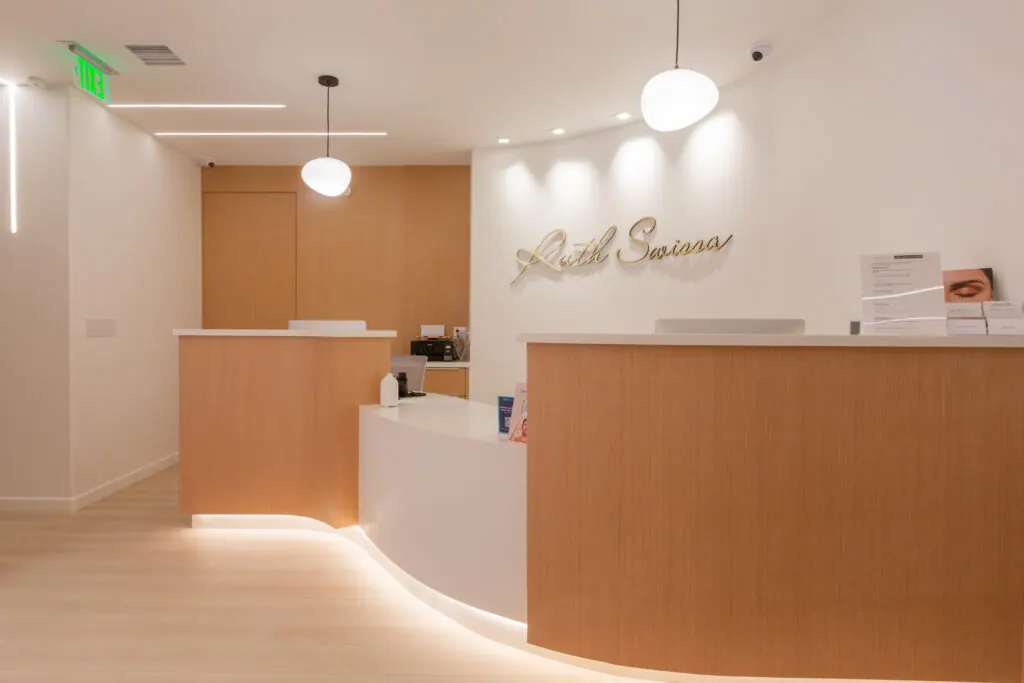
Paramedical tattooing that blends a mature scar into the surrounding skin tone — the same technique the Ruth Swissa studio is known for nationally, now performed inside the Med Spa's clinical envelope.
Swissa Med Spa shares a building, a clinical team and a thirty-year history with Ruth Swissa, the paramedical tattooing practice.
Every booking starts with a conversation.
“I had ablative CO2 laser resurfacing. Next to no pain! … She explained everything in detail and was explicit in after care instructions…”