Scar camouflage, before and after.
Selected consented cases from the paramedical archive — how camouflaged scars read at conversational distance, what remains visible up close, and what we don't publish.
What a published before-and-after actually shows.
Camouflage outcomes are easiest to evaluate at conversational distance — three to six feet, in soft daylight, without a phone camera flash. That is the distance at which the procedure is designed to do its work. The published before-and-after photographs below are taken in calibrated studio lighting at that distance, with the same camera and the same color reference card for both frames.
Up close, you may still see the scar's texture. Camouflage does not flatten tissue. If texture is the dominant concern, the right tool is laser scar revision — also performed in this building, and often the first step in a combined plan.
All cases shown are from the Ruth Swissa archive. As Med Spa cohort cases reach the eight-week settled mark, we add them to the published set with consent. The shared technique and provider mean the case archive transfers — you can use these as a reasonable reference for what to expect from a Med Spa booking.
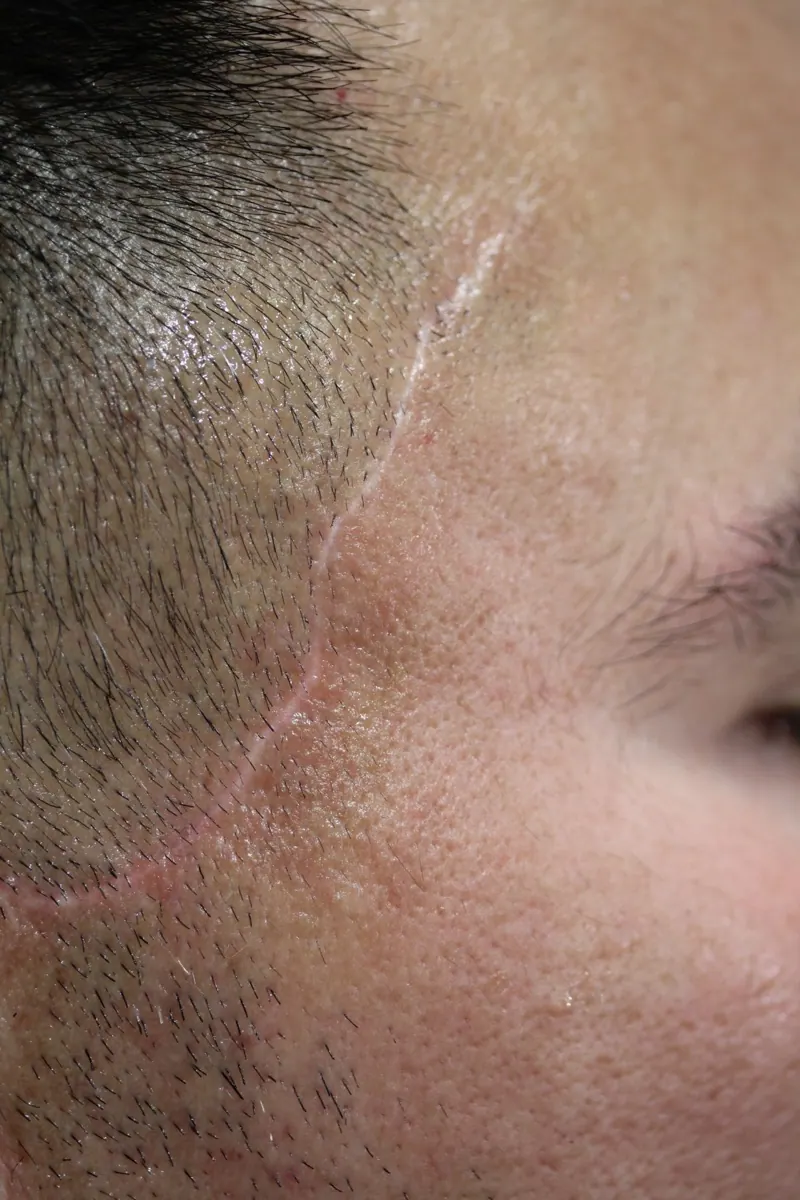
Mature surgical scar, two sessions to full match.
A long-standing surgical scar in the silvery-white stage. The patient had completed the original surgery years prior and wanted the scar concealed for a milestone event. Two sessions, six weeks apart. The settled match held at the eight-week and twelve-month follow-up checks.
The case is typical: flat scar, stable color, good candidate, plan completed across two appointments. The patient elected against any laser revision; camouflage alone was sufficient.
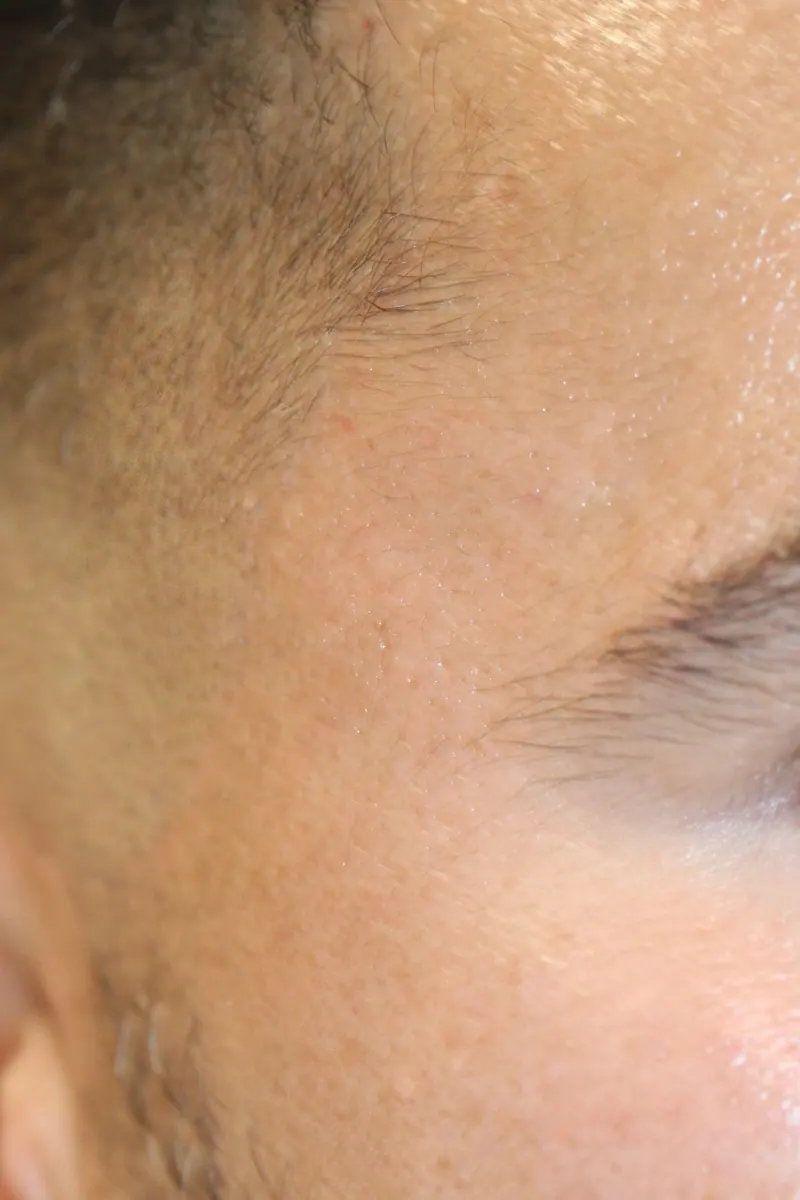
The settled deposit at eight weeks.
The same scar at the eight-week follow-up after session two. Pigment has fully settled. At conversational distance, the scar reads as continuous color with the surrounding skin; texture remains visible at close inspection.
Sun-care discussion at the follow-up: SPF 30+ daily on the area, hat or covering during long outdoor exposure, annual check-in. No additional sessions scheduled; refinement deferred to the five-to-ten year window if needed at all.
Cases that don't appear here.
Self-harm cases and gender-affirming surgery cases are excluded from the public archive by default, regardless of consent. Patients who want to see additional reference cases relevant to their specific scar type can request them privately at consultation — we keep a more comprehensive consented archive that is shared one-on-one rather than published openly.
Areola and nipple reconstruction cases live on the Ruth Swissa archive, where the canonical case set has accumulated over decades of paramedical work. The reference quality there is significantly higher than what we can show at SMS scale today.
- All published cases shared with explicit patient consent and identifiable features cropped.
- Photographs from the Ruth Swissa studio archive; provider and technique transfer 1:1 to a Med Spa booking.
- Calibrated studio lighting; color reference card matched across before and after frames.
- Med Spa cohort cases will be added as they reach the eight-week settled mark with consent.
- For self-harm and gender-affirming cases, a private consented archive is shared at consultation rather than published openly.
Artistic direction by Ruth Swissa, CMM, 25+ years in paramedical aesthetics.
Every booking starts with a conversation.
“… Ruth, with her artistry, skill, and talent, magically removed the entire scar! It's completely gone, and I feel like myself again.”