Smooth & prevent wrinkles.
Dynamic and static wrinkles — what neurotoxins, RF microneedling and resurfacing can address, and when each is the right call.

Dynamic wrinkles appear when you express; static wrinkles remain when you don't. Neurotoxins — Botox, Daxxify, Dysport — address the muscle activity that drives the dynamic line. Energy-based treatments — RF microneedling, fractional CO₂ — address the etched line in the skin. The two work on different layers; for most faces, you eventually need both.
Dynamic, static, and the line between them.
Make an expression in front of a mirror. The lines that appear — across the forehead when you raise your brows, between the brows when you frown, at the outer eyes when you smile — are dynamic. They're caused by the muscle pulling on the skin above it.
Now relax your face. The lines that remain are static. They started as dynamic lines decades ago, deepened by repetition, and eventually etched themselves into the skin's structure. The muscle is still pulling under there, but the line no longer needs the pull to be visible.
That distinction is the entire treatment conversation. A line that's still primarily dynamic responds beautifully to neurotoxin alone. A line that's become primarily static won't fully resolve from neurotoxin — you need to remodel the skin itself.

Reading a face for what it actually needs.
The glabella — between the brows — is the area where dynamic lines become static fastest. Decades of frowning compresses the dermis between two strong muscles; the resulting eleven lines often need both a neurotoxin to stop the contraction and a resurfacing pass to soften what's already there.
Forehead lines tend to remain primarily dynamic longer. They sit on a broad flat plane and don't get folded as deeply as glabellar lines, so neurotoxin alone often closes the gap.
Crow's feet are the friendliest of the dynamic areas — they respond reliably to small doses of neurotoxin and rarely need adjunctive resurfacing in the first decade of treatment. The skin around the eye is thin enough that energy-based work needs careful settings when it does become appropriate.
Three tools for three jobs.
Most patients use one of these throughout their lives; the patients with the best long-term outcomes use all three, in sequence, as their face asks for different things.
| NeurotoxinsBotox · Daxxify · Dysport · Xeomin | Four FDA-approved botulinum toxin products, each with its own page-depth guide. Each one relaxes targeted muscles at the injection site, softening the dynamic lines those muscles produce. Onset at 5 to 7 days, full effect at 14, duration of 3 to 6 months depending on product. The first line of work for dynamic wrinkles, and the right place to start for preventive treatment. |
|---|---|
| RF microneedlingRadiofrequency · collagen induction | Microneedling combined with radiofrequency heat delivered into the dermis. Stimulates new collagen production and addresses early static lines, mild laxity, and surface texture. Lower downtime than fractional CO₂, more passes needed for equivalent effect. Often the right choice for a patient transitioning from purely dynamic to early static wrinkles. |
| Fractional CO₂ resurfacingAblative · serious downtime | An ablative laser that creates controlled columns of injury, prompting the skin to rebuild with better-organized collagen. The most effective tool for established static wrinkles, deep textural change, and significant photodamage. Real recovery — 5 to 10 days visible — and not for every Fitzpatrick type without discussion. |
On prevention"Preventive neurotoxin isn't about treating wrinkles that aren't there. It's about not turning today's expression into tomorrow's etched line."
What a long-term plan tends to look like.
Few patients arrive needing all three tools at once. The order below is the typical arc — many patients spend years at step one or two before adding the next.
- 01
Daily sunscreen and a retinoid.
Not a treatment, but the foundation everything else builds on. Without UV protection, every other intervention is fighting daily damage. Without a retinoid, the skin's natural collagen production is undersupported. We discuss home-care before we discuss appointments.
- 02
Neurotoxin, conservatively dosed.
Starting in the late twenties or thirties for most patients who choose to. The first sessions are about establishing tolerance, finding the right dose, and learning what your face looks like with softened expression. We'd rather under-dose and adjust.
- 03
RF microneedling, as static lines emerge.
Typically a series of three to four sessions, four to six weeks apart, often paired with regenerative add-ons. Addresses the texture and shallow lines that neurotoxin alone can't soften. Manageable downtime — a day or two of redness.
- 04
Fractional resurfacing, for established change.
When the textural change is significant enough that microneedling won't close the gap. Usually a single deep session or a series of two, scheduled around real recovery time. We're candid about who is and isn't a candidate, especially across Fitzpatrick types.
Honest framing.
The question we get most often, especially from patients in their twenties, is whether to start neurotoxin preventively. The honest answer is conditional.
Preventive use does reduce the deepening of dynamic lines into static ones — that's well-established. What it doesn't do is freeze the clock; aging continues at every level neurotoxin doesn't reach. The decision is whether the multi-decade financial and treatment commitment is worth slowing one specific path of change.
For patients with strong expression patterns and a family history of deep glabellar or forehead lines, the math often favors starting earlier. For patients with relaxed expression and no early line formation, waiting is reasonable. We talk it through rather than recommending a default.
- During pregnancy or breastfeeding.
- Patients with myasthenia gravis, Lambert-Eaton syndrome, or ALS for neurotoxin.
- Active skin infection or active cold sore in the treatment area.
- Within 6 months of isotretinoin (Accutane) for ablative resurfacing.
Continue.

Four FDA-approved botulinum toxin products — what differentiates them, how we dose, where we treat, and the cadence that actually holds.
Dysport (abobotulinumtoxinA) — how it differs from Botox, where its wider diffusion helps, unit conversion, and onset timing.
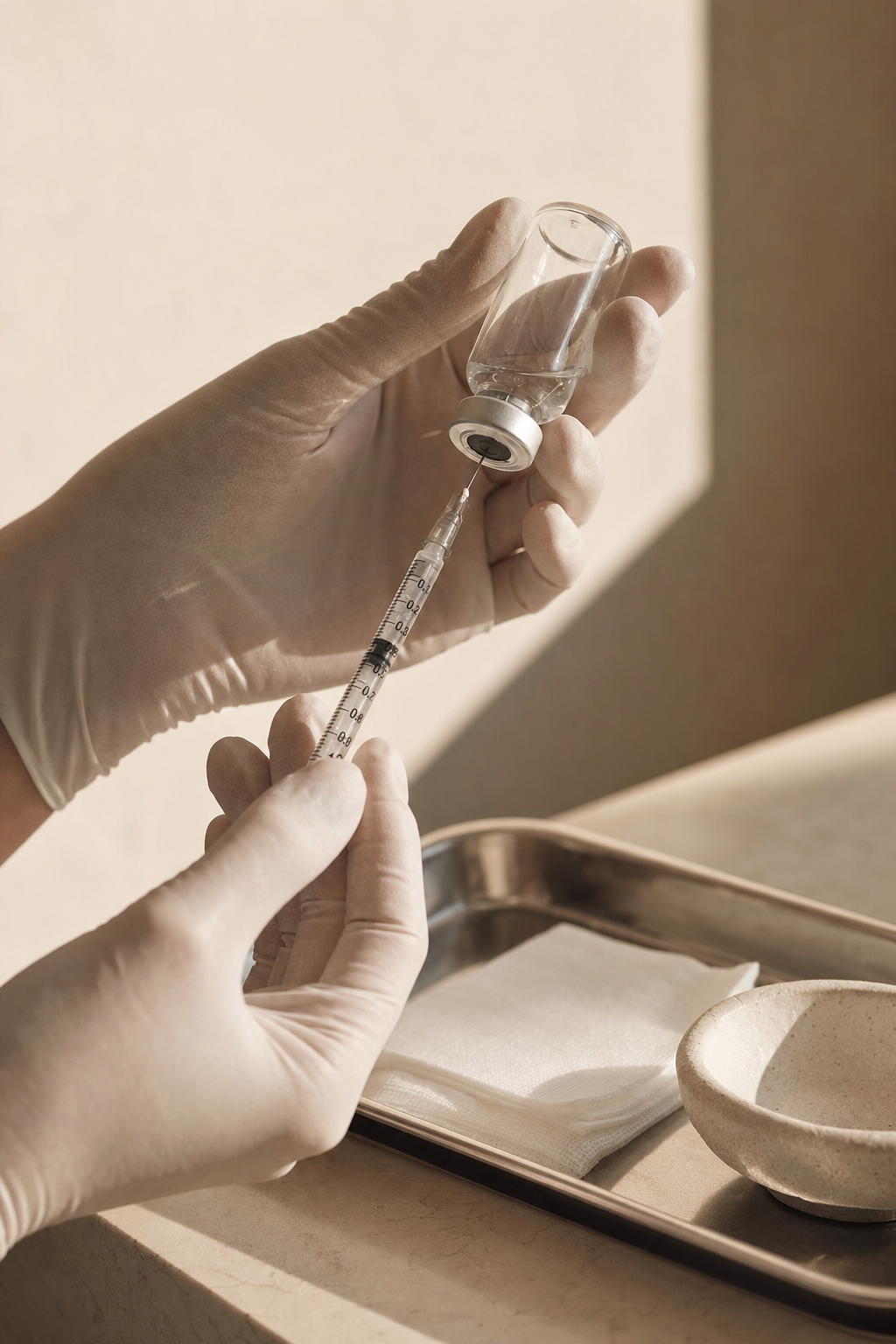
Xeomin (incobotulinumtoxinA) — the uncomplexed neurotoxin, why that matters for antibody resistance, and how it doses against Botox.
Daxxify (daxibotulinumtoxinA) — peptide-stabilized, six-to-nine-month duration in trials, and who benefits from the longer interval.
Every booking starts with a conversation.
“They're truly my one-stop shop for everything beauty and skincare. The entire team is so knowledgeable, honest, and always ready to help…”