Masseter Botox. Jaw slimming and clenching relief.
Masseter Botox for jaw slimming, clenching and grinding — dosing, what changes by week six, and who it actually suits.
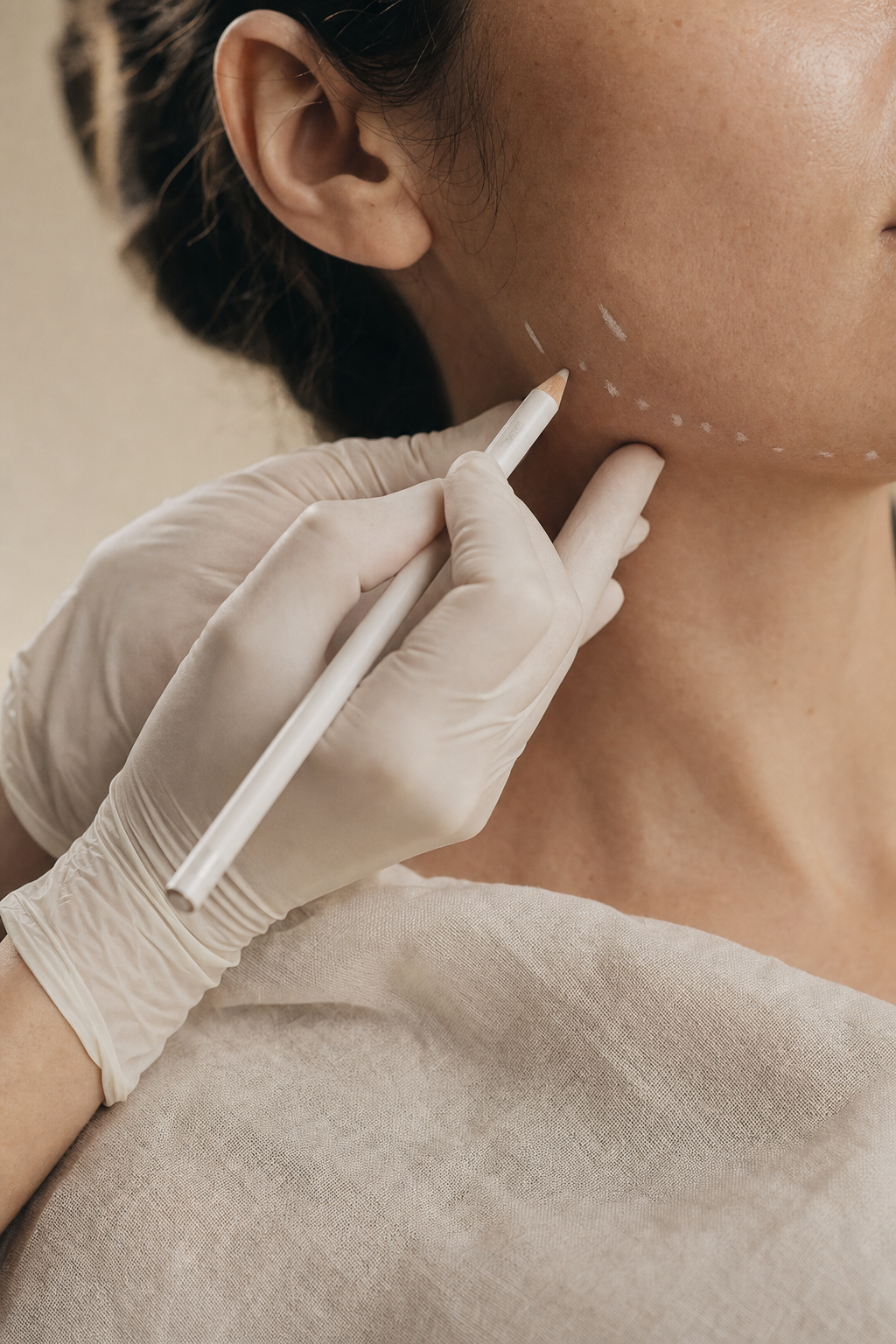
Botox — onabotulinumtoxinA — injected into the masseter, the thick chewing muscle at the angle of the jaw. In small doses it relaxes the muscle, which slims a wide or square lower face over the weeks that follow and, for many patients, eases the clenching and grinding that enlarged the muscle in the first place.
A muscle treatment, not a skin treatment.
The masseter is one of the strongest muscles in the body relative to its size. When it is overworked — by clenching, grinding, habitual gum chewing, or simple anatomy — it grows, the way any muscle grows under load. The clinical term is masseter hypertrophy, and it is what gives a lower face its square, widened set.
OnabotulinumtoxinA interrupts the signal between nerve and muscle at the injection site. The masseter keeps working — you chew, speak and express normally — but its resting tension drops, and a muscle that is no longer overworked gradually loses bulk. That loss of bulk is the slimming. It happens over weeks rather than days, because it is the muscle de-conditioning, not anything happening to the skin.
Nothing is added and nothing is removed. When the effect wears off, the muscle returns to its prior pattern unless treatment is maintained.
Two reasons patients book this.
Most patients arrive with one of these goals. A fair number discover at consultation that they have both.
| AestheticJaw slimming | A wide or square lower face driven by muscle bulk rather than bone. As the masseter softens, the lower face narrows toward a more tapered profile. The change is gradual and reads as natural — people tend to notice you look rested or slimmer, not treated. If the width is skeletal rather than muscular, we say so at consultation; neurotoxin can't change bone. |
|---|---|
| FunctionalClenching and grinding | Patients who clench or grind — bruxism — often report less jaw tension, fewer morning headaches and less tooth wear after treatment. We discuss this candidly: the injection reduces the muscle activity behind those symptoms, but it isn't a diagnosis or a cure for an underlying joint disorder, and persistent TMJ complaints deserve a dental or medical workup in parallel. |
What a course of masseter Botox looks like.
- 01
Assessment.
We palpate the masseter while you clench to map its bulk and borders, review your history, and photograph baseline. Dosing is set by muscle size — typically 20–30 units per side, noticeably more than a glabella treatment, because the masseter is a much larger muscle.
- 02
Injection.
A few injection points per side, placed in the lower portion of the muscle, away from the muscles that move the mouth. The appointment runs about fifteen minutes; sensation is a brief sting at each site. No downtime — patients return to their day.
- 03
The slow reveal.
Functional relief tends to arrive first, often within one to two weeks of treatment. Visible slimming follows the muscle's de-conditioning: usually evident at six weeks or later, continuing to refine through three months. Masseter work rewards patience.
- 04
Maintenance.
Effect typically lasts 4–6 months — longer than upper-face treatment, because a large muscle takes time to rebuild. Many patients find the interval stretches further after two or three consistent rounds.
The lower face works as a unit.
Masseter treatment narrows; it doesn't define. Patients after a complete lower-face change often pair masseter slimming with jawline and chin filler — the neurotoxin reduces width while structured filler draws the line of the jaw and brings the chin into proportion. When the goal is contour rather than relief, we plan the two together rather than treating one and hoping.
On product choice: we typically use Botox in the masseter because its dosing in this muscle carries the longest published track record. Some patients — particularly those treating broad areas elsewhere in the same visit — prefer Dysport, and long-term patients occasionally do better on Xeomin. The right answer is anatomical, and it's discussed at consultation rather than assumed.
Performed by Orr Swissa-Amran, PA-C, board-certified Physician Associate, internationally trained in hair restoration and aesthetic medicine.
Questions we get.
How much does masseter Botox cost?
In Los Angeles, masseter treatment typically runs $500 – $1,000 per session at market rates — 20–30 units per side at the prevailing $13 – $16 per unit. The masseter needs more units than upper-face areas, which is why it prices higher. Your exact unit count and total are confirmed in writing at consultation, before injection.
Will masseter Botox change my smile?
Dosed and placed correctly, no. The injection sits in the lower portion of the masseter, away from the muscles that lift the mouth. Some patients notice mild chewing fatigue with tougher foods in the first weeks; it settles as the surrounding muscles compensate.
How long does masseter Botox last?
Typically 4–6 months — longer than glabella or forehead treatment, because a large muscle rebuilds slowly. Patients who maintain a consistent schedule often find the interval lengthens over time, since the muscle has less opportunity to recondition between sessions.
When will I see the slimming?
Functional relief — less clenching, less morning jaw tension — often arrives within one to two weeks. Visible slimming takes longer: most patients see the change at six weeks, with continued refinement through three months. Baseline photos at the first visit keep the comparison honest.
Continue.
Four FDA-approved botulinum toxin products — what differentiates them, how we dose, where we treat, and the cadence that actually holds.
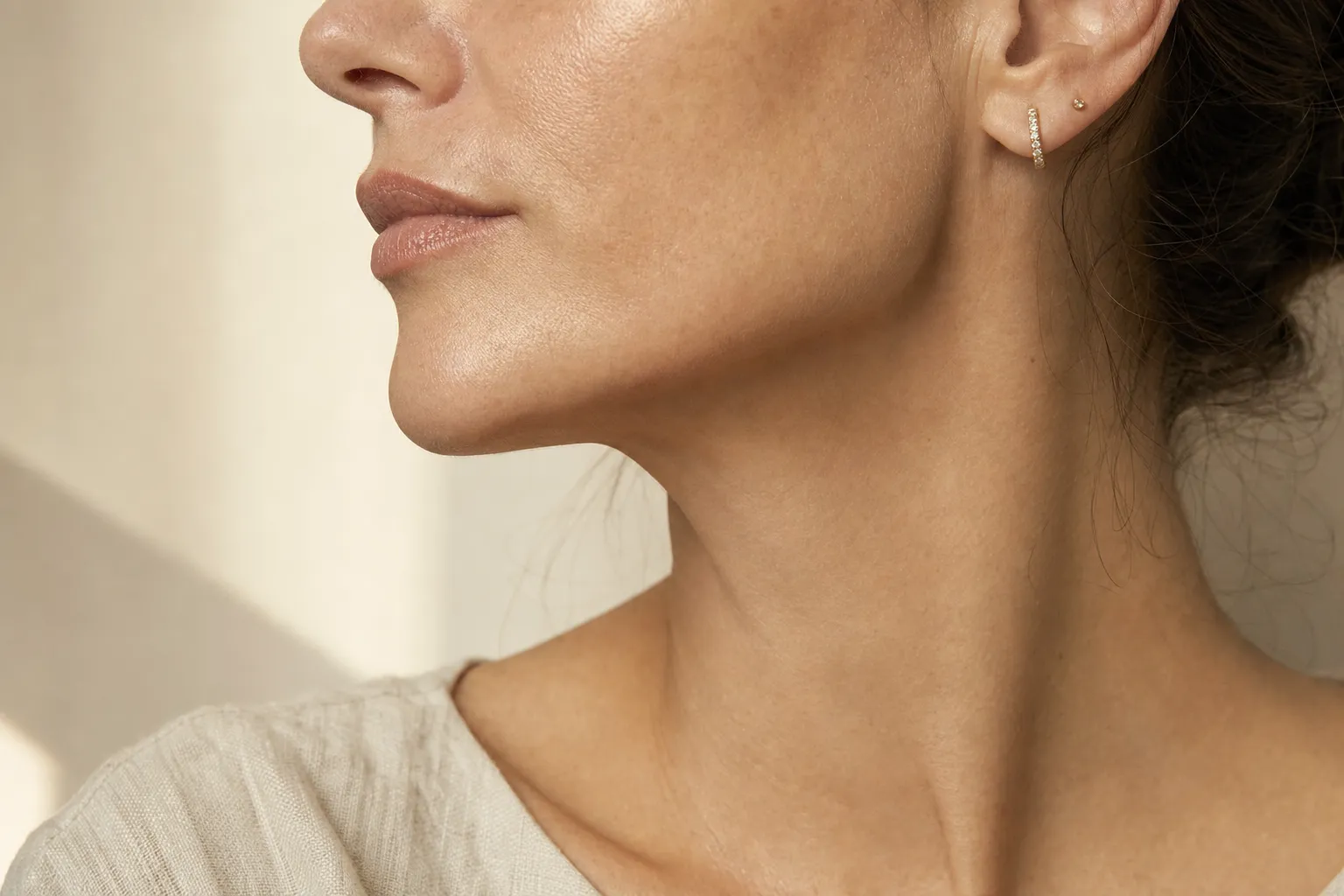
Chin filler and jawline contouring — projection, pre-jowl blending, gel selection by tissue plane, and the masseter-Botox pairing for the lower face.
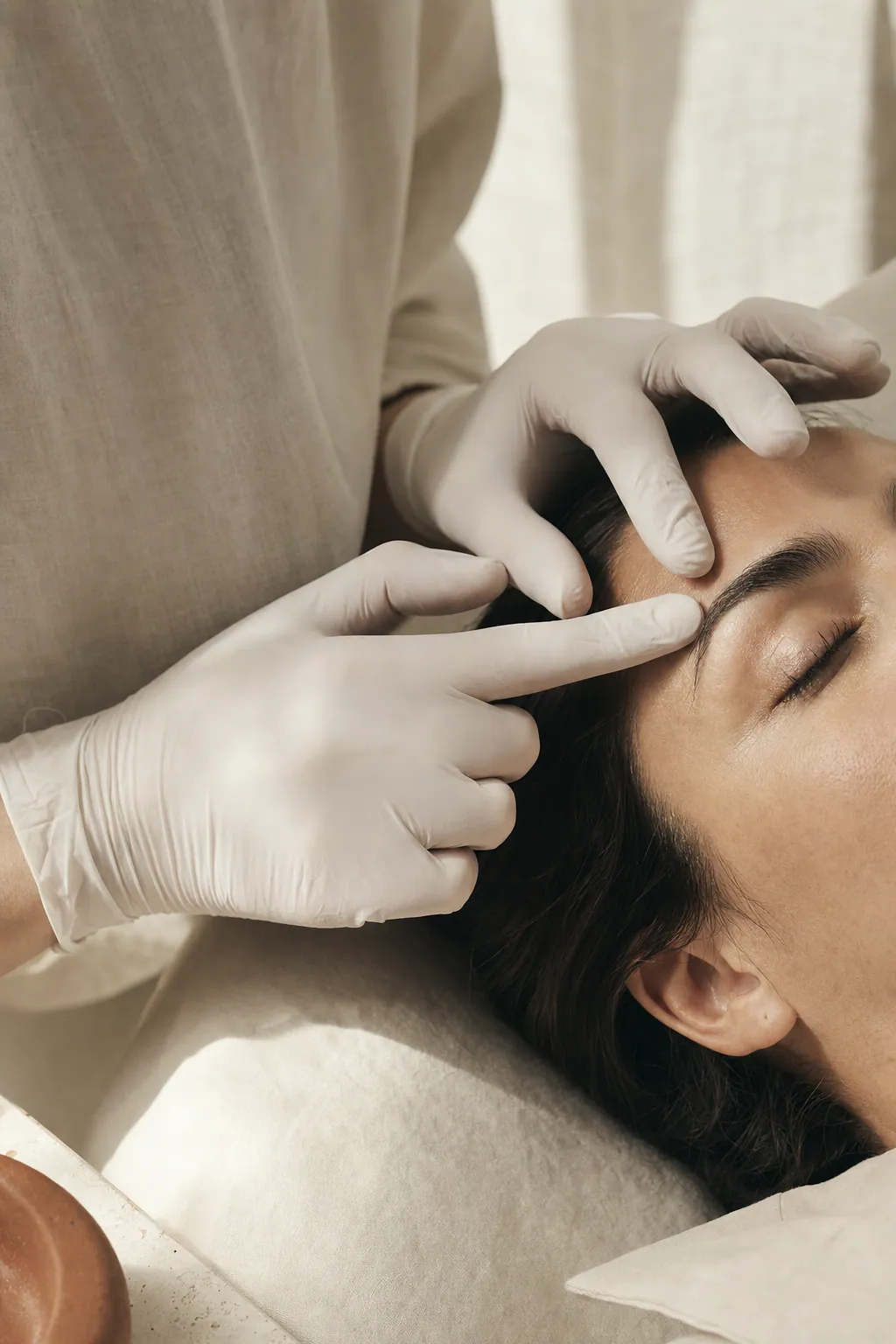
Botox in Calabasas at Swissa Med Spa — mechanism, treatment areas, dosing approach, and what a first appointment looks like at our studio.
Dynamic and static wrinkles — what neurotoxins, RF microneedling and resurfacing can address, and when each is the right call.
Schedule a consultation for masseter botox. jaw slimming and clenching relief.
“Nicole has been doing my botox for a while now, and honestly, I wouldn't trust anyone else with my face!”